
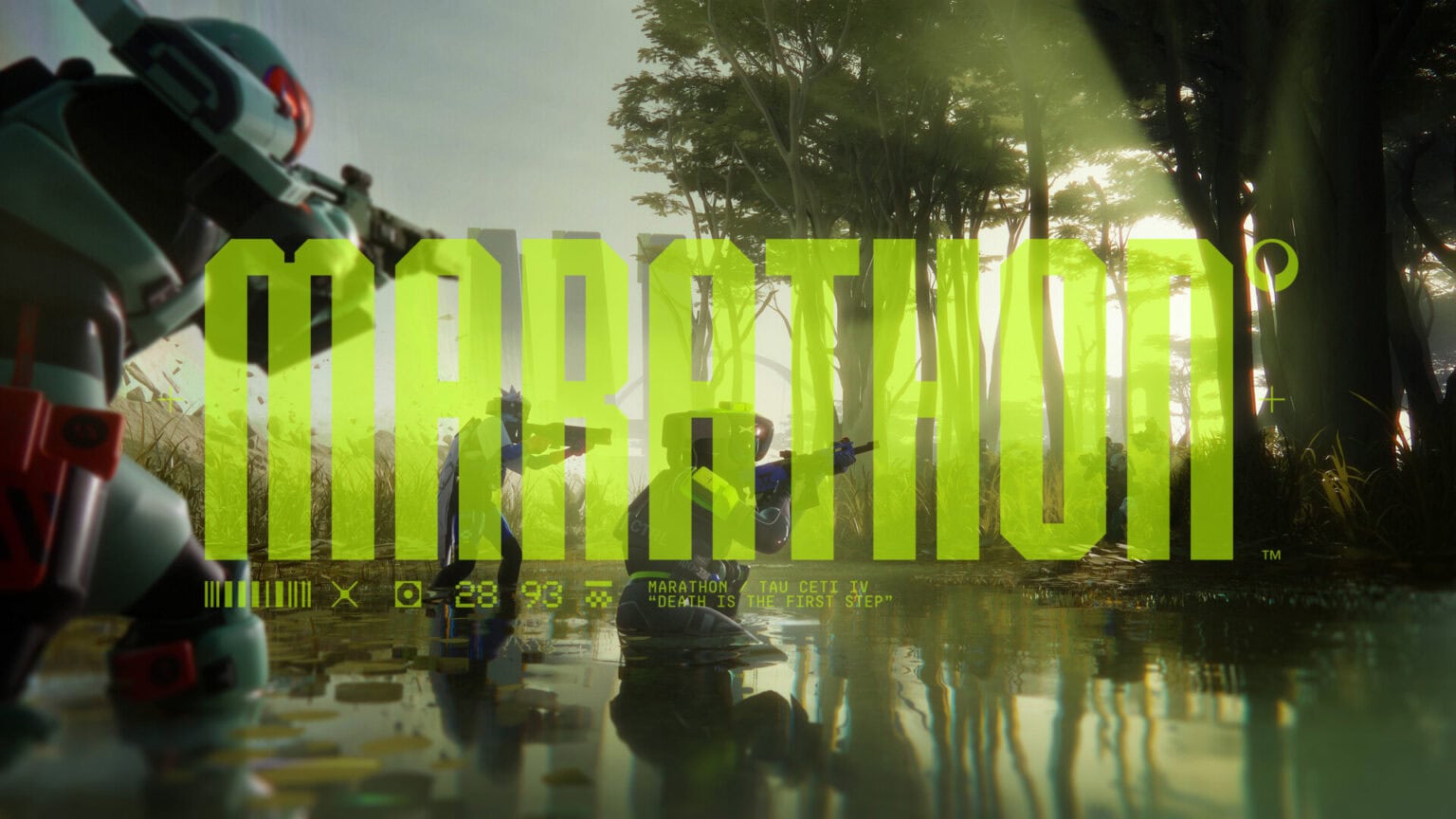
Marathon is one of those games that makes a complicated first impression, and not always a flattering one. The opening hours are abrasive, the onboarding is thin, and the systems it throws at you feel like they expect a level of genre familiarity that not everyone is going to have. For a while, it gives off the impression of being a game you’re supposed to admire more than enjoy, especially if you’re coming in with expectations shaped by Bungie’s past work or by other extraction shooters that do a better job of easing players into the loop.
The thing is, that impression doesn’t really hold once you spend enough time with it.
After a lot of hours on the PC version running on an RTX 4090, Marathon gradually shifted from something I respected at a distance to something I actively wanted to keep playing, even after runs where I lost a strong loadout and had every reason to log off instead. That is where the game becomes interesting. It does not win you over through generosity or spectacle. It wins you over by making each run feel just tense enough, each system just opaque enough, and each victory just meaningful enough that you start thinking about the next drop before the last one has even finished bothering you.
That also makes it a difficult game to recommend cleanly, because this is very clearly not built for everyone. Marathon is demanding, unapologetically so, and the people who love it seem to love it for exactly the same reasons that others bounce off after two or three runs. As an extraction shooter, it sits in that uncomfortable but fascinating space where frustration and attraction are constantly feeding each other.
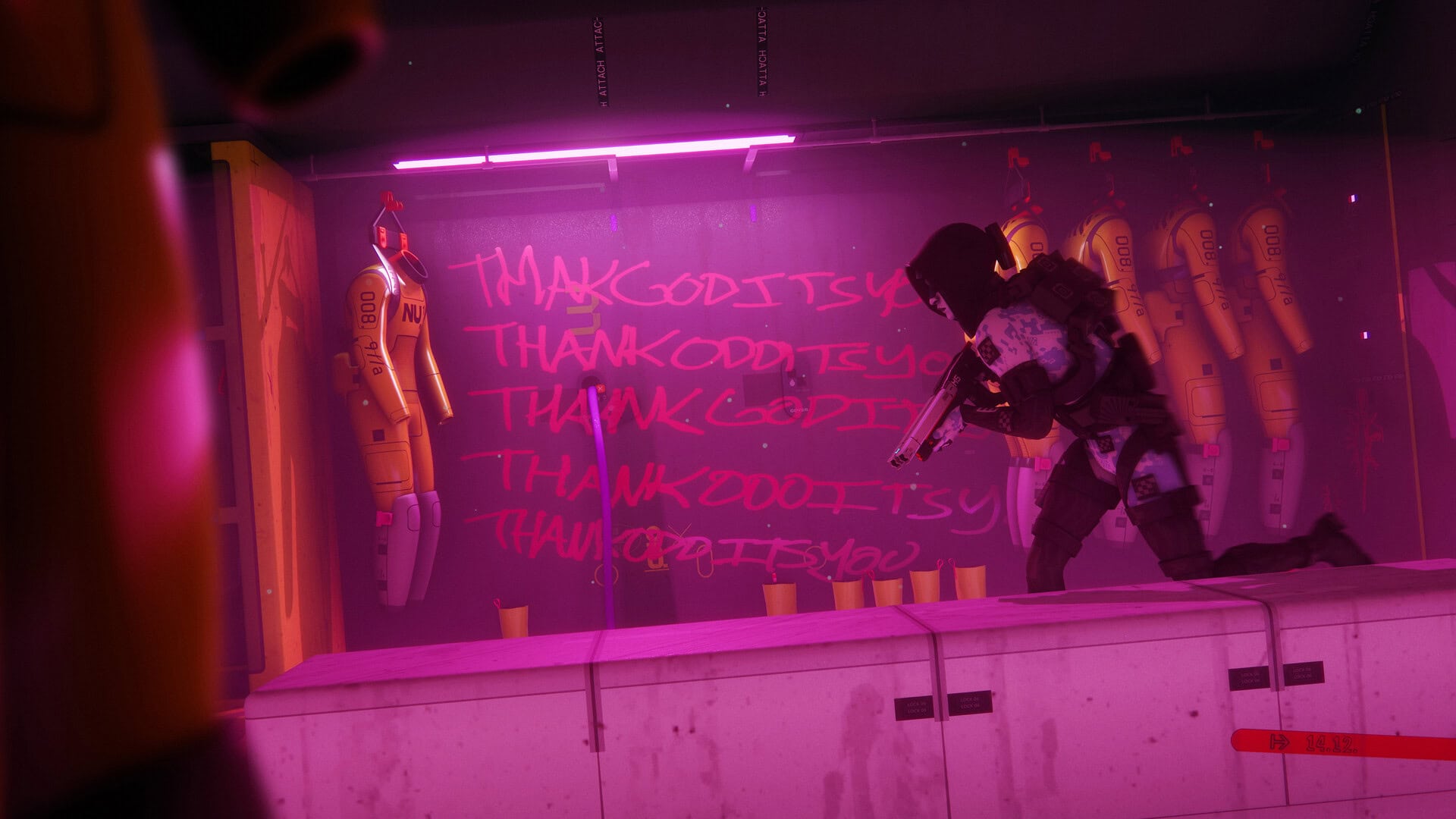
The biggest hurdle Marathon faces is not the PvP, nor the difficulty of its AI, nor even the baggage that comes with Bungie releasing another live service shooter into an already tired market. The real problem is that the game takes too long to reveal why it is worth sticking with. During the first several hours, you are not so much playing confidently as you are trying to assemble a working mental model of how everything fits together. Gear, shells, abilities, contracts, faction progression, extraction timing, map flow, inventory management, enemy threat levels, and the general rhythm of engagement all arrive quickly, and Marathon does not spend much energy making those systems feel inviting.
That rough start is not just a small issue either. It shapes the entire reception. If you click with Marathon immediately, you are probably already comfortable with extraction shooters or you simply enjoy games that expect you to learn by getting punished. If you don’t, then the first impression can be actively hostile. I understand why some people dropped it early. I also understand why so many of the players who stuck with it ended up saying some variation of “I hated it at first, and now I can’t stop playing.”
That transformation makes sense once the systems begin to settle in. The moment Marathon stops feeling like a list of overlapping mechanics and starts feeling like a world with logic, purpose, and rhythm is the moment the whole thing improves. It does not become easier. It becomes readable. That’s an important distinction.
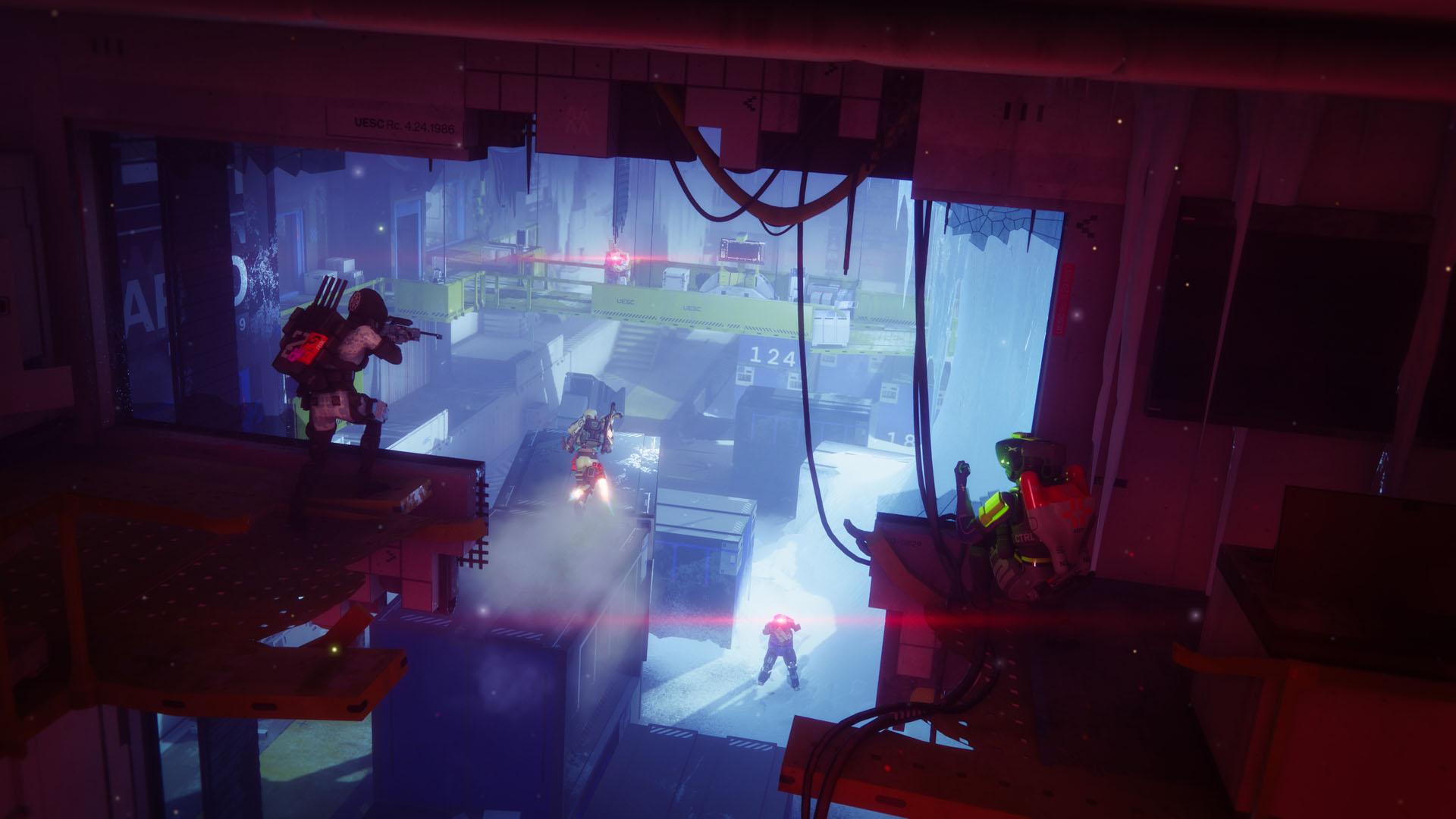
Marathon’s maps are built with intention, but it’s the Cryo Archive that really defines what the game is aiming for long term. Set aboard the abandoned UESC Marathon ship, it shifts the tone from exploratory tension to something much closer to controlled chaos. The layout feels tighter, more hostile, and far less forgiving, especially once you start pushing deeper into its secured areas.
What stood out to me is how the map layers its risk. You’re not just moving through space and reacting to enemies. You’re actively working toward access. The security clearance system adds a progression layer within a single run, forcing you to make decisions about whether to engage, avoid, or push your luck for better rewards. It creates a steady escalation where each step forward feels earned but also increasingly dangerous.
There’s a noticeable shift here compared to the earlier maps. Cryo Archive feels closer to a raid environment than a standard extraction zone. Enemy presence is heavier, encounters demand more coordination, and mistakes carry immediate consequences. It’s the kind of space where playing solo feels significantly more limiting, and where a coordinated team starts to feel less like an advantage and more like a requirement.
At the same time, it reinforces what Marathon does best. The tension isn’t just about surviving. It’s about deciding how far you’re willing to go before everything falls apart. That push-and-pull between risk and reward is at its strongest here, and it gives the endgame a sense of purpose that the earlier maps only hint at.
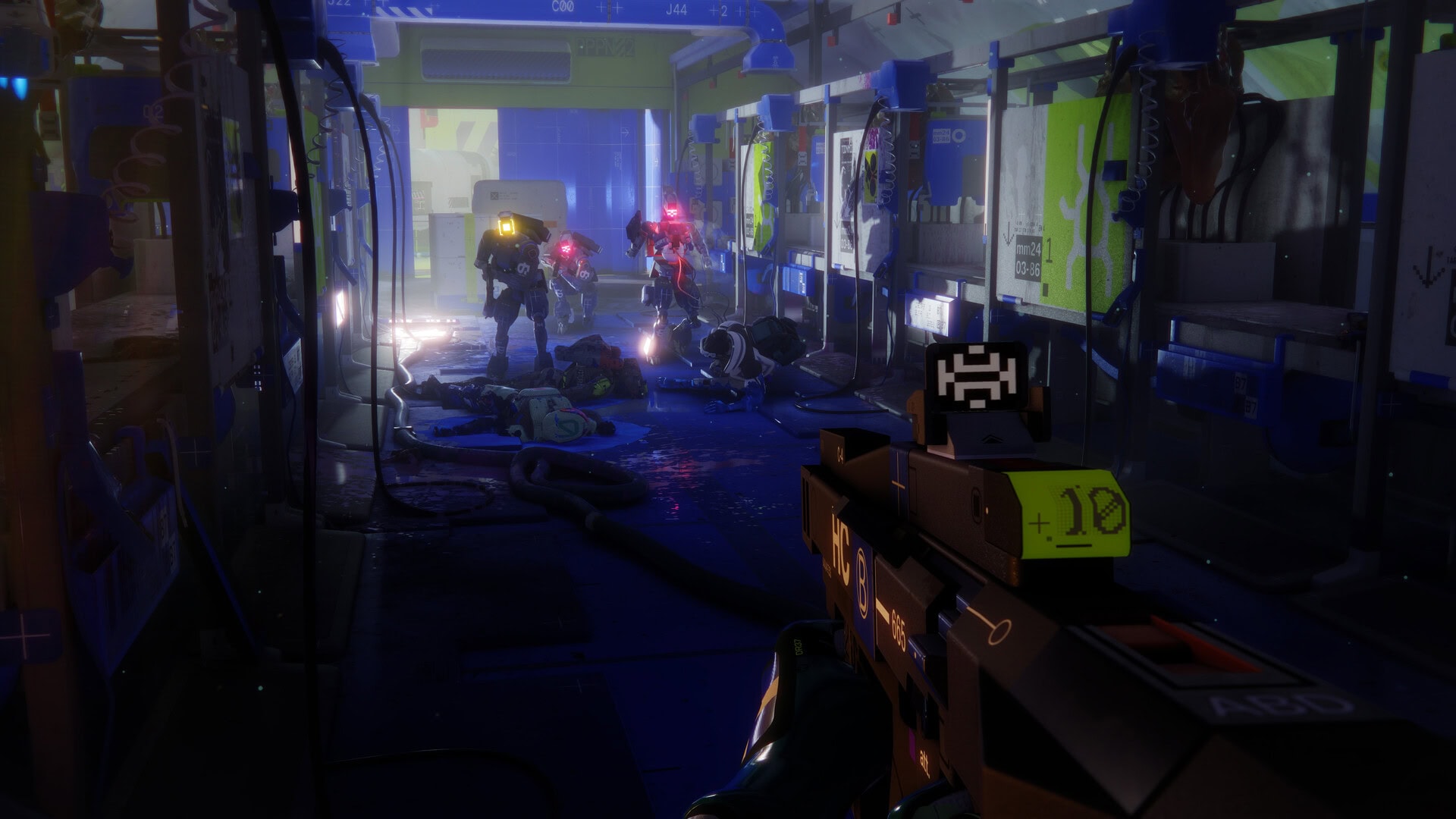
For all the discussion around extraction systems, faction progression, UI headaches, and whether this game will survive in the long term, the most immediate strength Marathon has is that it still feels like a Bungie shooter. That old instinct is all over the gunplay. Weapons have the right amount of weight, recoil feels controlled rather than noisy, and movement carries that specific Bungie smoothness that makes even simple actions like sprinting through a corridor or snapping onto a target feel satisfying.
It would be easy to reduce that comparison to “it feels a bit like Destiny,” and there is certainly some truth there, but Marathon is doing something a little different with that foundation. Destiny’s combat tends to encourage momentum and constant forward pressure, whereas Marathon is much more interested in making you question whether you should even take the fight in front of you. You feel the same craftsmanship in the handling, but the context changes everything. Shooting is still good for its own sake, but it is no longer the start of a power fantasy. More often than not, it is the beginning of a risk calculation.
That difference stood out even more because I had Arc Raiders in the back of my mind while playing. The similarity is obvious in a broad sense, since both are modern extraction shooters with strong visual identities and progression loops built around repeated runs, but the feel is not the same at all. Arc Raiders is more willing to let situations spiral into weird, messy unpredictability. Marathon is more disciplined and more confrontational. It leans harder into direct danger, stronger PvP tension, and cleaner mechanical feedback. In Arc Raiders, I often felt like I was improvising around the world. In Marathon, I felt like the world was testing whether I deserved to move through it at all.
One of the more successful parts of Marathon’s design is how it layers character identity on top of the shooting without turning matches into constant ability spam. The shell system gives each runner a distinct profile, and while those roles matter more in coordinated team play than they do in isolated solo runs, they still contribute meaningfully to how each drop unfolds. Abilities feel important because they are not available often enough to become background noise. Cooldowns are long enough that using one at the wrong time can leave you exposed, which naturally puts more emphasis on positioning and timing than on simply pressing every button available.
The heat system also deserves more credit than it might get at first glance. It would have been easy for Bungie to let movement stay loose and hyper-mobile, especially given the studio’s history, but Marathon intentionally reins that in. Sprinting and sliding carry a cost, and that changes decision-making in a subtle but constant way. You can still move aggressively, but not without consequences. The result is a shooter that feels faster than many extraction games in terms of responsiveness, while still remaining more tactical than anything Bungie has done in the multiplayer space over the last decade.
This balancing act is a big part of why Marathon works. It understands that tension in an extraction shooter doesn’t just come from loot loss or hostile players. It comes from uncertainty in movement, the risk of overcommitting, and the awareness that a bad push can unravel an otherwise strong run.
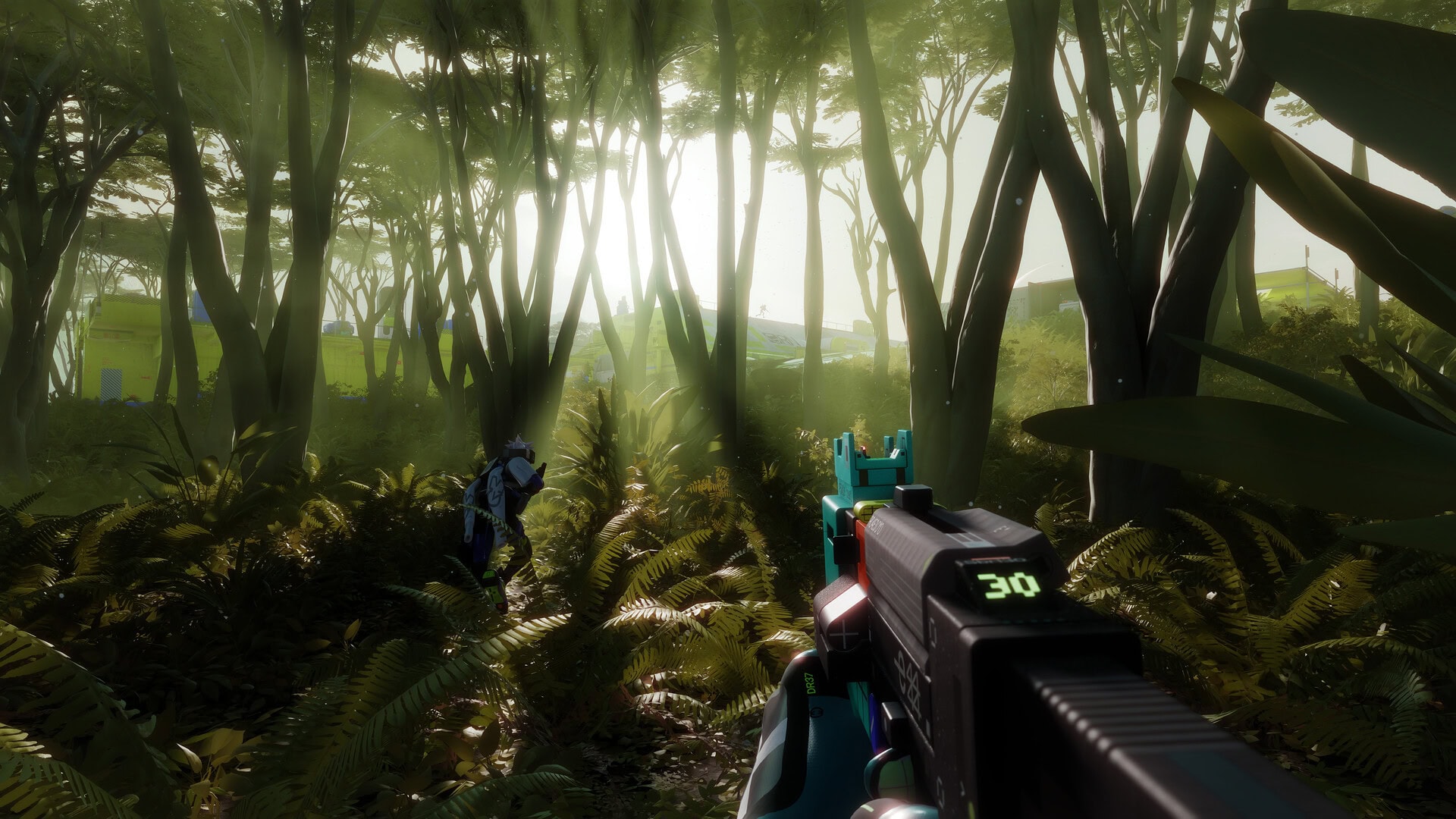
Progression in Marathon is stronger than I initially gave it credit for. The faction structure provides a sense of direction that many extraction shooters struggle with, and even though the story remains fragmented and indirect, there is enough personality in the factions themselves to make the contract grind feel connected to something larger than just resource acquisition. Their introductions have character, their voice work gives them texture, and the way their respective progression tracks open up armory options, passive bonuses, and inventory advantages gives them more purpose than simple quest dispensers.
I do think the contract system could be more flexible. Being limited in how many objectives you can actively pursue at once creates friction, especially when playing solo, and there were several moments where I found myself wishing the game let me stack tasks more intelligently rather than forcing each run into a narrower lane. Even so, the way team progression shares some of that momentum across squad members helps soften the sting, and it reinforces the idea that Marathon really comes into its own when you are playing with people who understand the game and each other.
That last part matters more than the marketing probably lets on. Marathon can be played solo, and solo runs can be some of the most tense and memorable in the game, but they are also where the experience feels the least forgiving and, occasionally, the least expressive. In a squad, the systems stop feeling like separate pieces and start functioning as a whole. Roles matter more, communication actually changes outcomes, and the structure of a run begins to feel like it was built with cooperation in mind from the ground up. It isn’t simply that the game gets easier in a trio. It’s that it feels more complete.
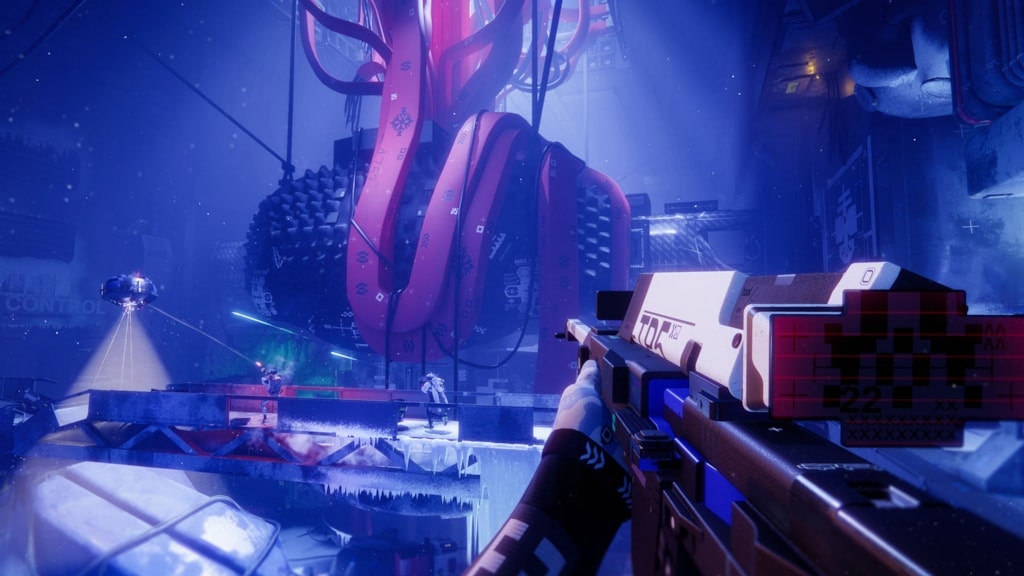
Marathon’s world-building has that familiar Bungie habit of giving you enough to be intrigued without ever fully settling into a conventional narrative cadence. If you want a traditional campaign with clear mission-to-mission escalation, this is not that. The story is dispersed across faction dialogue, codex material, environmental hints, and the broader mystery of Tau Ceti IV and what exactly went wrong there. I found the setup more intriguing than emotionally gripping, but there is enough personality and enough implied history in the world to keep pulling at the edges of that curiosity.
This is another place where Destiny inevitably comes to mind, although Marathon is in some ways even more withholding. It trusts the player to chase context rather than offering it cleanly, and that’s going to be either a strength or a frustration depending on how much patience you have for lore delivery that feels more archival than dramatic. Personally, I found myself reading more than I expected to, and that says something positive about the world. At the same time, I don’t think Marathon has yet proven that all of this mystery will pay off in a way that feels truly memorable.
Marathon’s art direction is probably going to remain one of those things people either warm up to or reject outright. I understand both reactions. The color palette is bold to the point of being abrasive in places, the retrofuturist design language can feel blocky and alien rather than sleek, and the shell designs are unlikely to win over anyone looking for something more grounded or conventionally cool. At first, I wasn’t entirely sold on it either.
Over time, though, the aesthetic started to make more sense to me. Once the world, the factions, and the overall tone begin to settle in, the visual language stops feeling random and starts feeling committed. That doesn’t mean everyone will like it, but it does mean the game has an identity, and that goes a long way in a genre full of grey sameness and military clutter. I would much rather play something that knows exactly how weird it wants to look than something trying to sand down every edge for maximum market comfort.
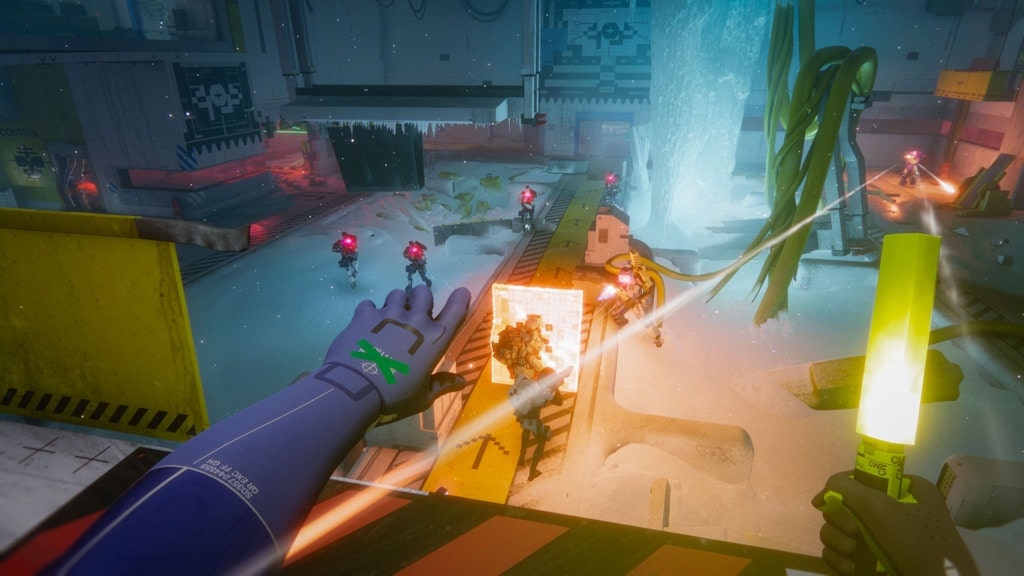
For as much as Marathon nails the feel of being in a run, it does far less well in the space between runs. The interface is easily the most persistent source of friction in the game. Inventory management is awkward when it should be quick. Comparing gear takes more effort than it should. Certain item categories blur together visually, and too much of the experience depends on mousing over, hovering, checking, and second-guessing what should be immediate information.
This is the kind of problem that might seem minor in isolation, but Marathon asks you to spend a lot of time with this stuff. When a game’s loop is built around loading in, extracting, sorting gear, modifying your setup, and then heading back out, any clumsiness in the UI gets magnified fast. I adjusted to it over time, but I never stopped noticing it.
That also feeds into a broader issue with how Marathon presents its complexity. The game clearly has depth, and I don’t think it should be flattened to appeal to the lowest common denominator, but there are still moments where it feels like it is making the experience harder to parse than necessary. Complexity is not the same thing as friction, and Marathon occasionally confuses the two.
On an RTX 4090, Marathon runs very well. Performance during firefights remained stable, input response felt sharp, and transitions between menus, loading screens, and active matches were quick enough that I never felt technical limitations disrupting the loop. In a game like this, where hesitation and timing matter as much as raw aim, that consistency goes a long way.
Visually, the game is not trying to melt your hardware. It is cleaner than it is extravagant, and that feels intentional. Readability is prioritized, which matters more for Marathon than sheer visual density would. Enemy silhouettes are easy to pick up, sightlines are legible, and effects rarely clutter the screen to the point of becoming a gameplay problem. I did not run into crashes or major performance faults during my time with it, and from a technical standpoint, this is a much more polished experience than some of the discourse around the game might suggest.
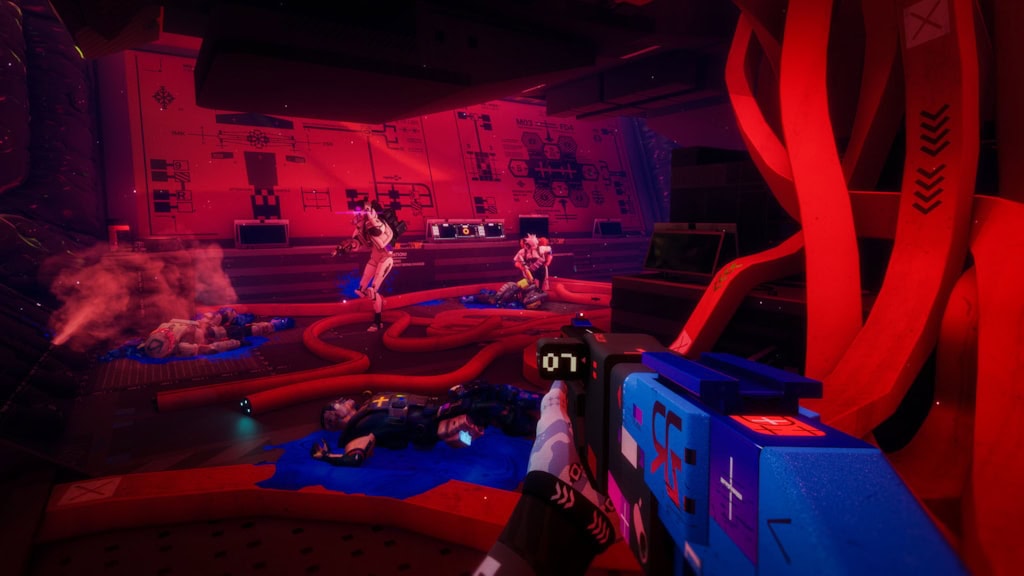
Marathon’s biggest challenge may have less to do with its actual quality and more to do with everything orbiting it. It arrives in a market that is already skeptical of live service shooters, under a publisher that almost certainly wants numbers this genre rarely delivers, and under a studio whose relationship with player trust is, at best, complicated. Some people were always going to write this game off before touching it. Others were always going to hold it to impossible expectations.
The game itself doesn’t completely escape that pressure. Marathon is niche in a way that Arc Raiders feels less niche. It is more openly PvP-leaning, less socially flexible, and less interested in giving casual players a comfortable on-ramp. I can see why that would limit its audience, and I think it probably will. At the same time, I also understand why the people who do click with it seem to fall hard. This is one of those games where a bad first night can send you away forever, but a great extract under pressure can lock you in for weeks.
That tension is the game.
Marathon is not a universally appealing game, and it makes very little effort to pretend otherwise. The onboarding is rough, the UI can be aggravating, and the early hours ask more from the player than many will be willing to give. Even so, there is something deeply compelling underneath all of that resistance. Once the systems begin to make sense and the runs start to feel intentional instead of overwhelming, Marathon reveals itself as a highly disciplined extraction shooter with excellent gunplay, strong structure, and a hook that is difficult to shake once it gets into your head.
Compared to Arc Raiders, it is less loose, less socially flexible, and more confrontational, but it is also tighter and more tactically focused in a way that I ended up appreciating. Compared to Destiny, it carries Bungie’s mechanical fingerprints everywhere while channeling them into something slower, harsher, and far less interested in making you feel powerful. It doesn’t fully reinvent the genre, and it doesn’t always push its best ideas as far as it could, but it does enough right that the result is hard to dismiss.
Marathon will probably be one of those games people either swear by or never understand, and honestly, that feels fitting.
This review is based on a review code provided by the publisher/developer.
Marathon (PC)
Marathon will probably be one of those games people either swear by or never understand, and honestly, that feels fitting.
The Good
- Excellent gunplay with unmistakable Bungie feel
- Extraction loop becomes addictive once it sinks in
- Stable, polished performance on PC
The Bad
- UI and inventory management are consistently frustrating