Developer: Ubisoft Singapore
Publisher: Ubisoft
Reviewed On: PC
Available On: PC, PS5, Xbox Series X|S
Release Date: July 10, 2026
Review Copy Provided By: Ubisoft
There are very few games that have managed to outlive the generation they were released in quite like Assassin’s Creed IV: Black Flag. Long before Ubisoft officially announced Resynced, every conversation about where the series should go inevitably circled back to the same answer: “Just make another Black Flag.” It didn’t matter whether the discussion was about the RPG direction of Origins, Odyssey, and Valhalla, or the return to classic stealth with Mirage. Somehow, Black Flag always found its way back into the conversation. That’s a difficult legacy for any remake to inherit because nostalgia has a habit of polishing rough edges that were very much there the first time around.
When I walked away from my hands-on preview back in May, I wrote that Ubisoft Singapore didn’t seem interested in rebuilding Black Flag from scratch. The studio understood something that many remakes often forget: people weren’t asking for a different Black Flag. They wanted the Black Flag they remembered, not necessarily the one they actually played in 2013. After spending dozens of hours with the final game, I’m happy to say that Resynced walks that line remarkably well. It modernizes where it should, resists the temptation to overcorrect where it shouldn’t, and, perhaps most importantly, understands exactly why this particular Assassin’s Creed has remained the benchmark for the series more than a decade later.
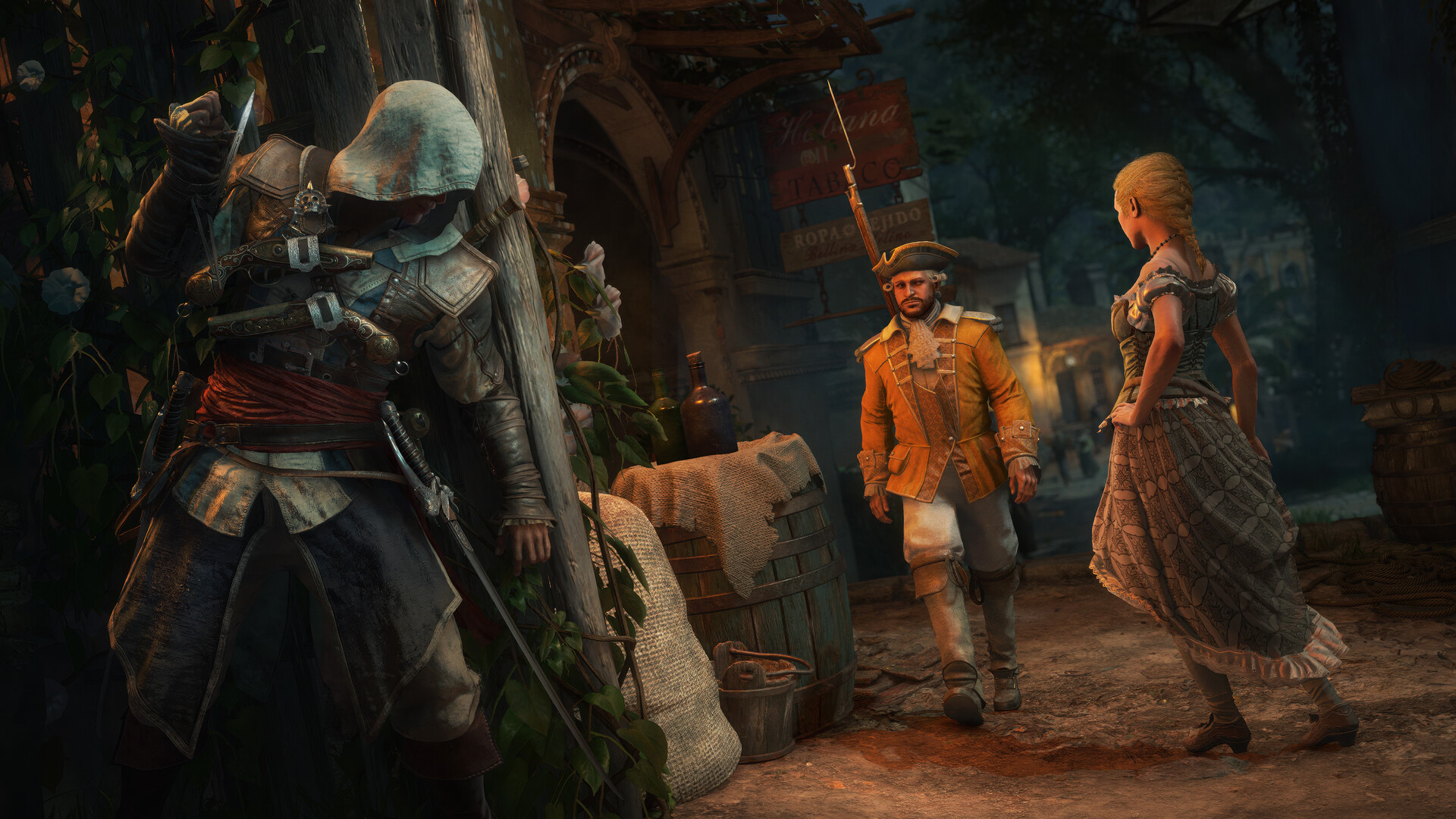
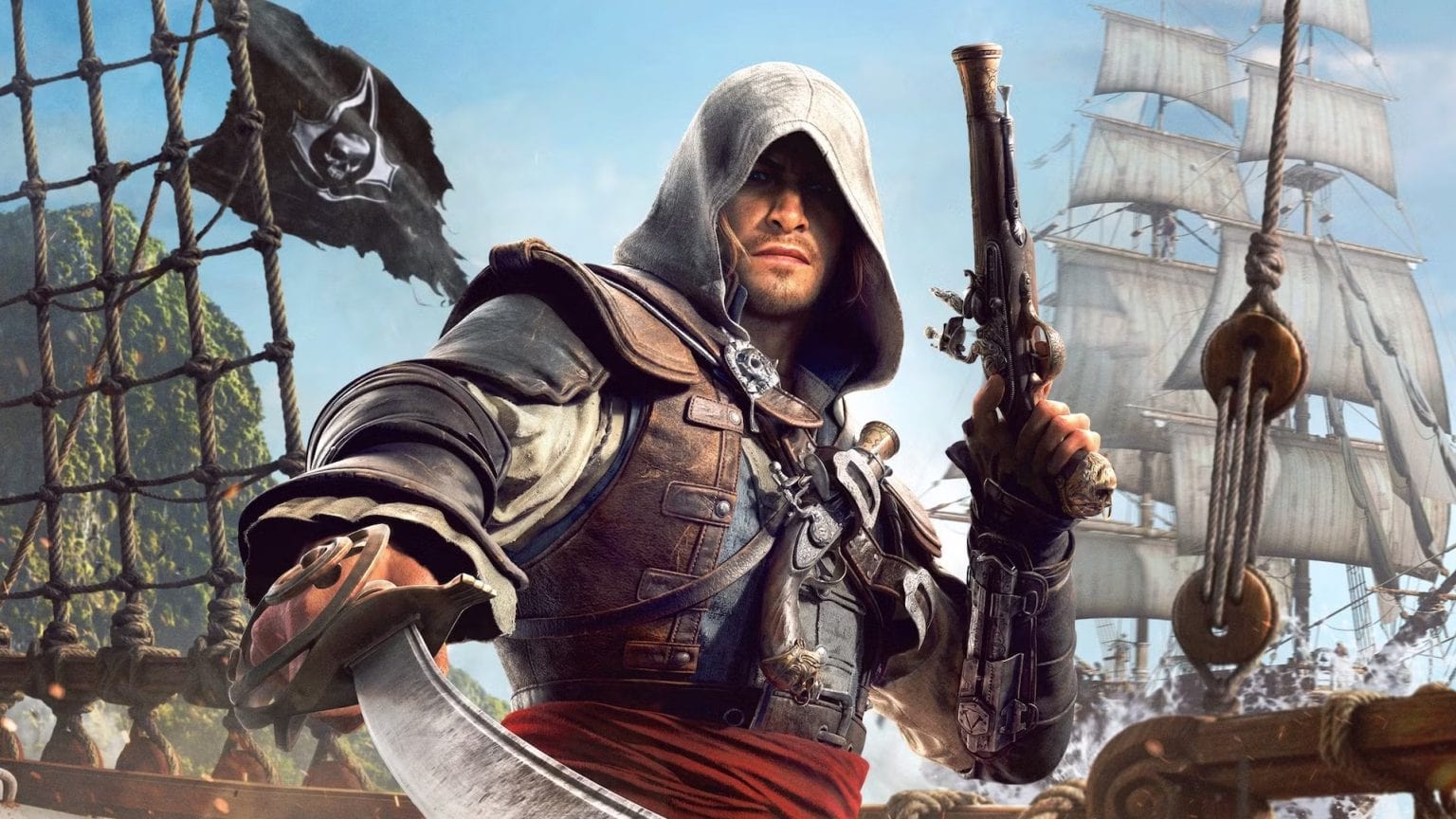
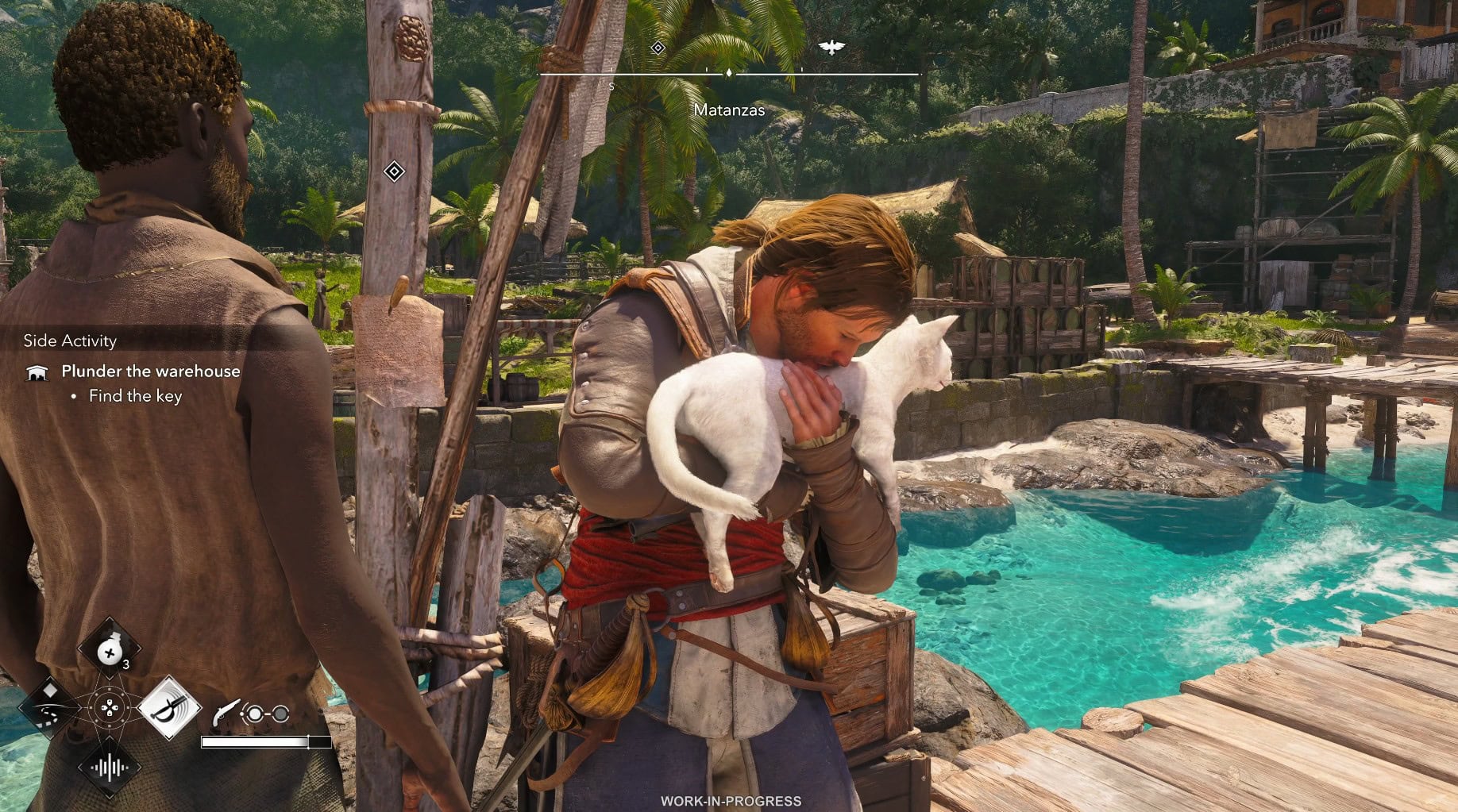
One of the reasons Black Flag has survived the last thirteen years isn’t because of its pirate fantasy, as entertaining as that still is. It’s because Edward Kenway never begins the story as the kind of protagonist you’d expect from an Assassin’s Creed game. He’s selfish, reckless, and more interested in filling his own pockets than joining a centuries-old conflict between Assassins and Templars. That makes the gradual shift in his priorities feel earned instead of inevitable, and it’s why revisiting his story today still carries the same emotional weight it did back in 2013.
What struck me most this time wasn’t the destination of Edward’s journey, because by now everyone knows where it ends. It was how confidently the story allows him to remain unlikeable for much of its first half. Ubisoft never rushes to turn him into a hero. He lies, manipulates, steals identities, and repeatedly places personal ambition ahead of the people who genuinely care about him. In almost any other Assassin’s Creed game, those traits would exist simply to give the protagonist somewhere to grow. With Edward, they feel like the entire point.
The Caribbean isn’t just a playground for treasure hunting and naval warfare. It’s a mirror reflecting every decision Edward makes, and almost every meaningful loss he suffers comes directly from choices he could have avoided. Watching him slowly realize that wealth means very little if there’s no one left to share it with remains one of the strongest pieces of character writing Ubisoft has ever produced. Resynced wisely leaves that foundation untouched.
The additional cutscenes don’t attempt to rewrite the original narrative or force dramatic new revelations into a story that never needed them. Instead, they do something much smaller, but arguably far more valuable. Characters like Blackbeard receive quieter moments that strengthen relationships already present in the original game, making certain departures hit with even greater force because you’ve simply spent more time alongside them. Likewise, the new post-game sequence finally gives closure to one lingering thread that many players felt was left unresolved in the original release. It doesn’t redefine the ending, but it provides just enough closure to make the journey feel more complete.
Looking back, I think that’s exactly why Black Flag continues to resonate while other entries in the series have slowly faded from memory. It never asks you to care about ancient artifacts or secret organizations first. It asks you to care about Edward. The Assassins and Templars simply happen to exist around him.
Ironically, that’s also why Black Flag may be the least “Assassin’s Creed” Assassin’s Creed ever made. And somehow, that’s exactly what made it timeless.
One of the biggest concerns I had after my preview wasn’t whether Ubisoft Singapore could make Black Flag feel better to play. That part was almost expected. Technology has moved on, player expectations have changed, and thirteen years is a long time for any game’s mechanics to remain untouched. What I was far more interested in was whether the studio understood where modernization should stop. Black Flag’s age has always been visible in its controls, but those quirks are also part of how the game feels. Remove too much, and you risk losing the personality that made it memorable in the first place.
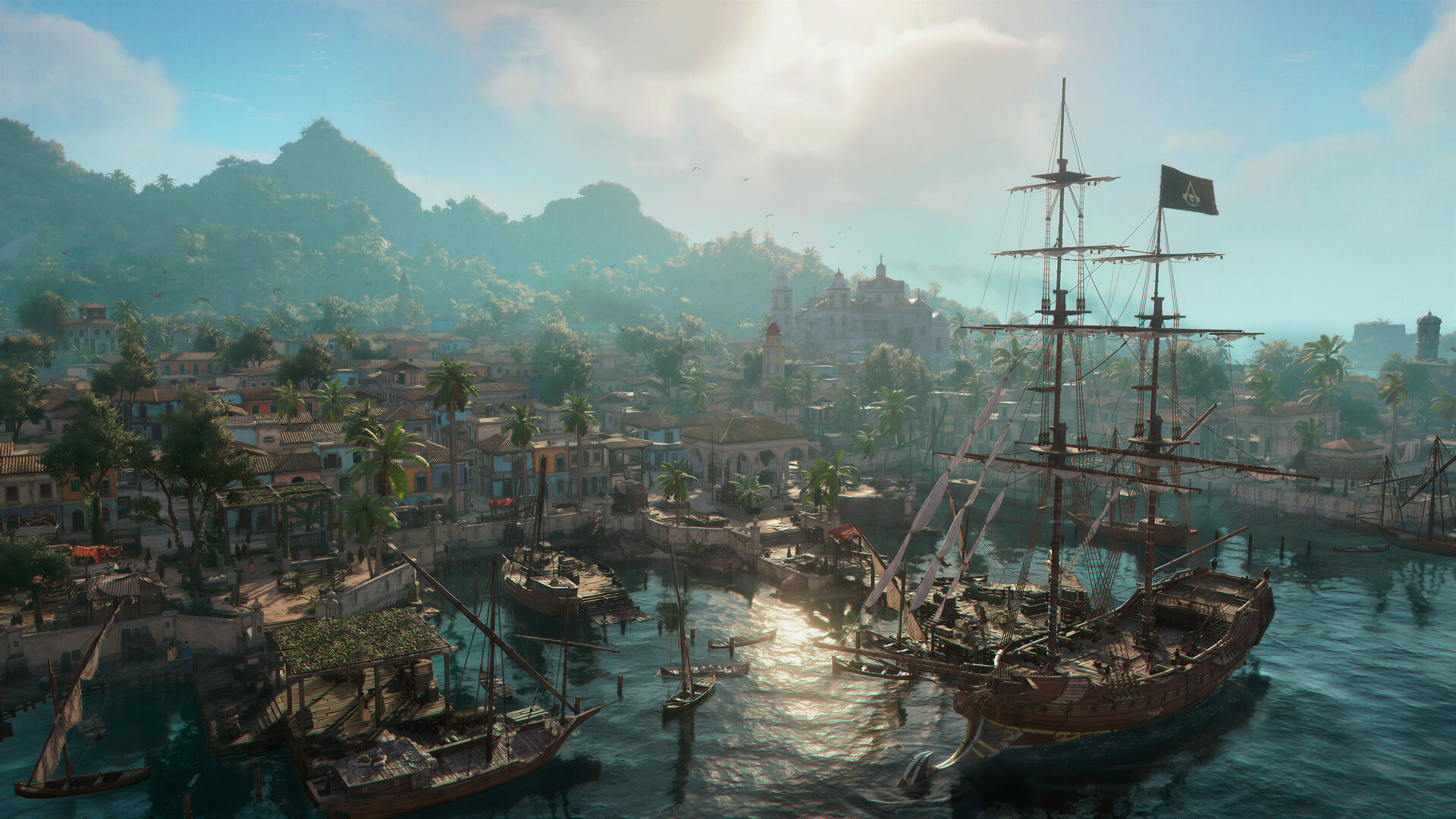
The first thing I noticed after settling into the full game was just how much more natural movement feels. Parkour no longer fights you nearly as often as it did in the original release. Edward transitions between ledges more confidently, changing direction doesn’t require the same awkward pause between animations, and climbing through Havana or Nassau feels noticeably closer to what modern Assassin’s Creed players expect. The improvements aren’t flashy enough that you’ll immediately stop and admire them, but after a few hours, going back to the 2013 version almost feels like learning to walk again. But that doesn’t mean every frustration has disappeared.
Black Flag still carries traces of its original movement system, and there were moments where I’d confidently commit to a jump only for Edward to latch onto the wrong object or refuse to follow the path I thought was obvious. Those moments happen far less often than before, but they haven’t disappeared entirely. If anything, they stand out more precisely because the rest of the movement has become so much smoother. It’s a reminder that beneath all of these improvements still sits a game designed over a decade ago.
Stealth sees arguably the biggest transformation, and not simply because Ubisoft finally gave Edward a dedicated crouch button. It’s amazing how such a seemingly obvious addition changes the rhythm of infiltration. In the original game, staying hidden often meant relying on bushes, blending groups, or those familiar stalking zones that dotted every restricted area. Resynced gives you considerably more control over how you approach an encounter, letting you quietly move between cover without constantly forcing Edward into context-sensitive animations.
Another change I appreciated far more than I expected was how Resynced revisits some of the original game’s more restrictive mission design. Black Flag was never afraid of making you follow someone through crowded streets or quietly listen in on a conversation, but it also had a habit of punishing the smallest mistake with an instant mission failure. Get spotted once, wander a little too far from the conversation, or accidentally step outside an invisible objective radius, and you’d be staring at a loading screen before you even had the chance to recover.
Resynced doesn’t completely remove those sequences, but it does rethink enough of them that they no longer feel like interruptions. Several missions have been opened up, giving you more freedom in how you approach an objective instead of insisting on one exact solution. More importantly, the game trusts you to recover when things don’t go according to plan instead of immediately telling you that you’ve failed.
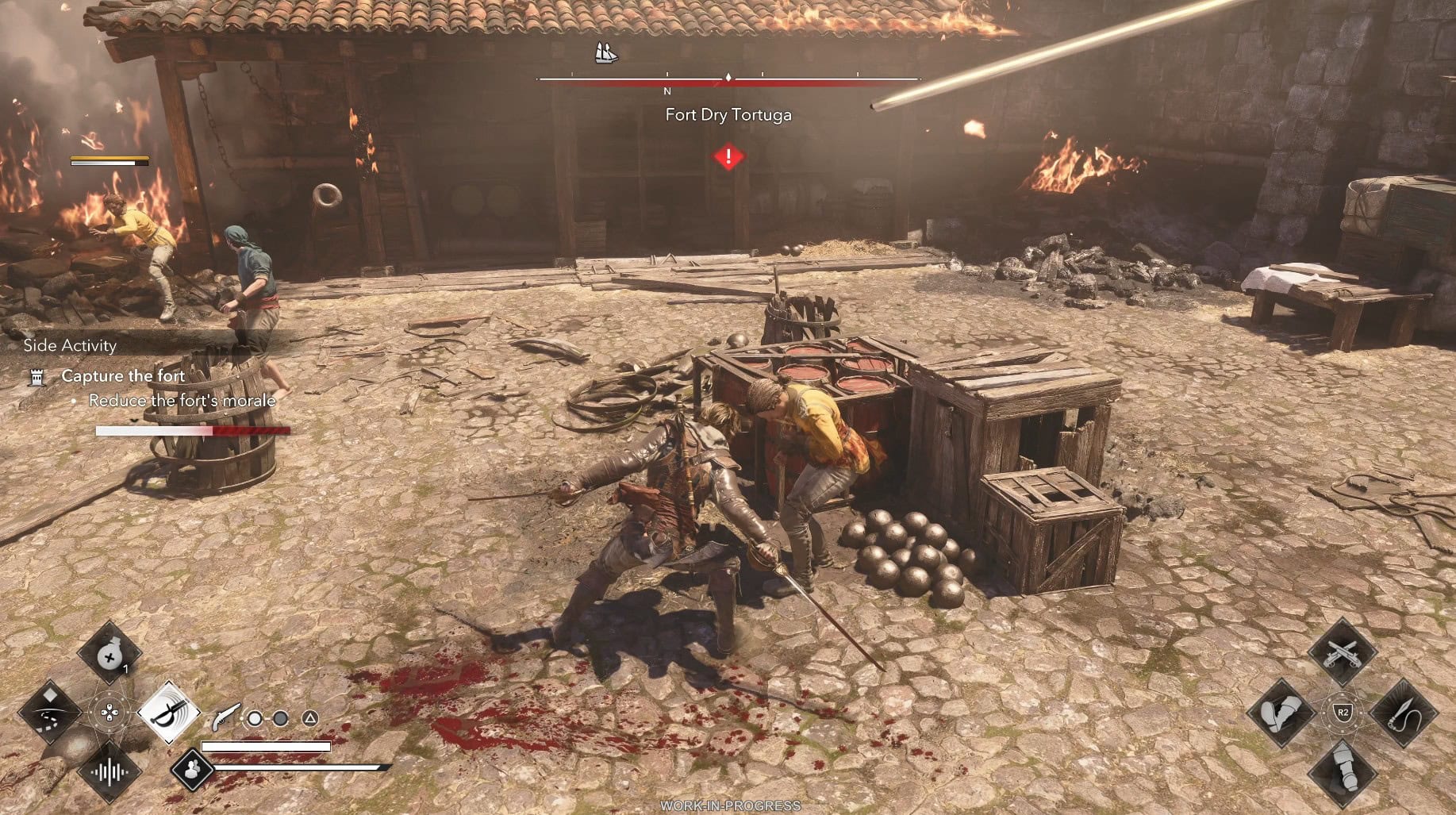
That freedom is genuinely welcome, but it also creates one of the more interesting trade-offs in the remake. Because crouching is now such an effective solution, I found myself interacting far less with the social stealth systems that originally helped define Assassin’s Creed. Hiring dancers, blending naturally into crowds, or throwing money to create distractions still exists, but they’re no longer necessities. More often than not, simply crouching behind cover and patiently working through a patrol route proved to be the safest option. It makes stealth feel more responsive, but it also quietly shifts Black Flag toward the design philosophy of newer Assassin’s Creed games.
Combat follows a similar philosophy. Ubisoft Singapore hasn’t reinvented sword fighting so much as it has given it a clearer sense of purpose. The introduction of posture meters immediately changes how encounters unfold, encouraging you to think about creating openings rather than simply waiting to counter everything that comes your way. Heavy attacks, sweeping strikes, kicks, and finishers all have a role now, giving fights more texture than the original’s counter-heavy rhythm ever managed.
What impressed me most wasn’t that combat became harder. It became more engaging. Enemy variety hasn’t changed dramatically, but because different tools now naturally fit different situations, I found myself swapping tactics much more frequently instead of falling into a single repetitive combo. Pistols remain wonderfully satisfying to use, smoke bombs still save you when everything inevitably falls apart, and watching Edward seamlessly chain executions across multiple enemies still delivers the same adrenaline rush that made the original combat so entertaining.
The original Black Flag often looked spectacular during combat because elaborate counter animations played out almost automatically. Resynced asks more from the player, and while I ultimately prefer the increased control, some of that theatrical flair inevitably gets left behind. I wouldn’t call it a step backward, but it is one of the few moments where I found myself appreciating what the original game was trying to accomplish, even if it wasn’t mechanically deeper.
Where Black Flag Resynced leaves absolutely no room for debate, however, is at sea.
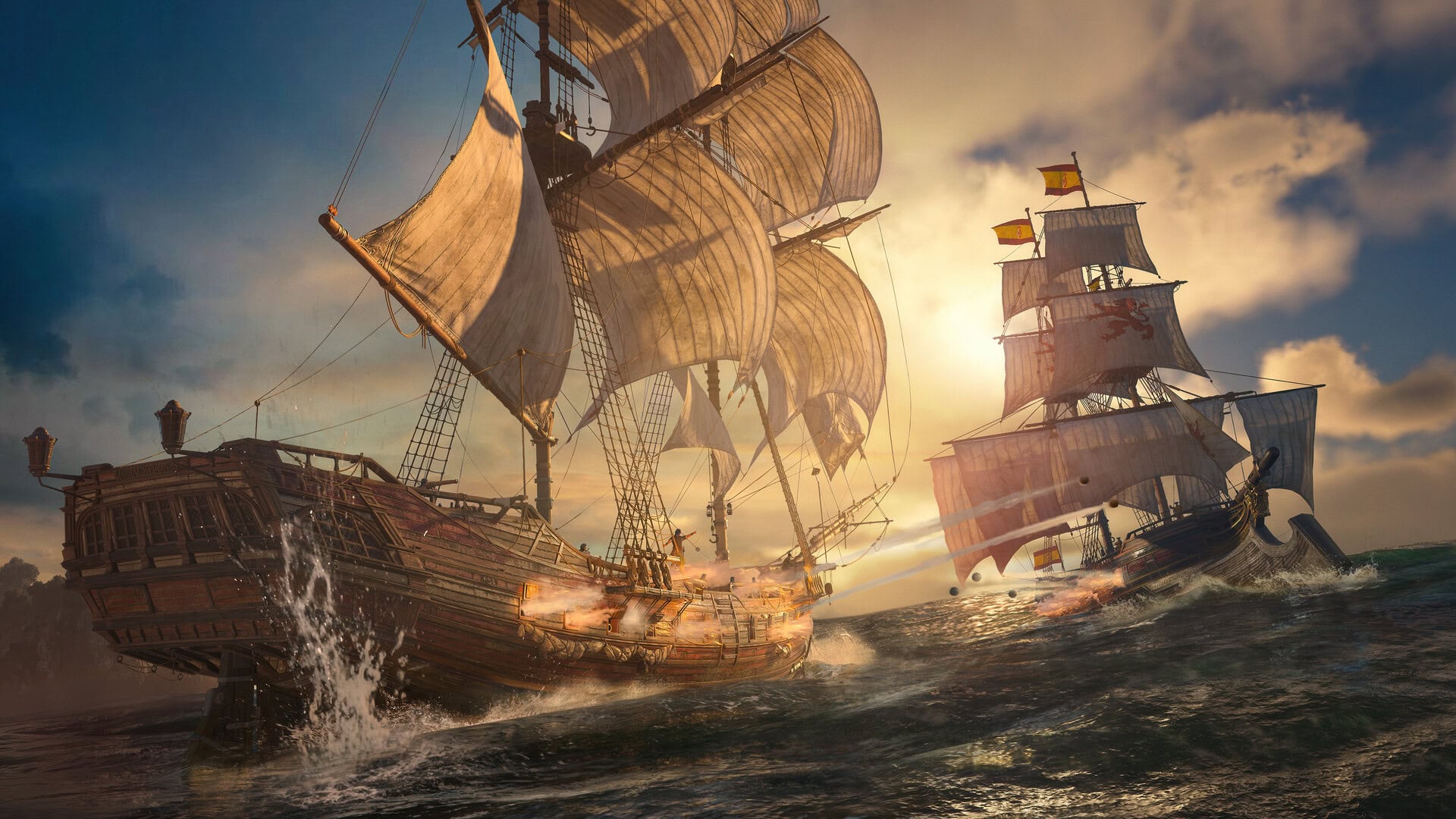
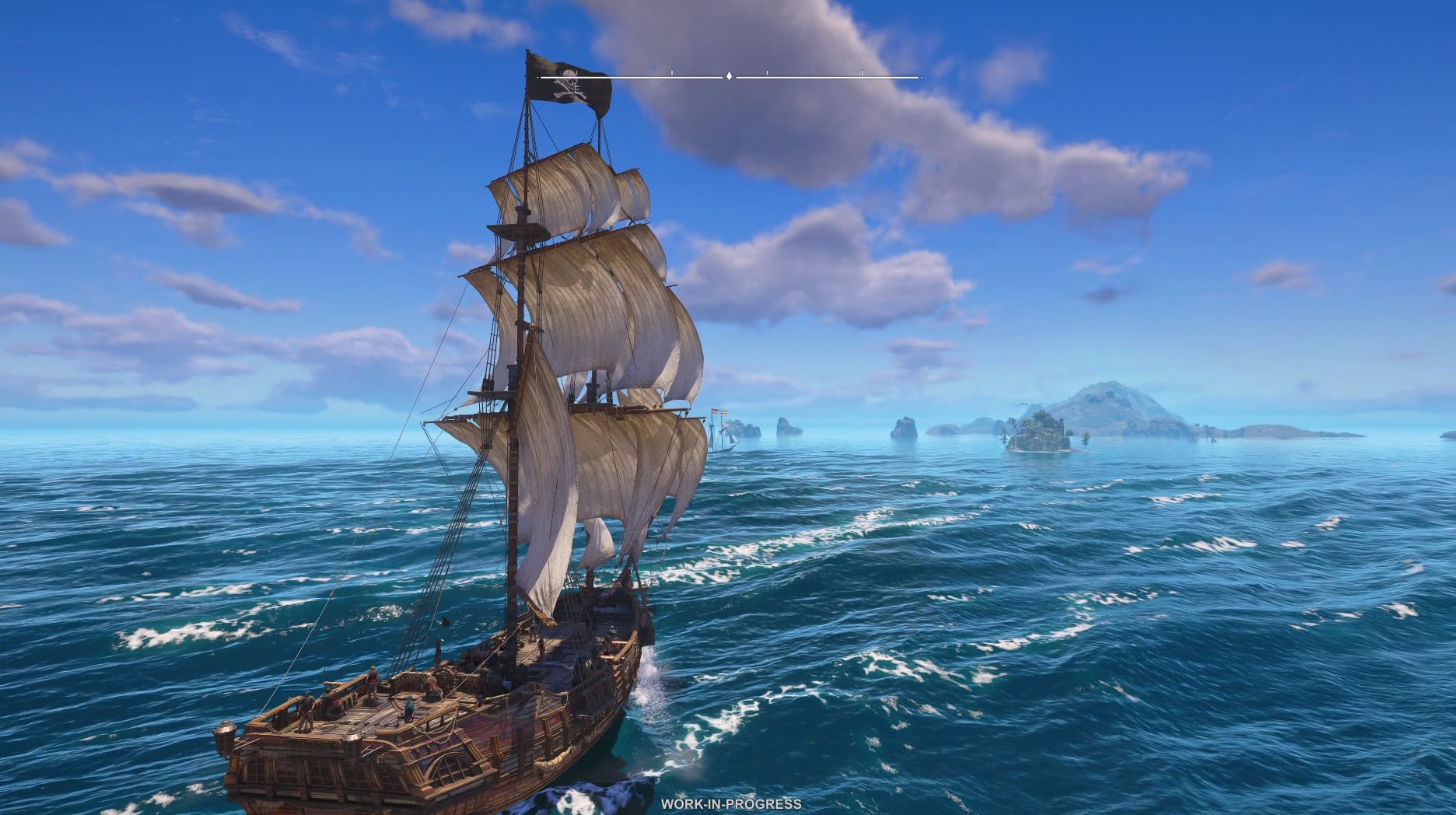
One of the strangest things about revisiting Black Flag in 2026 is realizing just how few games have managed to capture naval combat with the same confidence. Ubisoft itself has spent years chasing the magic that Black Flag stumbled into, yet somehow the Jackdaw still feels unmatched. Resynced doesn’t dramatically reinvent that formula because, quite frankly, it doesn’t need to. Instead, it builds upon it with additional weapon variations, recruitable naval officers, and subtle mechanical improvements that make every broadside feel even more deliberate.
I lost track of how many times I told myself I’d finish “just one more mission,” only to spend another hour hunting convoys, boarding frigates, and chasing legendary ships across the Caribbean instead.
That isn’t to say every modernization lands perfectly. While Black Flag Resynced does an admirable job updating systems that genuinely needed attention, there are still moments where its age quietly shows through. Enemy AI, for example, hasn’t evolved at the same pace as everything surrounding it. Guards remain surprisingly easy to manipulate once they enter their suspicious state, often lingering there long enough for you to reposition or eliminate them before they ever become a real threat. It’s one of the few reminders that, beneath all the new technology, this is still a game whose mission design was originally built more than a decade ago.
One change I’m still conflicted about is the removal of the Abstergo office sequences. The story moves with greater momentum now that you’re no longer stepping away from Edward every few missions. At the same time, those quieter moments were part of what gave the original Black Flag its unique place within the broader Assassin’s Creed mythology. They weren’t everyone’s favorite, but they constantly reminded you there was a larger story unfolding beyond the Caribbean. The new Animus Hub integration serves its purpose mechanically, yet it never quite recreates that same lingering sense of mystery. It makes Black Flag Resynced a smoother experience, but perhaps a slightly less distinctive Assassin’s Creed because of it.
It’s never enough to diminish the experience, but it is enough to keep Resynced from feeling like the definitive modernization it comes so close to becoming. For all the mechanical improvements Ubisoft Singapore has made, I kept coming back to one question while the credits rolled.
Did Black Flag actually need this remake?
It’s a fair question because, unlike some older Assassin’s Creed entries, Black Flag was never particularly difficult to go back to. The original still plays well enough today, its story hasn’t aged, and its naval gameplay has somehow remained unmatched despite Ubisoft spending years trying to recreate it elsewhere. If there was ever a game that could have survived on nostalgia alone, this was probably it.
By the end of Resynced, though, I realized I’d stopped asking that question entirely. That’s probably the biggest compliment I can give it.
A lot of remakes spend so much time trying to justify their existence that they forget why people loved the original in the first place. They add unnecessary systems, rewrite familiar moments, or chase trends that weren’t part of the game’s identity to begin with. Black Flag Resynced rarely falls into that trap. It feels less interested in replacing the original than it does in removing the small frustrations that accumulated over thirteen years, allowing everything that already worked to stand out even more clearly. Ironically, what impressed me most wasn’t any single improvement, it was Ubisoft Singapore’s restraint.
The temptation to over-modernize must have been enormous, I think every remake has that pressure. Add enough new mechanics and people question whether the original identity survived. Change too little and players ask why the remake exists at all. Resynced sits comfortably between those extremes.
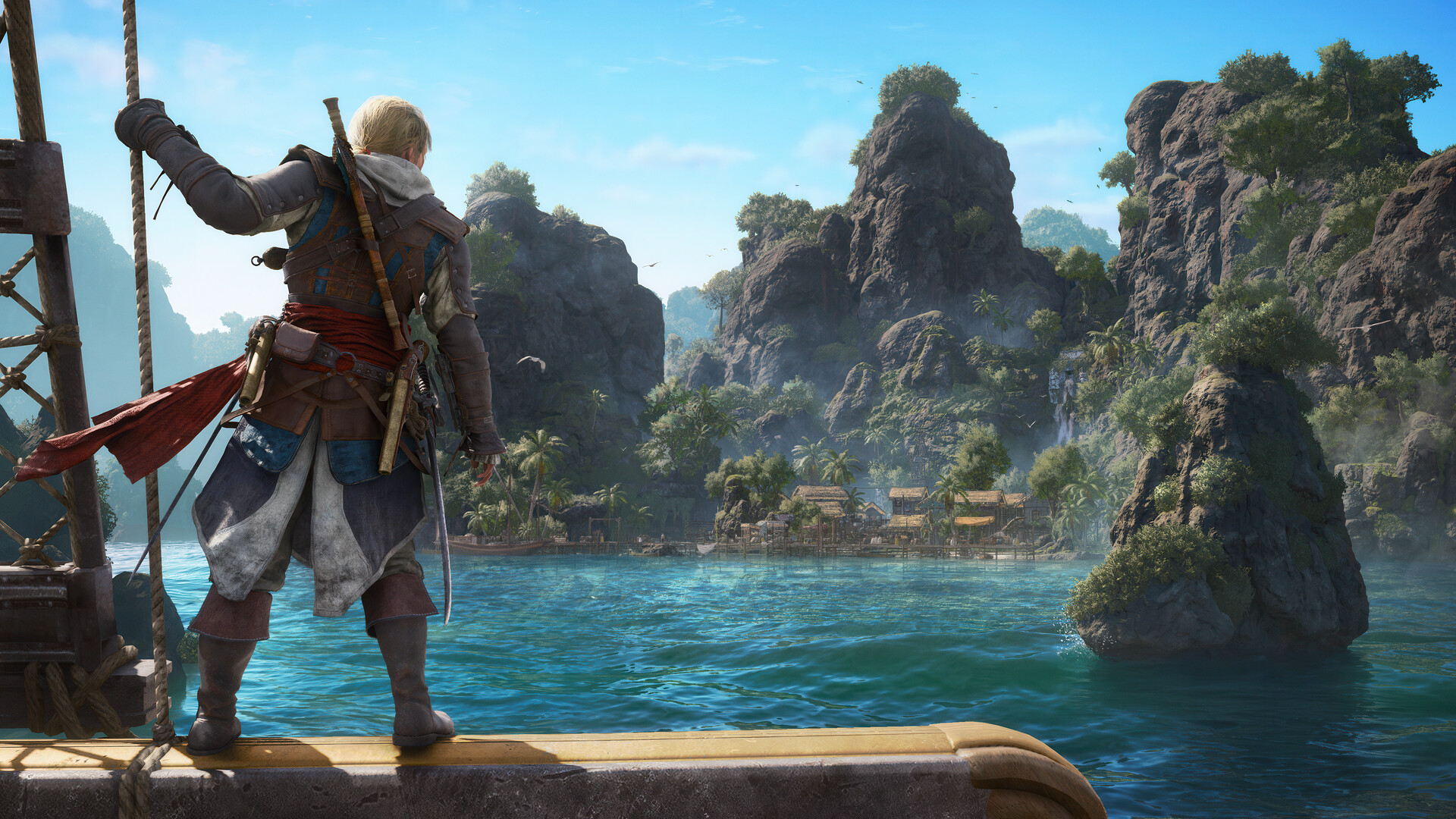
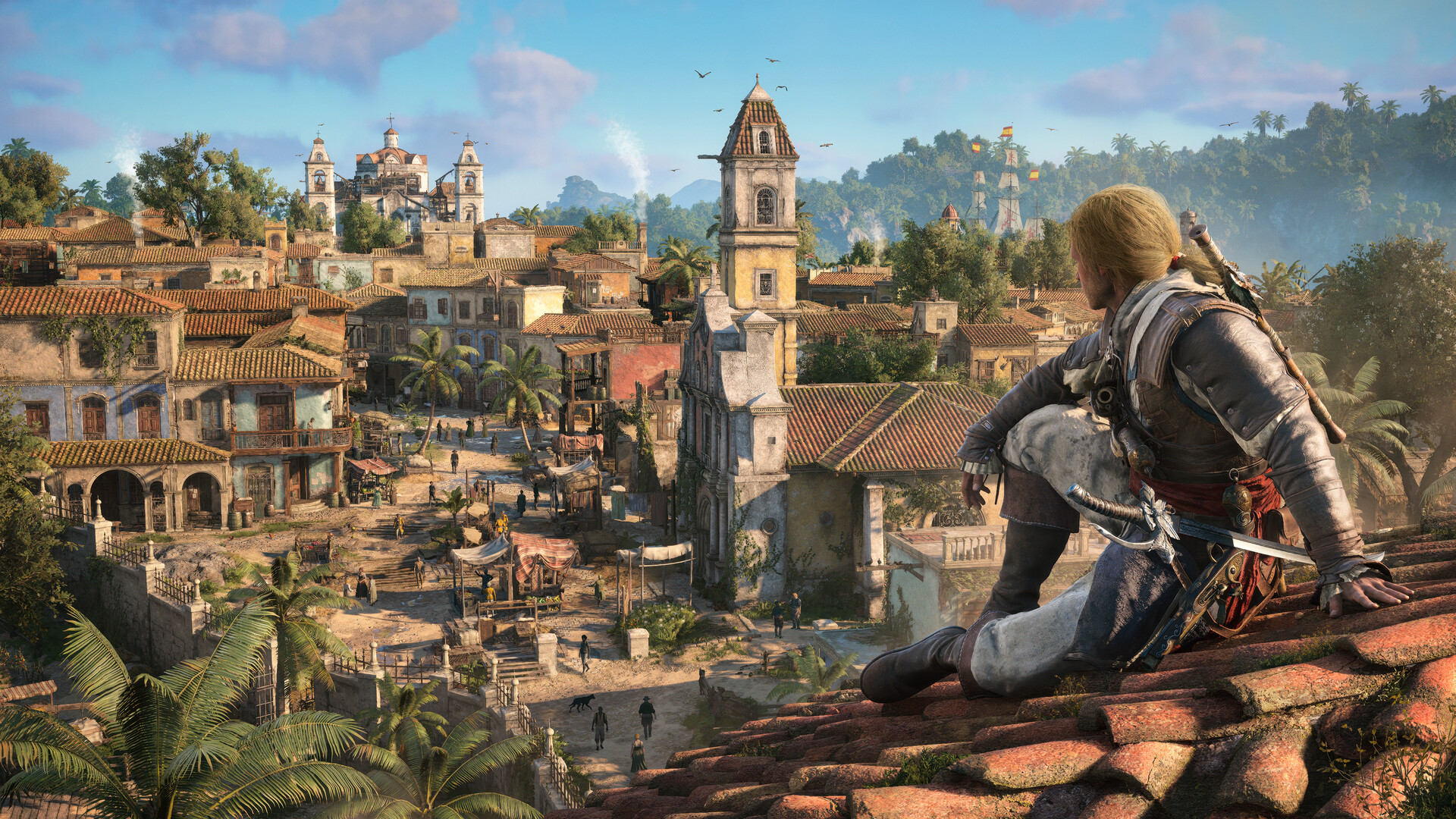
The visual overhaul immediately catches your attention, but after a few hours it fades into the background because the Caribbean simply starts feeling like the Caribbean again. Edward’s story remains the emotional core of the experience. Naval exploration still encourages that familiar “I’ll just sail a little farther” mentality. Even the quieter moments, standing on the deck of the Jackdaw while the crew breaks into another sea shanty, still have the same charm they did over a decade ago. That’s something technology alone can’t recreate.
When I previewed Assassin’s Creed: Black Flag Resynced, I said Ubisoft Singapore seemed to understand exactly what players wanted from this remake. After finishing the full game, I think the studio understood something even more important. Players weren’t asking for Black Flag to become a different game. They were asking for Black Flag to feel the way they remembered it.
Memory has a habit of smoothing rough edges, hiding technical limitations, and turning great games into flawless ones. Black Flag was never flawless. It had clunky movement, inconsistent stealth, and systems that occasionally showed their age even back in 2013. Resynced doesn’t pretend those things never existed. Instead, it addresses most of them carefully, leaving behind a version of Black Flag that feels familiar without becoming trapped by nostalgia.
Thirteen years later, Edward Kenway’s story still stands among Ubisoft’s finest, the Caribbean remains one of the most inviting worlds the series has ever created, and sailing the Jackdaw across open waters is somehow just as difficult to put down as it was the first time. That isn’t just because Black Flag was ahead of its time. It’s because some adventures simply deserve another voyage.
Assassin's Creed: Black Flag Resynced (PC)
Assassin's Creed: Black Flag Resynced is exactly what a remake should be. It respects one of Ubisoft's finest games by modernizing its rough edges without losing the heart that made it unforgettable. While a few aging design decisions and the streamlined modern-day elements stop it from being the definitive version in every respect, Edward Kenway's story, the revitalized Caribbean, and still-unmatched naval gameplay make this the best way to experience Black Flag today.
The Good
- Edward Kenway remains one of Assassin's Creed's finest protagonists
- Meaningful gameplay refinements that respect the original's identity
- Naval combat is still among the best Ubisoft has ever created
- Beautiful visual overhaul
- Additional story content strengthens an already excellent narrative
The Bad
- Enemy AI and some legacy movement quirks occasionally show the game's age