

While I’ve always been familiar with the Fatal Frame series, I’ve never actually played one until know. I’ve been intrigued by the premise of using a camera to exorcise ghosts which is a far cry from the survival horror I’m accustomed too. And I have to say, getting the chance to review the Fatal Frame II: Crimson Butterfly Remake made me realize how much I was missing out.
It’s still surprises me to realize that Koei Tecmo is the publisher of the Fatal Frame series. I usually know them for publishing games that have a lot of action, like Dead or Alive or even Ninja Gaiden. Likewise, the Fatal Frame II: Crimson Butterfly Remake is also developed by Team Ninja who are the developers of the above mentioned games.
I’ve never played the original Fatal Frame II, so I had to do a bit of research to know the differences between the original and the Crimson Butterfly Remake. It’s been a very long while since the last new Fatal Frame game, nearly ten years in fact. With the remake finally releasing for 2026, will this promise a return to this niche survival-horror franchise?
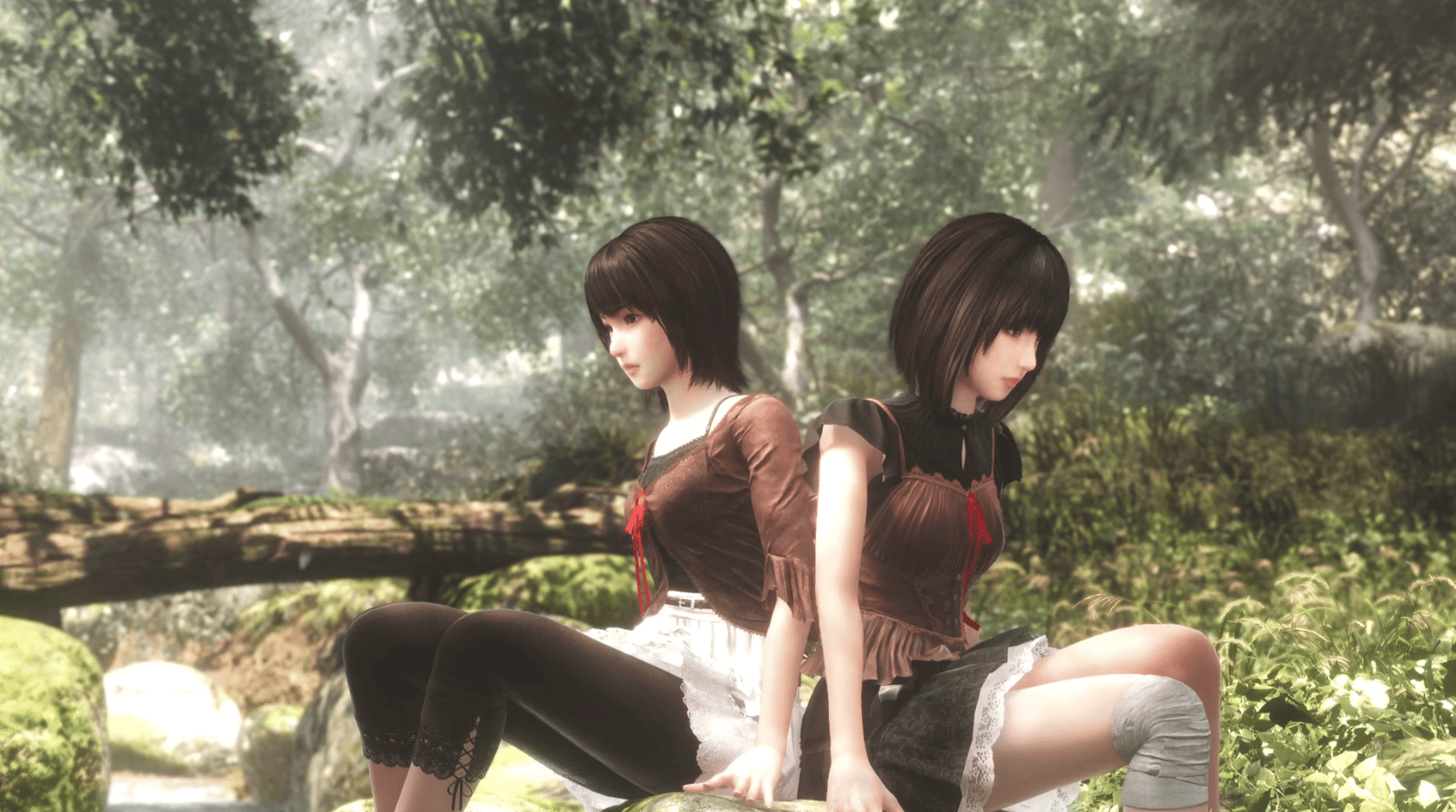
Fatal Frame II: Crimson Butterfly Remake embraces the modern standard of a third person over-the-shoulder camera view. The original Crimson Butterfly released in 2003 had fixed camera angles because it was popular for horror games at the time to do so. With the new per perspective, you’re more close and personal with the horrors of the Minakami Village before you even pull out Camera Obscura.
It’s not just the perspectives either. The models and textures have also been upgraded to the point that the characters don’t look anything like their original 2003 selves. Interestingly enough, it’s not the first time Fatal Frame II has been remade. There’s actually a Wii edition released in 2012 called Deep Crimson Butterfly which also featured a different perspective, updated character models, and even changed the age of the protagonists.
The question is if the Fatal Frame II: Crimson Butterfly Remake will attract newcomers and veterans alike to push the series forward. Since I never played the original or the Wii version of the game, I can’t comment too much on those.
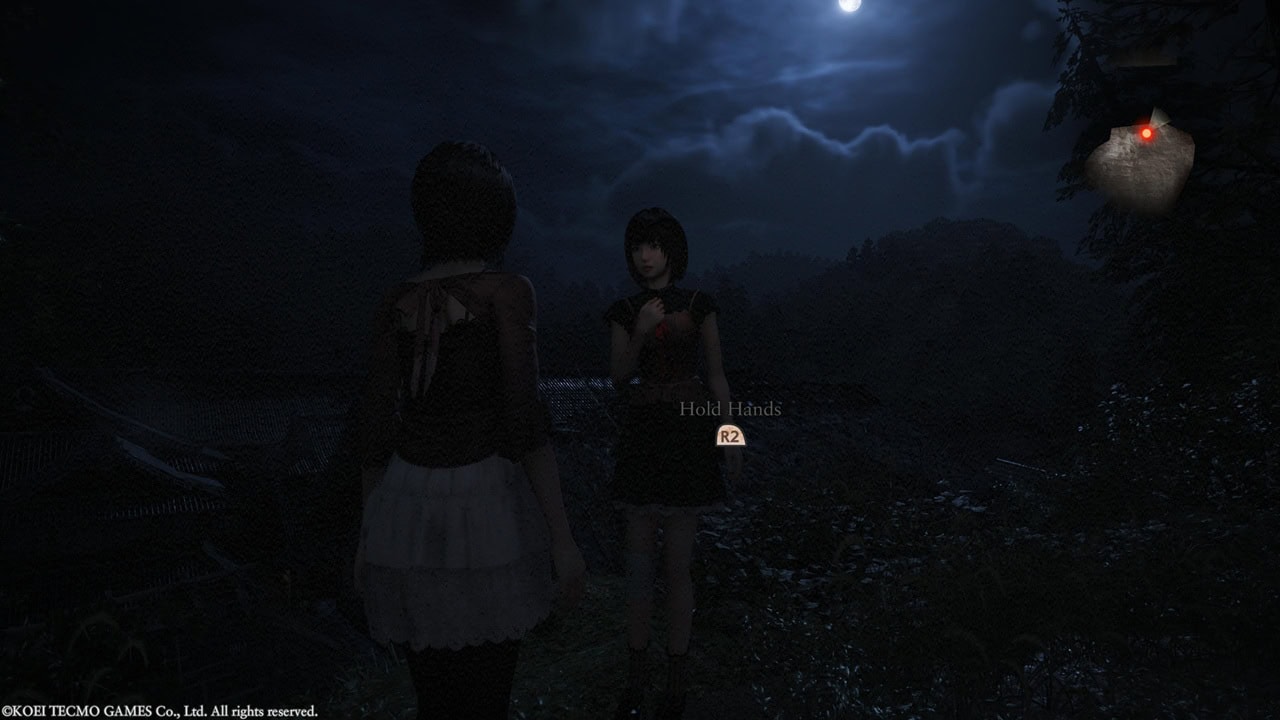
The first thing I can think of when it comes to Fatal Frame II: Crimson Butterfly Remake is that it is overwhelming at the very beginning. The game over encumbers you with tutorial after tutorial that it made the game feel more complex to learn than it actually is.
Unlike other horror games which have you swinging around some kind of weapon or shooting monsters with guns, you can’t really do those things against spirits. The unique aspect of Fatal Frame is the Camera Obscura which allow you to exorcise ghosts by taking photographs of their presence in the living world.
It’s scarier than it sounds because an effective exorcism doesn’t just involve a simple photograph. You have to get up close and personal, enough to really see the gory details, to banish these ghosts from the world of the living. And they don’t exactly sit still so you can take their best features in.
Also, I’m not really sure if it’s a design choice or some sort of limitation, but the Fatal Frame II remake is stuck on 30 FPS. At first, I thought that maybe due to limitations, but upon thinking about it more, the lower frame rate does make the game feel scarier and probably a lot more faithful to the original 2003 release.
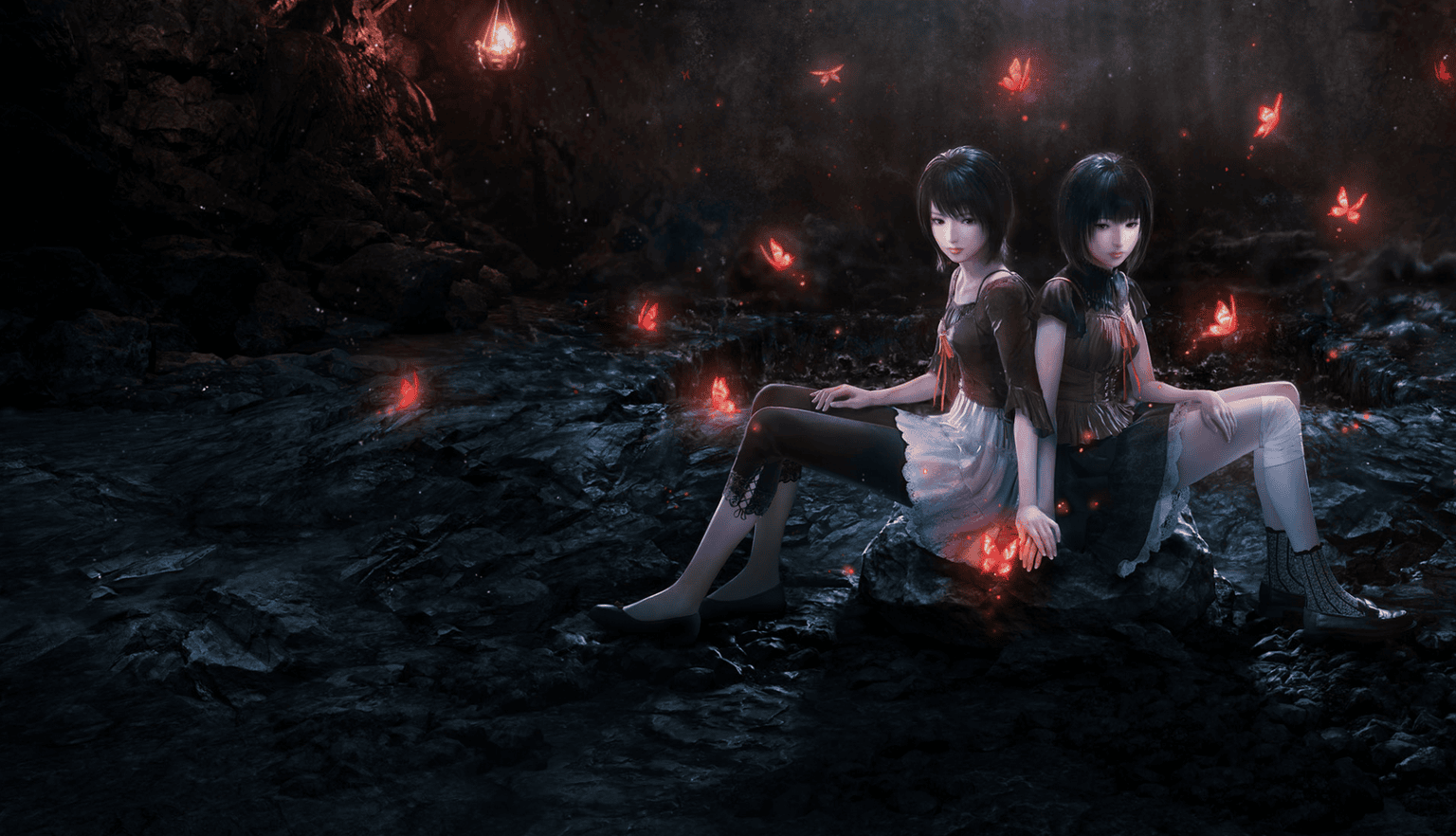
The story of Crimson Butterfly centers around a pair of twins, Mio and Mayu, who end up being stuck in Minakami Village after visiting an old spot they used to go to as children. In this village, the twins are haunted by malicious ghosts that can only be exorcised by an artifact Mio picks up called the Camera Obscura.
As the twins are forced to go through the village in order to find some means of escape, Mayu begins to act strangely which forces Mio to chase her deeper into the haunted realm. Our protagonist, Mio, faces against the corrupted souls of Minakami Village, called Wraiths, to ensure her and her twin make it out safely. Mio discovers revelations about the cruel secret of this haunted village.
The story of Crimson Butterfly is intriguing as it dives into Japanese folklore centered around rituals, evil spirits, and malicious curses. I can’t help but wonder what would happen next. The only problem is that I don’t really feel attached to any of the characters. Neither Mio nor Mayu strikes me as particularly endearing. In their defense, it’s probably because there isn’t much time or opportunity to set up their characters while they’re being haunted by ghosts.
Regardless, the Minakami Village has a lot of environmental story telling. There are a lot of notes left behind from previous inhabitants that give you a glimpse of the horror that happened but also side stories where you’re able to resolve the issues of the spirits stuck in the world of the living. In typical survival-horror fashion, you’ll also be tasked with solving puzzles in order to proceed, which usually involve placing things in the correct order.
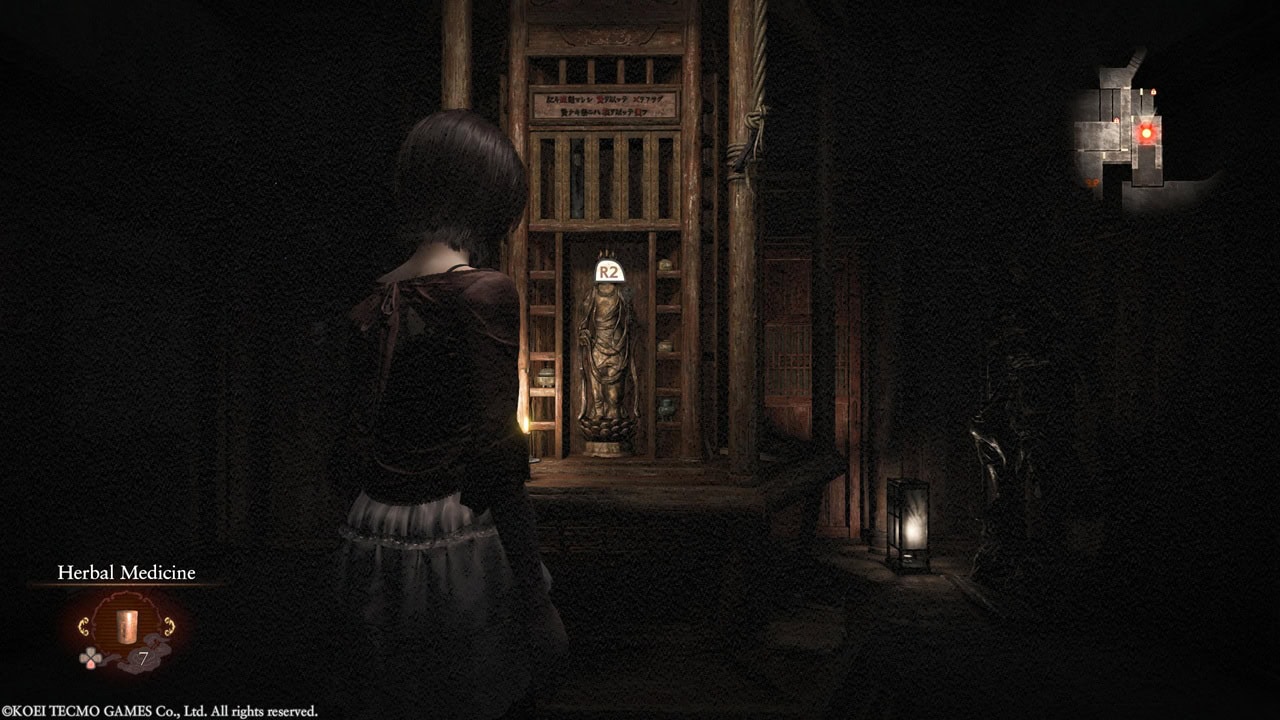
Despite being brought into the modern third-person view of an over-the-shoulder perspective, the controls for Crimson Butterfly nevertheless felt a bit awkward at first. Mio feels sluggish to move around and never moves faster than a snail’s pace when running away. I’m guessing this is due to balancing concerns because the ghosts in the game can be slow.
The menu on the PS5 is strangely tied to the square button by default which confused me because the options button wasn’t really being used for anything. I’m not sure if this was like that in the original 2003 version but they could’ve simply went with the options button to do this. Thankfully, you can switch the controls to something you’re more comfortable with.
Crimson Butterfly has about everything you can expect in a survival-horror. While you also have to take care of Mio’s health, Mayu can also be damaged by spirits, and it’s a game over if she takes enough damage. However, you also have Willpower, which is new to the remake. Willpower depletes when you’re running from ghosts, getting grabbed, dodging, or charging up special shots using the Camera Obscura. It’s essentially a do-it-all stamina bar that, once depleted, makes Mio much more vulnerable.
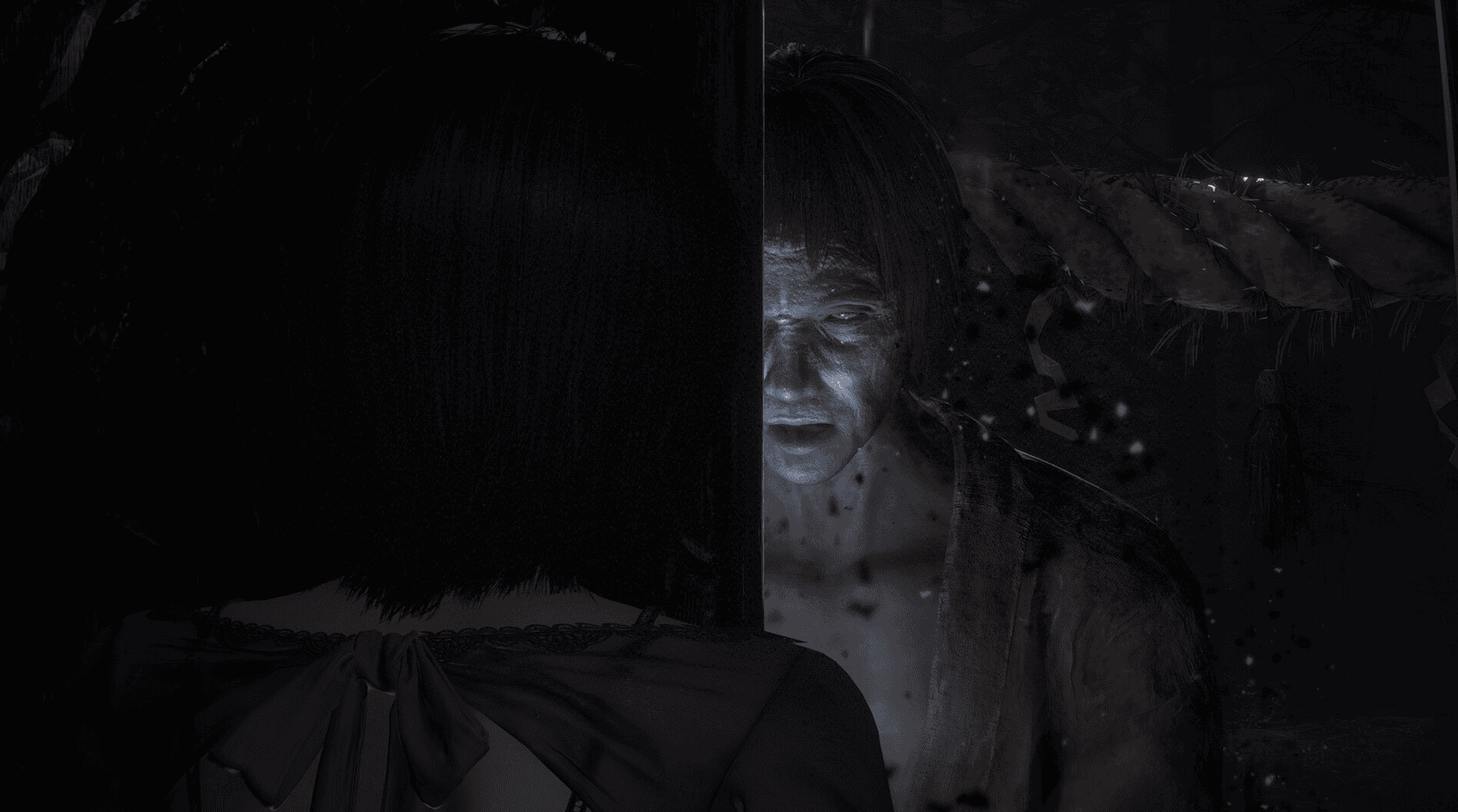
The Fatal Frame II: Crimson Butterfly Remake also carries an interesting mechanic that I think I should mention. Whenever you open a door, or at times pick up an item, the game slows down as Mio carefully slides the door open or reaches out to grab something. During this, you can cancel by using the dodge button at any time. I didn’t really know why this was here until I found out about the leer mechanic. If a Wraith gazes at you in the eye, there is a jump scare, and Mio will be drained of her Willpower. This is why you need to cancel before a ghost surprises you when performing even this simple action.
This made even the simple act of moving through rooms intense, as enemies can surprise you when you’re just picking up items or opening doors. It’s a pretty creative mechanic, I’ll give it that. Though I’m not fond of jump scares, the anticipation of each interaction I do sort of make them an integral part of the game.
Speaking of which, Crimson Butterfly is a story about twins. Because of the theme, you also get to play escort with Mayu, and there’s even a mechanic where you hold her hand which helps heal Health and Willpower.
The Camera Obscura is a second protagonist on its own. It actually carries more personalities than our playable protagonist. It’s not just your only weapon in fighting against the spirits haunting Minakami Village, it’s also a useful tool helpful in navigating and discovering secrets.
Camera Obscura has several film types, which are essentially your bullets in any other game. You have the standard Type-07, which is very weak but is infinite. Then you have stronger films like the Type-74 and Type-90, which are more finite and should be saved for when you’re in a pinch. You can find these film types throughout the game but you can also buy them from the save point if you’ve unlocked them as items on the store.
The camera also has several other tricks, like filters, that can help in environmental puzzles. These filters have special abilities, like one that lets you track ghosts, restore previous states of a certain area, or break seals covered in bloody handprints. It’s a bit hard to keep track of what each filter can do.
You can also upgrade Camera Obscura to have additional mechanics. Like being able to adjust focus or even zoom in. Honestly it’s a bit intimidating trying to remember everything it can do especially remembering which film type is which but thankfully they’re all color coded so it’s easier to remember.
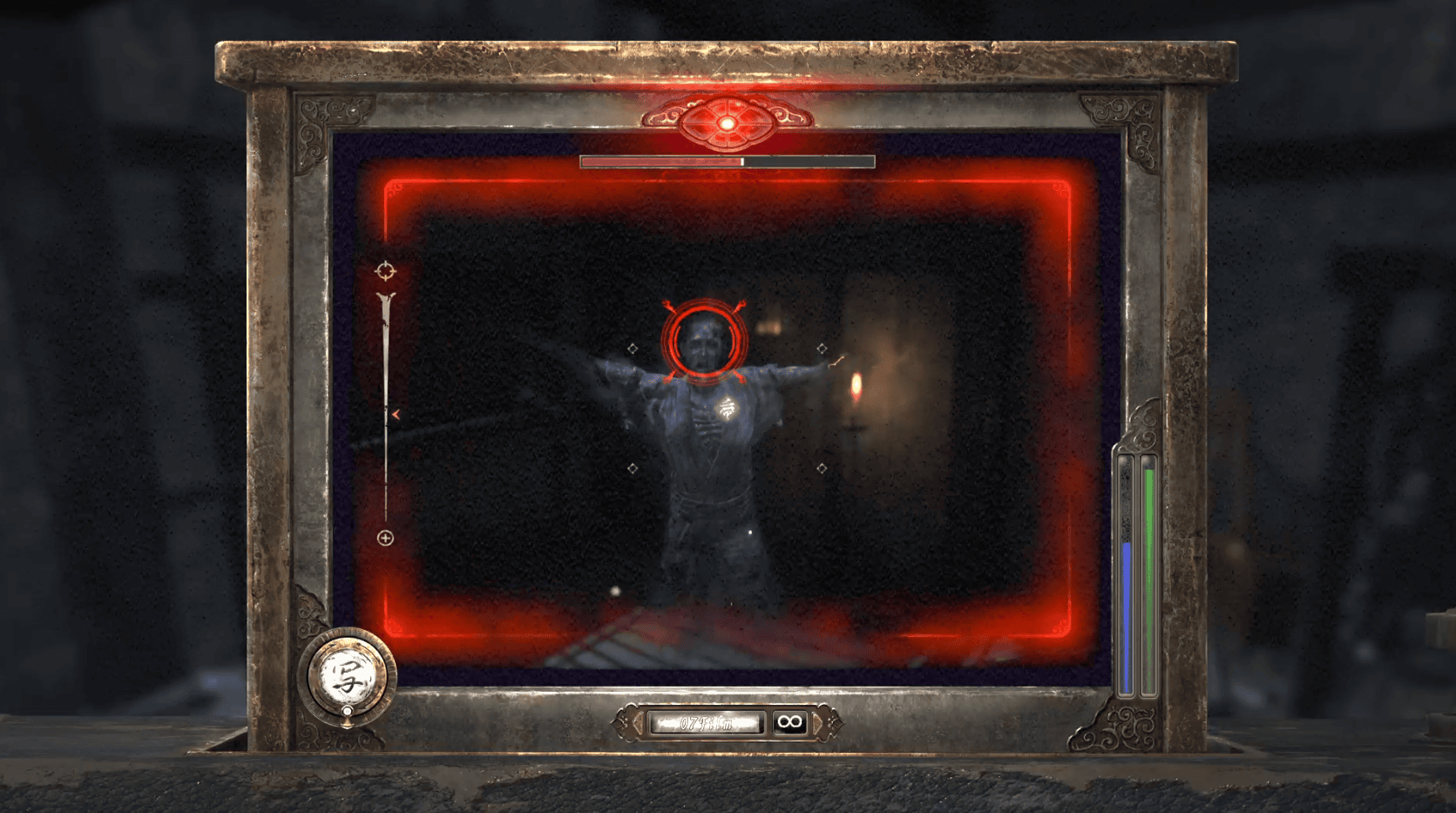
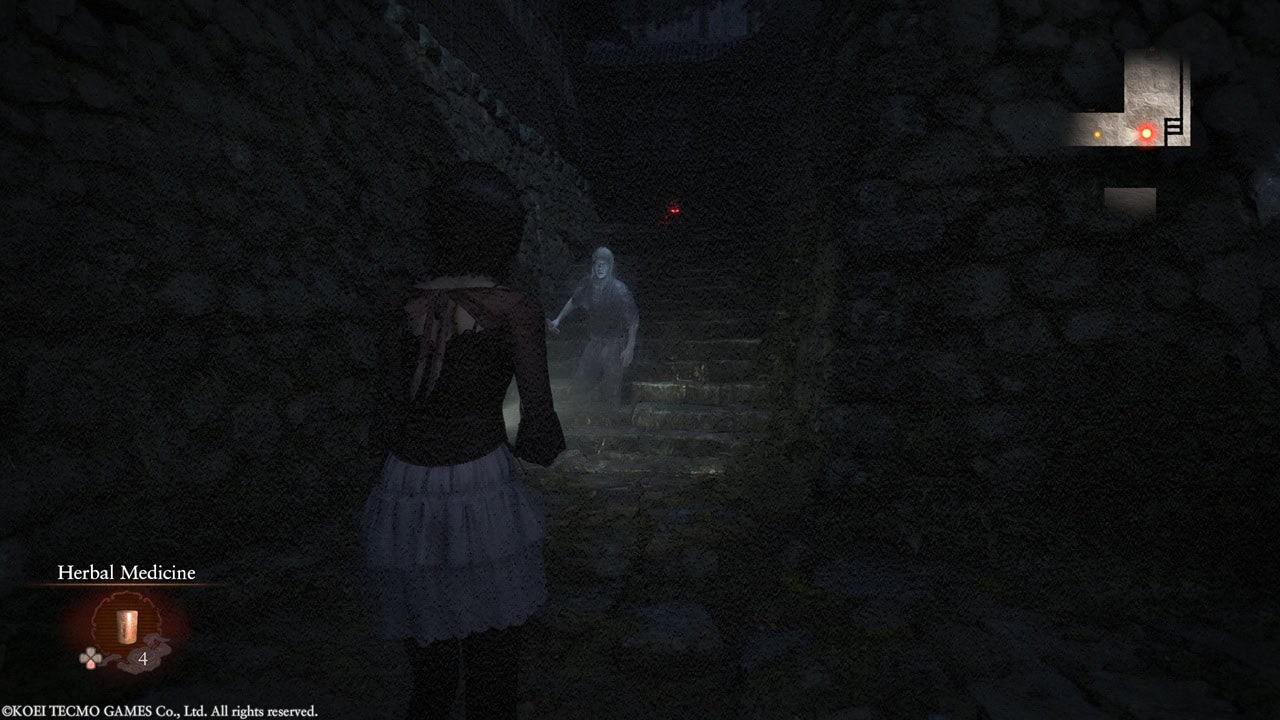
The other half is combat with Wraiths, the evil spirits haunting Minakami Village. Mio can dodge, provided she has enough Willpower to do so. If she gets grabbed or subjected to a leer, that Willpower does get drained. If she runs out, Mio won’t be able to charge up special shots with Camera Obscura and will be knocked down, allowing Wraiths to do heavy-hitting grab attacks.
When capturing pictures of Wraiths, you’re often encouraged to get them close and time your shot just before they do an attack. It’s a bit generous, as the game literally displays everything you need in bright red lights when a ghost is about to hit you, complete with an audio clue. Camera Obscura even comes with a spirit sensor by default, which tells you which direction a Wraith as they can disappear in front of you to attack from a different angle.
It’s sometimes also difficult to fully see what’s going on in Crimson Butterfly. The game has this grainy effect that, when combined with the 30 FPS limit on the PS5, make it a bit hard to focus as it can feel like you’re watching it from an old VHS tape. While it does make it scarier to play, it can be a bit straining on the eyes.
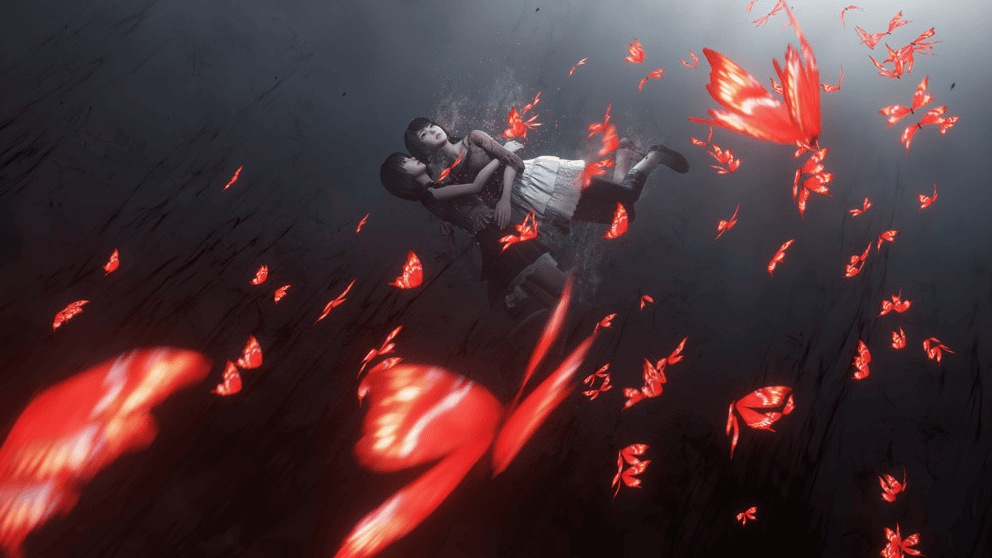
The Fatal Frame II: Crimson Butterfly Remake is scary. If it’s one thing Team Ninja nailed down it’s the atmosphere. And this is coming from someone who doesn’t really find most of Japanese horror to be all that scary. It’s amusing to think that the developers responsible for the jiggle physics of Dead or Alive are this capable of making a horror game.
While I did find the characters to be a bit flat, the story of Crimson Butterfly is interesting. It’s less about two sisters finding a way out of the hellhole they find themselves in and more about learning the disturbing stories of Minakami Village. Fatal Frame has always been a niche series but I think survival-horrors fans will find that Fatal Frame II is a great entry for newcomers.
Fatal Frame II: Crimson Butterfly Remake
The Fatal Frame II: Crimson Butterfly Remake is a great survival horror game and an even better entry for those looking to get into the series. It does have flaws regarding the execution of its story but its atmosphere and overall presentation are more than enough to forgive its shortcomings.
The Good
- Camera Obscura feels good to use
- Presentation and atmosphere is excellent for a horror game
- Tons of unlockables encouraging thorough exploration
The Bad
- A bit too many jumpscares
- Controls can be a bit sluggish
- Characters feel difficult to be attached to
- 30 FPS limit on the PS5 and film grain can be hard on the eyes