Tides of Tomorrow presents itself as a narrative-focused adventure built around choice, atmosphere, and slow-burn world-building. In my time with the preview build, I explored the opening segment of the game, which introduced its core mechanics and tonal direction without revealing the larger arc.
In an era where so many games feel eager to impress within the first five minutes, this one seems comfortable letting the atmosphere do the work. It opens quietly. You explore. You listen. You absorb. And whether that approach works for you will likely define your experience.
From the outset, the game leans heavily into mood. Environmental storytelling plays a central role, and traversal unfolds at a measured pace. Rather than overwhelming players with mechanics, the preview build gradually introduces interaction systems, encouraging exploration and observation.
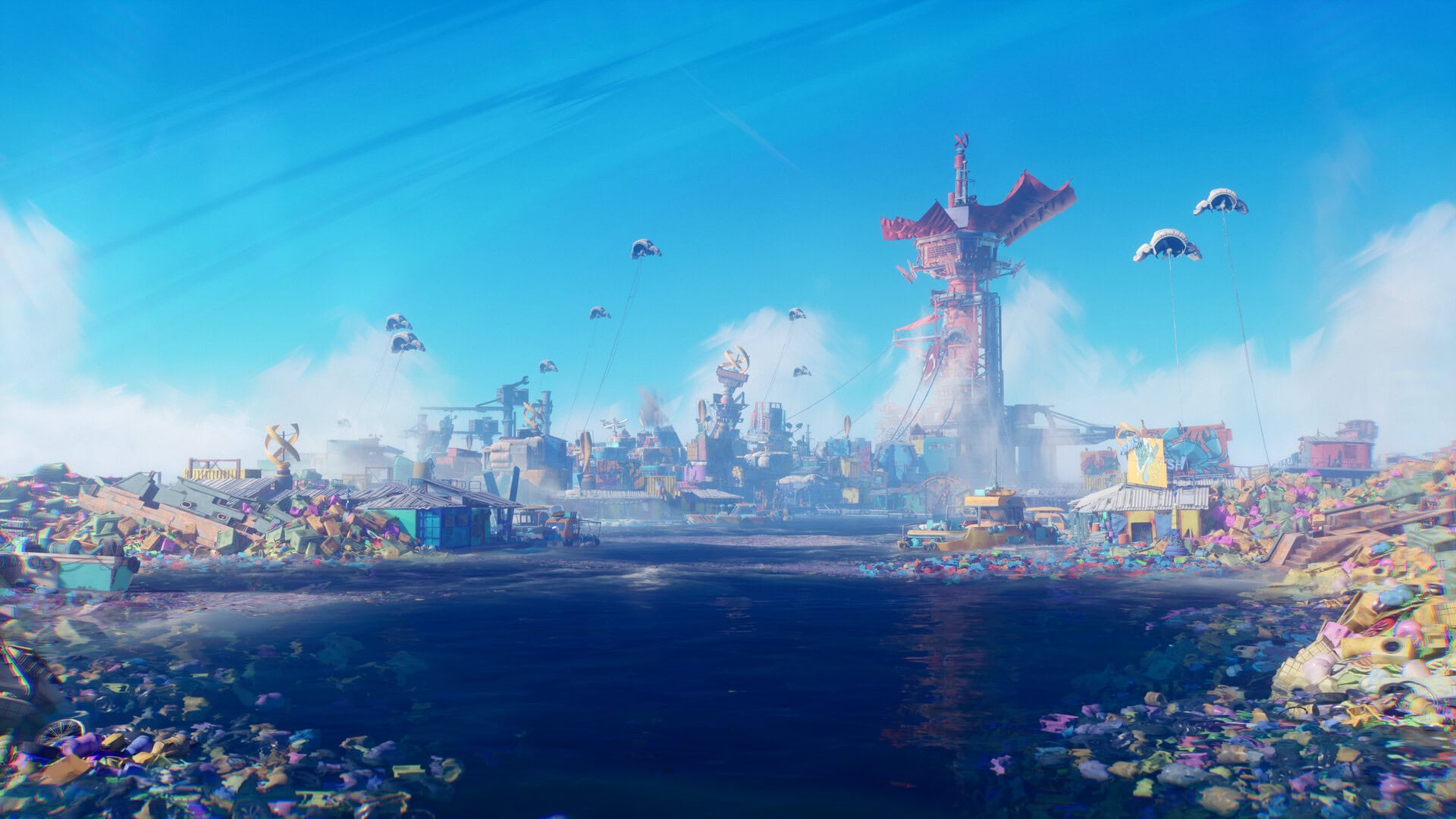
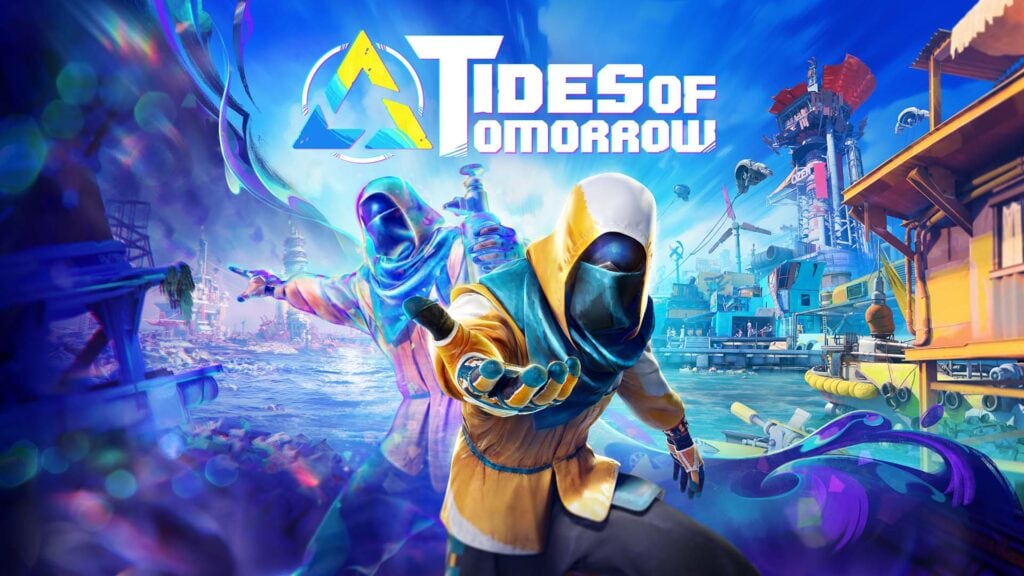
Tides of Tomorrow feels like it exists in a space between flooded dystopia and exaggerated toy-box surrealism. The world has this strange mix of harsh, cinematic desolation and bright, almost artificial textures that give it a personality of its own. The character designs lean toward exaggerated proportions, with faces and silhouettes that are instantly readable even from a distance. It’s not trying to look realistic. It’s trying to look distinct. And most importantly, Tides of Tomorrow doesn’t rush you.
Dialogue appears to be one of the game’s primary pillars. What I appreciated is that choices aren’t framed as obvious “good versus bad” decisions. They’re contextual. Sometimes you’re choosing between honesty and restraint. Other times, it’s about empathy versus detachment. The nuance suggests a game that wants players to think rather than simply optimize outcomes.
I found myself slowing down more than I expected. Instead of sprinting from objective marker to objective marker, I caught myself lingering in rooms, reading documents, listening to optional dialogue. The game encourages that behavior without forcing it. However, I did notice that a few conversations ran slightly longer than necessary. The writing is solid, but some exchanges could benefit from tighter editing. It’s not a major flaw, but in a game that leans so heavily on dialogue, pacing becomes critical.

That said, it’s still a preview build. Long-term consequences weren’t fully visible within the slice I played. It’s possible the full game will deepen those branching paths. It’s also possible some of them resolve more linearly than they initially appear. For now, the foundation is promising.
The setting in Tides of Tomorrow feels deliberate rather than flashy. It revolves around a world slowly collapsing under a disease called Plastemia, a condition that quite literally turns people into hardened plastic. It’s a bleak concept, but the game doesn’t drown you in misery. Instead, it places you in the role of a Tidewalker, someone capable of navigating this fractured world while carrying a rare ability that separates you from everyone else.
The environments aren’t overwhelming with visual noise, but they are detailed in ways that reward attention. Small environmental cues hint at past events. Conversations feel placed with purpose. Nothing feels randomly constructed.
Based on my time spent with an early preview build on PC via Steam for Tides of Tomorrow, what stood out immediately wasn’t spectacle or mechanical complexity, but tone. Tides of Tomorrow is clearly positioning itself as a narrative-forward adventure that prioritizes mood and player choice over speed or combat-driven pacing.
Tidewalkers can glimpse the actions of other players through distortions scattered across the world. These void-like echoes reveal decisions previously made, paths taken, and consequences left behind. Sometimes that means spotting the aftermath of a confrontation. Other times it means noticing an alternate route that someone uncovered before you.
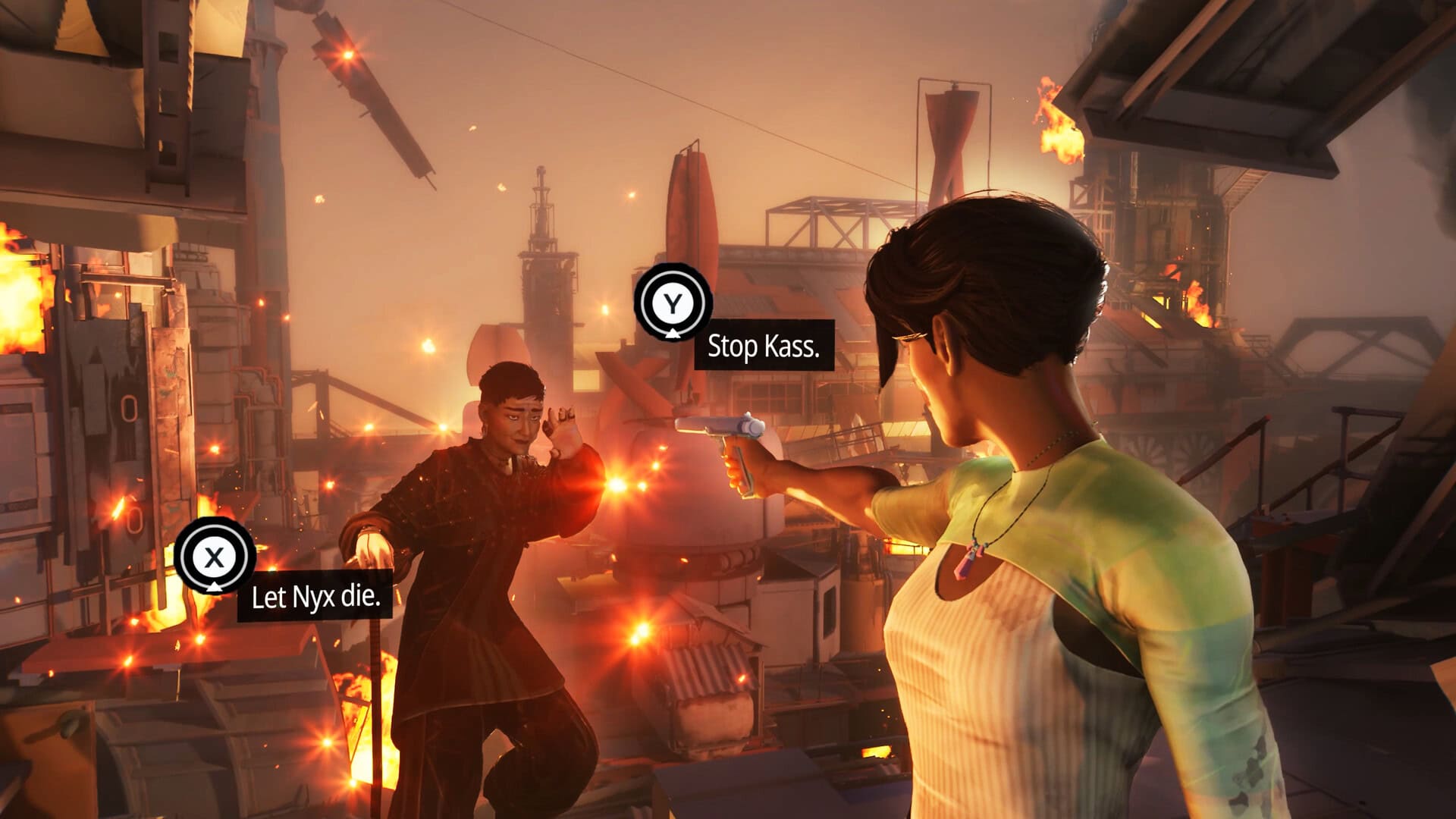
You’re free to follow those choices or ignore them entirely. The game doesn’t force alignment. It simply shows you what came before and leaves the decision in your hands. The asynchronous system made itself known in subtle but meaningful ways. Like arriving at a fortified location that had already been disturbed resulted in heightened security. In another instance, an area felt unusually welcoming, a quiet sign that someone ahead of me had chosen diplomacy rather than aggression.
Performance-wise, the Steam preview build ran smoothly on my setup. I played the preview build on my PC, which is running an RTX 3080 Ti, and performance never became a distraction. Frame rates held steady during exploration and even in the more visually layered sections. I did not run into crashes or sudden hitches that pulled me out of the experience. For an early build, it felt comfortable rather than fragile.
As someone who spends a surprising amount of time playing on the Steam Deck, I couldn’t help but think about how this would feel in handheld form. Tides of Tomorrow seems almost tailor-made for it. The slower pacing, dialogue-heavy structure, and exploration-first design make it easy to imagine playing this in shorter sessions on the couch or while traveling.
This isn’t the kind of game that demands twitch reflexes or mouse precision. It encourages patience. You read. You listen. You move at your own pace. That kind of rhythm tends to work beautifully on the Deck. As long as the final build handles text scaling and controller prompts cleanly, I can easily see this being one of those narrative adventures that feels even more intimate on a smaller screen.
I did not test this particular build on a Steam Deck, so I cannot speak to performance numbers there. Still, nothing about the design suggests it would struggle on smaller hardware. If text scaling and controller prompts are handled properly in the final release, I would not be surprised if this becomes one of those games that feels more natural curled up on a couch than sitting upright at a desk.
After finishing the preview build, I walked away curious rather than convinced. Tides of Tomorrow shows clear creative intent. It has a defined tone. It understands its identity. The world feels cohesive. The dialogue system hints at meaningful reactivity.
But the real test will be sustainability. Can the narrative momentum hold across a full-length campaign? Will player choices meaningfully alter outcomes, or simply flavor the journey? Will mechanical systems expand in ways that complement the story rather than distract from it?
The preview build offers glimpses. It doesn’t answer everything. And that’s fine.