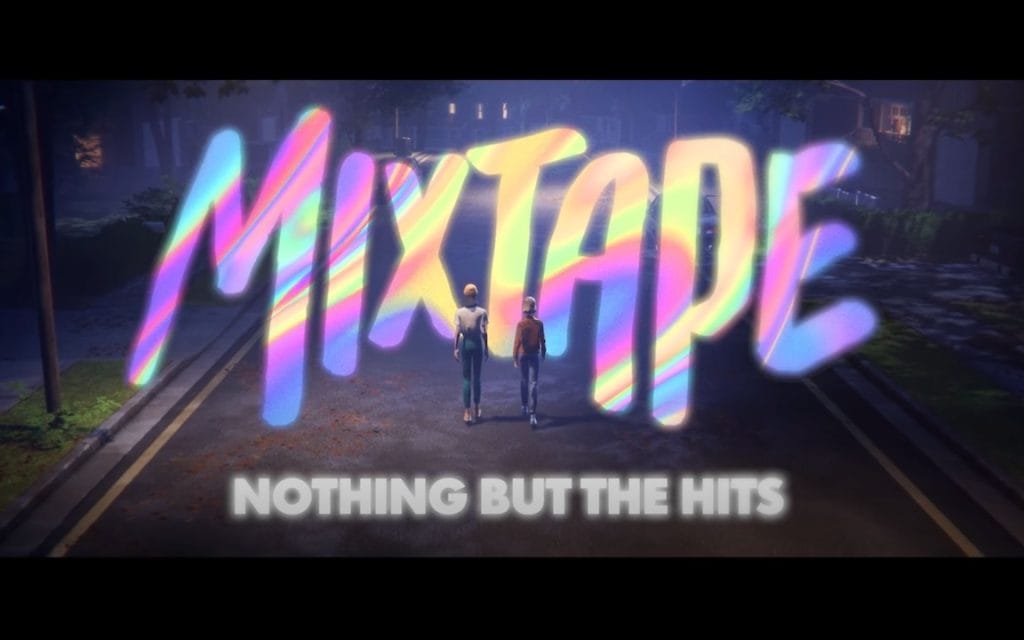
Developed by Beethoven & Dinosaur and published by Annapurna Interactive, Mixtape arrives with a clear sense of identity from the very beginning. This is a studio that has already proven it understands how to tell stories through feeling rather than spectacle, and Mixtape continues that trajectory with a quieter, more grounded focus on connection, memory, and the fleeting nature of growing up.
What surprised me wasn’t that it was emotional. That part felt expected. What caught me off guard was how quickly it stopped feeling like I was experiencing someone else’s story and started feeling like I was revisiting pieces of my own. Growing up as a millennial, where your life was somehow measured in songs, late-night conversations, and the people who were there for both, Mixtape taps into something that’s hard to replicate without feeling forced. It doesn’t try to remind you of the past. It just places you back in it.
Mixtape doesn’t follow a traditional narrative structure, and it’s better for it. Instead of building toward a single, clearly defined arc, the story unfolds through a series of moments that feel like they’ve been pulled from memory rather than scripted in sequence. You move through experiences the same way you remember them, unevenly, sometimes out of order, with certain scenes carrying more weight than they probably should because of how they made you feel at the time.
At the center is a group dynamic that immediately feels real. It would be easy to frame it as a straightforward coming-of-age connection, but that undersells what the game is actually exploring. It’s more about the space between people, the way certain connections form without needing to be defined, and how those relationships shape who you are long after the moment itself has passed.
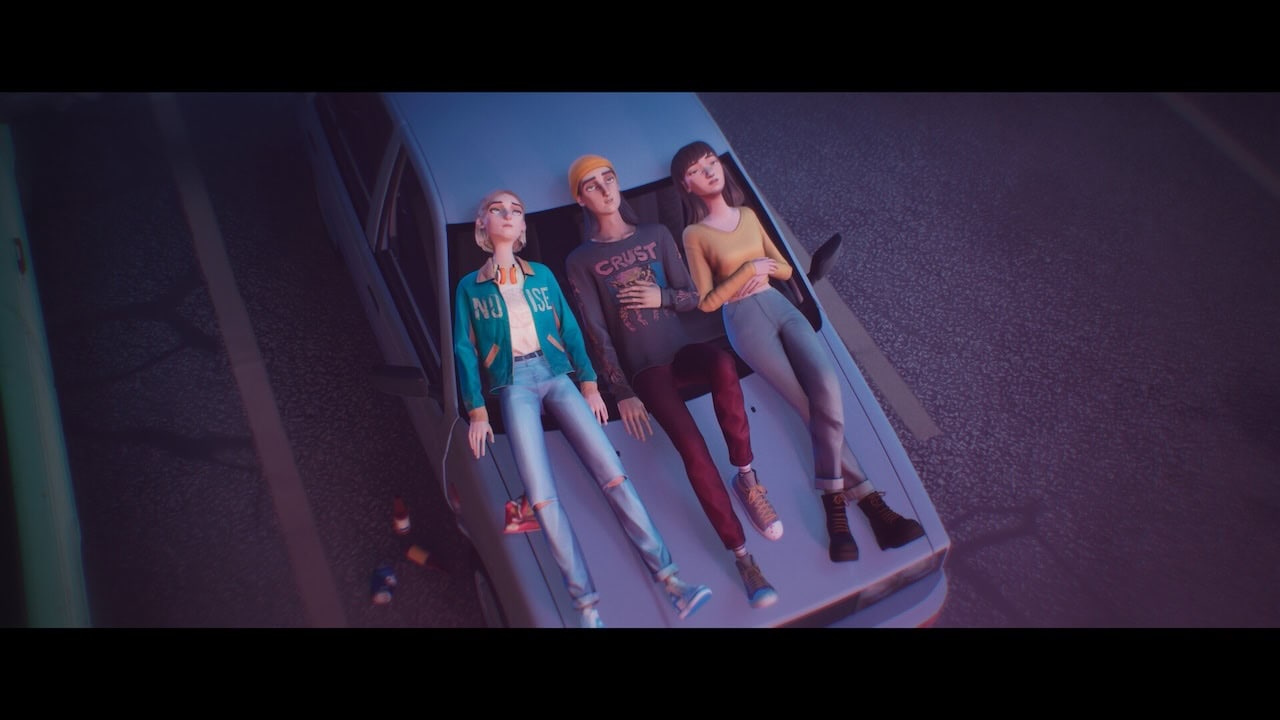
The dialogue is where this lands the hardest. It doesn’t feel written in the traditional sense. Conversations drift, overlap, sometimes say too much, sometimes not enough. It’s messy in a way that feels natural, like real friendships tend to be. There are jokes that don’t land perfectly, awkward pauses, and those small exchanges that don’t seem important until you realize later that they were.
As someone who grew up in that environment, where the people around you mattered just as much as anything you were doing, it felt uncomfortably familiar in the best way.
If the story is built on memory, the music is what holds everything together. Mixtape doesn’t treat its soundtrack as something that sits in the background. Every track feels like it’s defining the moment it’s attached to. Scenes don’t just play out with music behind them, they unfold because of it. There’s a rhythm to how everything is paced, where the song choice, the visuals, and the interaction all line up in a way that feels deliberate.
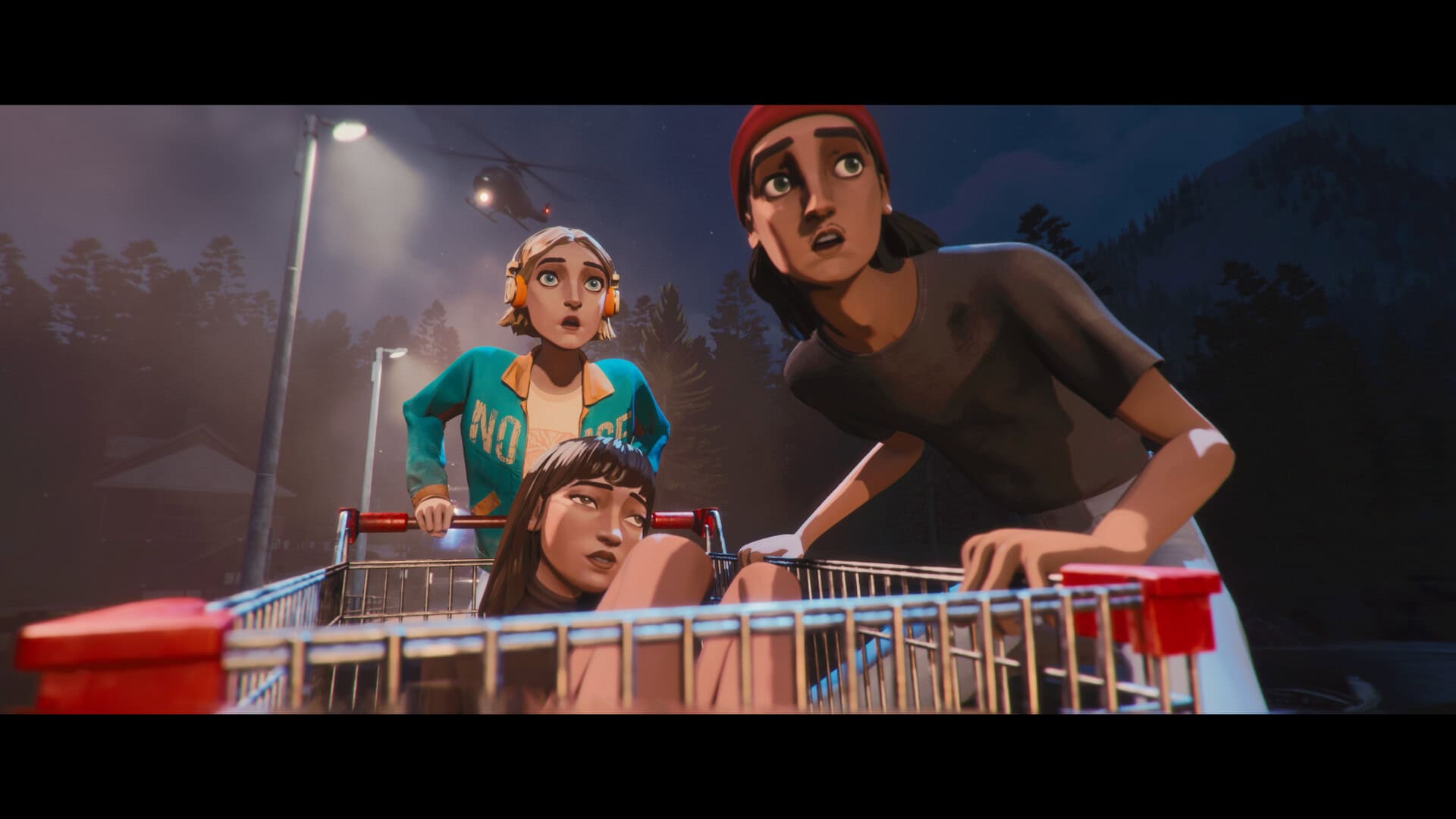
Growing up, music wasn’t just something you listened to. It was tied to specific moments, specific people, and specific versions of yourself. You hear a song years later and suddenly you’re back in that exact place again. Mixtape understands that completely.
There are moments where the music builds alongside what’s happening, and others where it disappears entirely, leaving silence to carry the scene. Those quieter stretches end up being just as impactful, because by then, the game trusts you to sit with what you’re feeling instead of telling you what to feel. It’s one of the few times where a soundtrack doesn’t just support a game, it becomes part of how you experience it.
From a gameplay perspective, Mixtape is intentionally minimal. Rather than building systems for you to master, it moves through a series of interactive sequences that feel more like lived-in moments than structured gameplay loops. Some are playful, some are reflective, and some exist purely to let you sit in a feeling for a little longer than you normally would.
That simplicity might sound like a limitation, but it never feels like one. It gives everything else space to breathe. You’re not distracted by mechanics or progression systems. You’re present in what’s happening, even if what you’re doing is relatively straightforward. At times, it doesn’t even feel like it’s trying to be a game in the traditional sense, and that’s exactly why it works. It understands that its strength isn’t in what you do, but in what you take away from it.
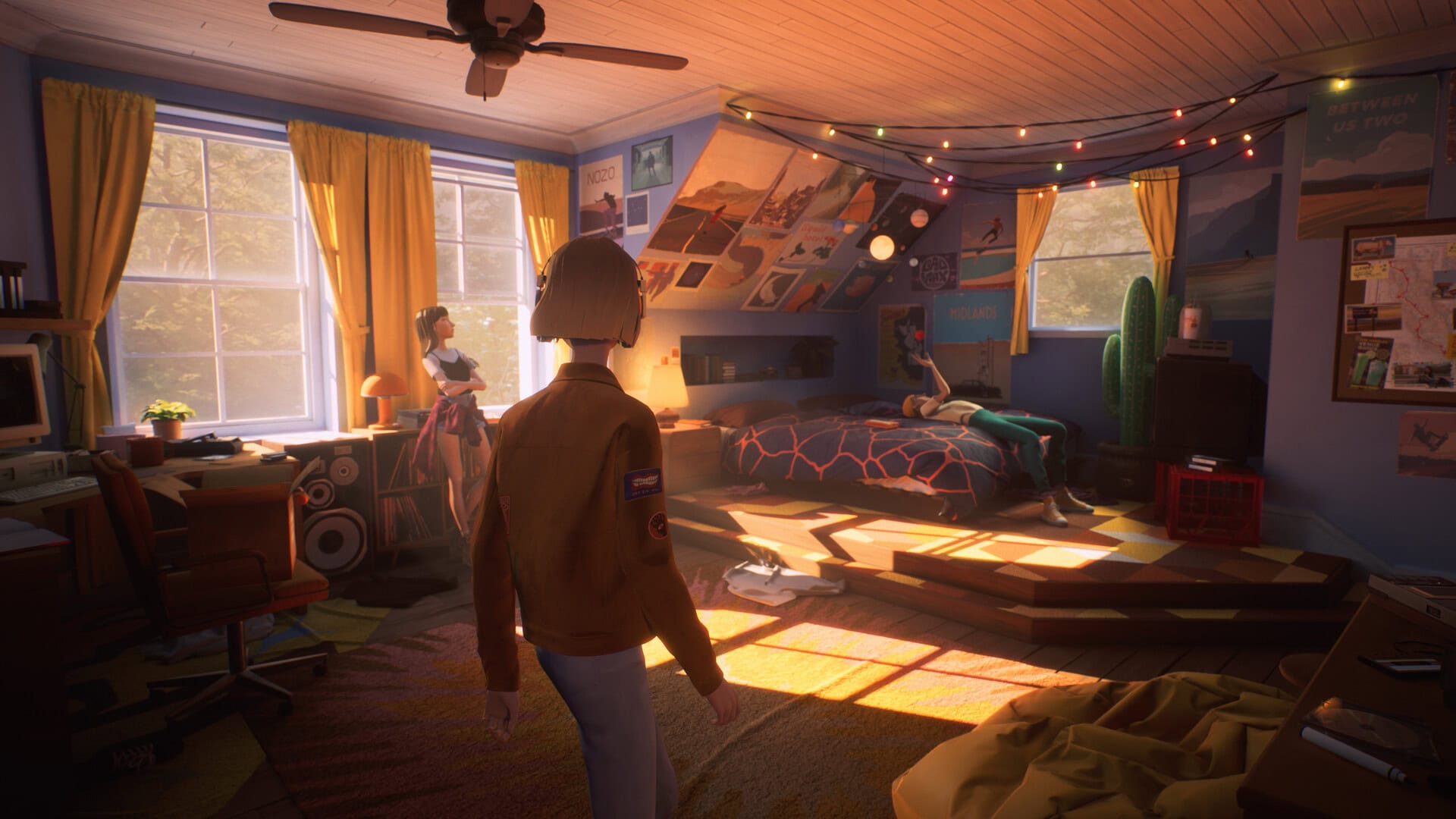
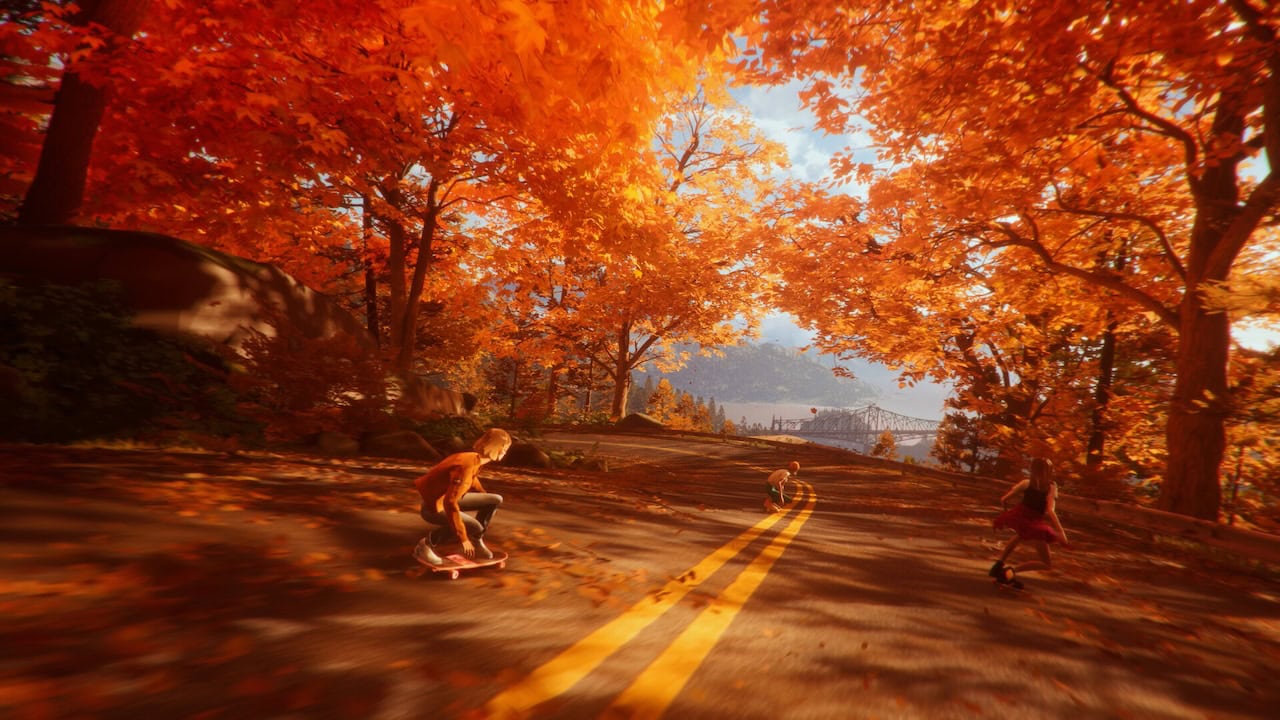
Visually, Mixtape commits fully to a stylized, soft-shaded 3D approach that feels deliberately crafted rather than conventionally rendered.
It doesn’t chase realism or push for technical spectacle in the way many modern games do, and that ends up being one of its greatest strengths. Character models are expressive rather than intricate, relying on animation, posture, and subtle gestures to convey emotion instead of high-fidelity detail. Environments follow the same philosophy. They don’t try to cram everything with detail, instead, they’re set up in a way that naturally draws your attention to what matters in the moment.
There’s a distinct sense of control in how everything moves. Animation feels timed and intentional, often aligning with the rhythm of the moment or the music beneath it, which gives each sequence a kind of presence that feels closer to memory than reality. It’s not stop motion, but it carries that same sense of deliberate movement, where nothing feels accidental and everything exists exactly where it needs to be.
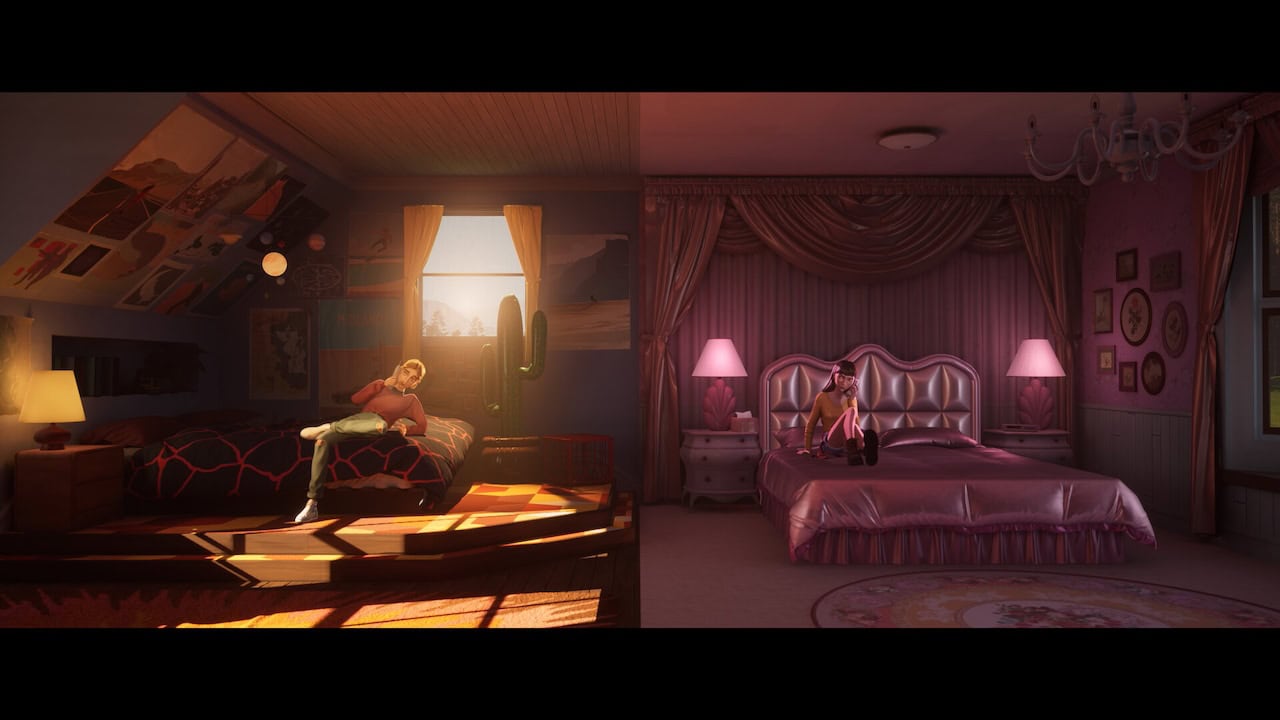
From a technical standpoint, that direction allows the entire experience to remain consistent. Performance stays smooth, transitions between scenes feel seamless, and the game shifts tone visually without ever breaking immersion. Lighting does more than illuminate a space, it shapes how you interpret it, often adjusting to reflect emotional beats rather than physical accuracy.
What stands out most is how cohesive it all feels. Even when the game experiments with perspective, editing style, or visual tone, it never feels disjointed. Every element feeds into the same core idea, that you’re not simply moving through a world, but through a series of curated, lived-in memories. In short, it looks like a playable music video made out of memories.
On PC, Mixtape runs smoothly from start to finish. Frame rates remain stable, transitions between scenes are seamless, and there were no crashes or technical issues during my playthrough. It’s not a demanding game, but that stability matters for something so reliant on immersion, nothing gets in the way of the experience.
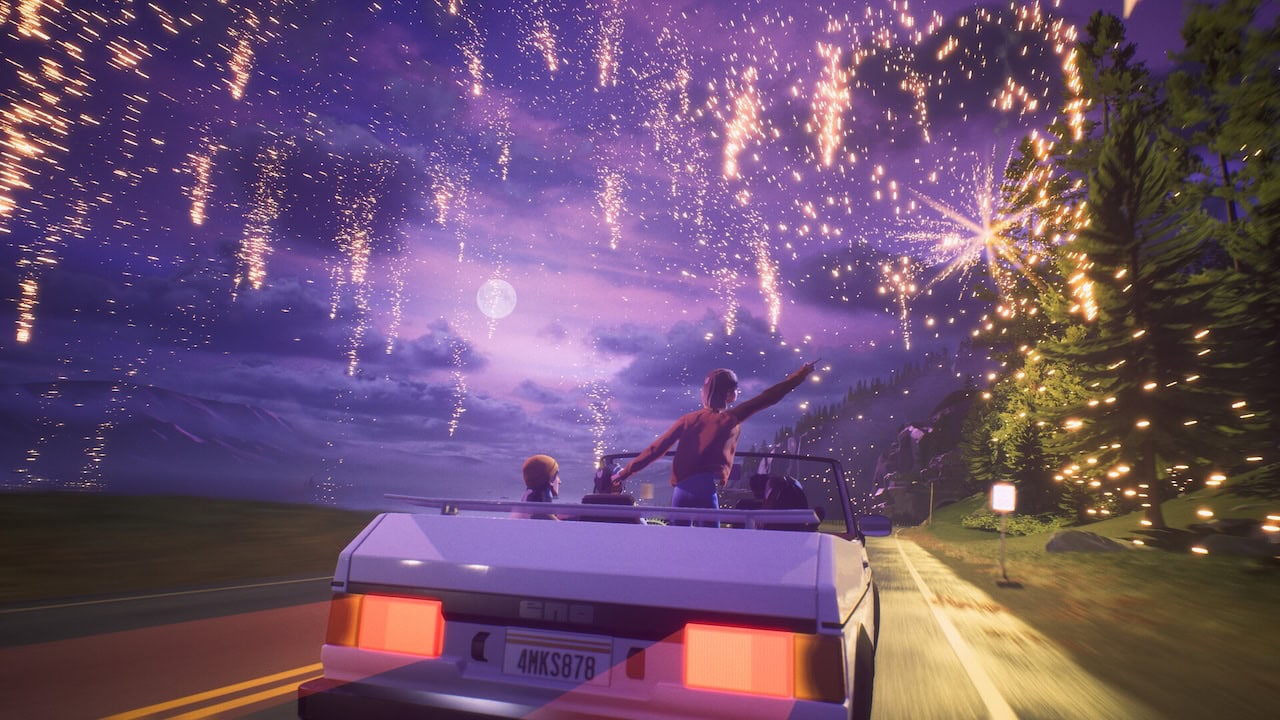
Overall, I would say Mixtape doesn’t try to be everything, and that’s exactly why it succeeds. It focuses entirely on telling a story about growing up, about connection, about the moments that feel small while they’re happening but end up defining you later. Everything around that, the music, the visuals, the pacing, works together to support that idea without pulling in different directions.
Mixtape is one of those rare experiences that feels completely confident in its identity. It doesn’t chase complexity, and it doesn’t try to appeal to everyone. Instead, it focuses on capturing something specific, the feeling of youth, of friendships that feel permanent even when they aren’t, and of moments that only seem important once they’re already behind you.
It’s not just nostalgic. It understands why nostalgia matters. For me, it didn’t feel like playing a game as much as it felt like revisiting something I didn’t realize I missed.
This review is based on a review code provided by the developer/publisher.
Mixtape (PC)
Mixtape is a narrative-driven experience that uses music, atmosphere, and character-driven storytelling to recreate the feeling of growing up in a way that feels deeply personal. It’s mechanically simple, but that simplicity allows its emotional core to stand out, making it one of the most memorable and affecting games in its genre.
The Good
- Deeply personal coming-of-age story that feels authentic and emotionally grounded
- Exceptional use of music as a core storytelling pillar, not just background
- Well-written dialogue that captures real friendships and connections
- Consistently memorable moments that linger long after the experience ends