
I’ve never thought that it would come to a day where we see a remake of the much-loved Assassin’s Creed IV: Black Flag. The closest thing we could have probably gotten is a remastered version of Black Flag, but no, Ubisoft Singapore went for a full remake. Built from the ground up using the latest game engine they used for Assassin’s Creed: Shadows, the Anvil Engine, Black Flag Resynced will sit right well amongst the modern action-adventure games today.
I was given a chance to play 3-4 hours of Assassin’s Creed: Black Flag Resynced last week at Ubisoft Singapore. And I have to say, if you loved Black Flag, you will definitely like what they’ve added to the game — it’s not just a visual overhaul, Black Flag Resynced is something more.

What immediately stood out to me within the first hour was just how different the game feels moment-to-moment. At its core, this is still the Assassin’s Creed IV: Black Flag we all remember — naval combat, open exploration, and Edward Kenway’s swagger are all intact — but the way you interact with the world has clearly been modernized.
Combat, in particular, is where the biggest leap happens. The addition of a proper parry system completely changes the approach to combat. There’s a weight to every encounter, and that “umph” you feel isn’t just visual, it’s carried heavily by the sound design. Every successful parry lands with a satisfying metallic clash that reinforces impact in a way that the original didn’t have. It makes you want to engage enemies rather than avoid them. And it’s not just about defense. The follow-ups after a successful parry feel more impactful as you’re able to immediately eliminate enemies with a takedown move.
Stealth also got some improvements thanks to the Anvil Engine. Enemy awareness feels more consistent, less predictable in a good way. Guards react faster to suspicious movement, and positioning matters more. It’s not overly punishing, but it nudges you to actually think like an assassin again: observe patrol routes, use elevation, and take advantage of distractions.
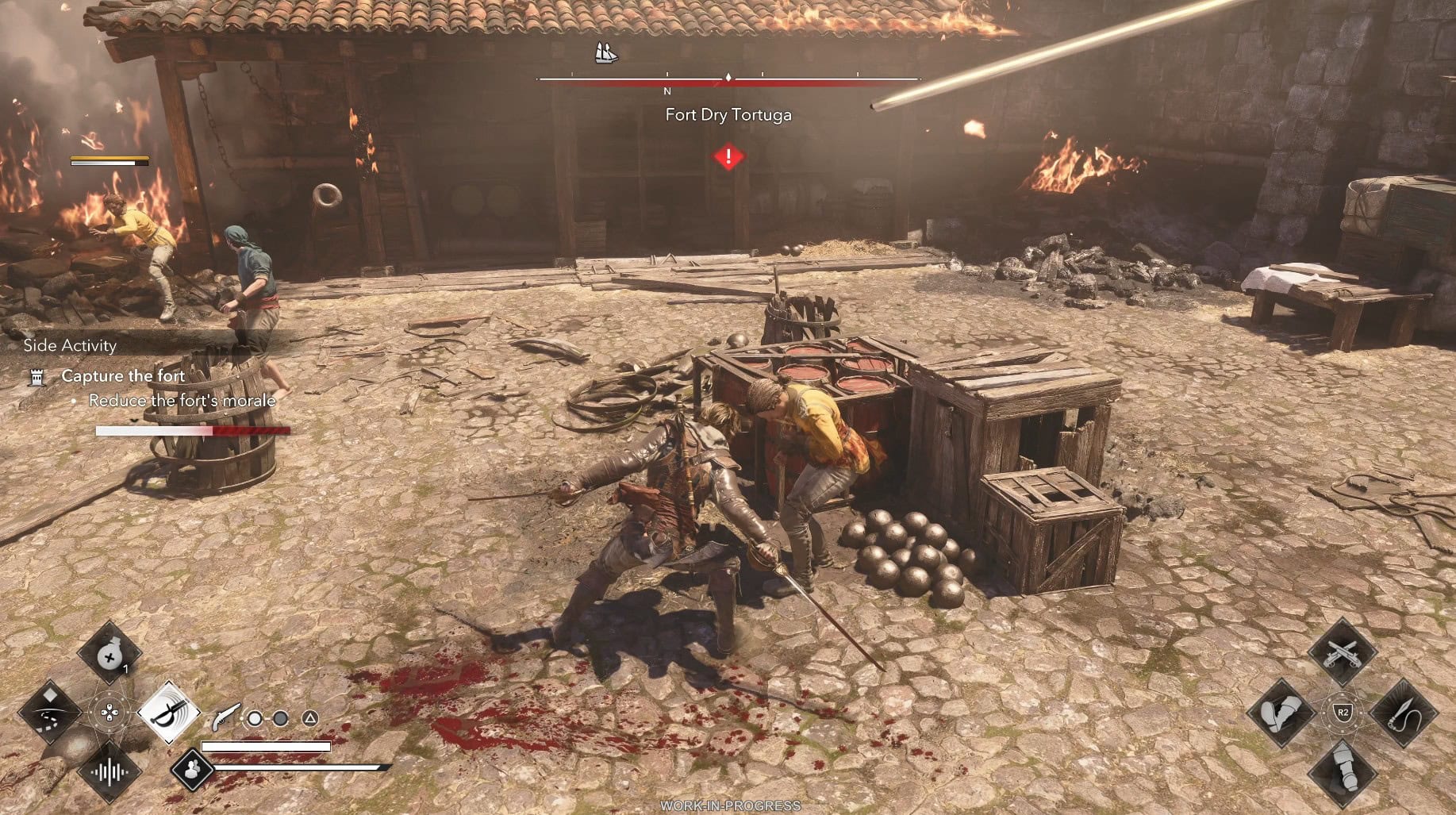
Visually, Black Flag Resynced is stunning. Built using the same game engine behind Assassin’s Creed Shadows, the Caribbean has never looked this alive. Water alone is worth mentioning. Waves react to your ship, lighting reflects realistically, and storms feel far more intense. Sailing through rough seas isn’t just visually impressive; it feels immersive in a way that enhances your experience. Islands are even denser now, making your adventures on them feel more alive. Even something as simple as walking through a port town now feels more grounded, thanks to improved NPC behavior and environmental detail.
It’s not just about looking good, it’s about how the world feels to move through. Traversal has been refined in subtle ways. Parkour transitions are more fluid, and there’s a better sense of control when navigating complex environments. It’s still familiar, but with enough polish to remove the frustrations that longtime fans might remember.
The handling of the Jackdaw has been tightened. Movement feels more responsive, and naval combat carries more weight. Cannon fire feels heavier, impacts are more satisfying, and ship battles have a stronger sense of scale. They’ve also added an alternative firing mode that adds to the fun in naval combat. I’ve had more time exploring the high seas and bringing down ships than I can remember when I played Black Flag a few years ago.

What I appreciated most is that Ubisoft Singapore didn’t try to reinvent what already worked. Instead, they refined it, polished the rough edges while enhancing the parts that made Black Flag iconic in the first place.
Over the course of my 3 to 4 hour session, I kept coming back to one thought: this feels like the version of Black Flag we remember, not necessarily the one we played. While there’s still more to explore in terms of content when the game comes out, what I’ve played at Ubisoft Singapore had me at least convinced that they made the right decision this time; and I hope that the final build of Black Flag Resynced is far more engaging than what I’ve experienced in this hands-on session.