Developer: S-GAME
Publisher: S-GAME
Reviewed On: PC
Available On: PS5, PC
Release Date: October 29, 2026
Review Copy Provided By: S-GAME
A wise man once said, “All we have to decide is what to do with the time that is given us.” For most people, it is an encouraging thought, but for someone who has so little time left, it is a call to action. Their vision narrows, and they gain a level of clarity they didn’t know was possible. They are more determined to see things through to whatever end. For someone like Soul, it is his last chance to right a wrong that cannot be forgiven, even if it means turning his back on everything and everyone that once meant the world to him.
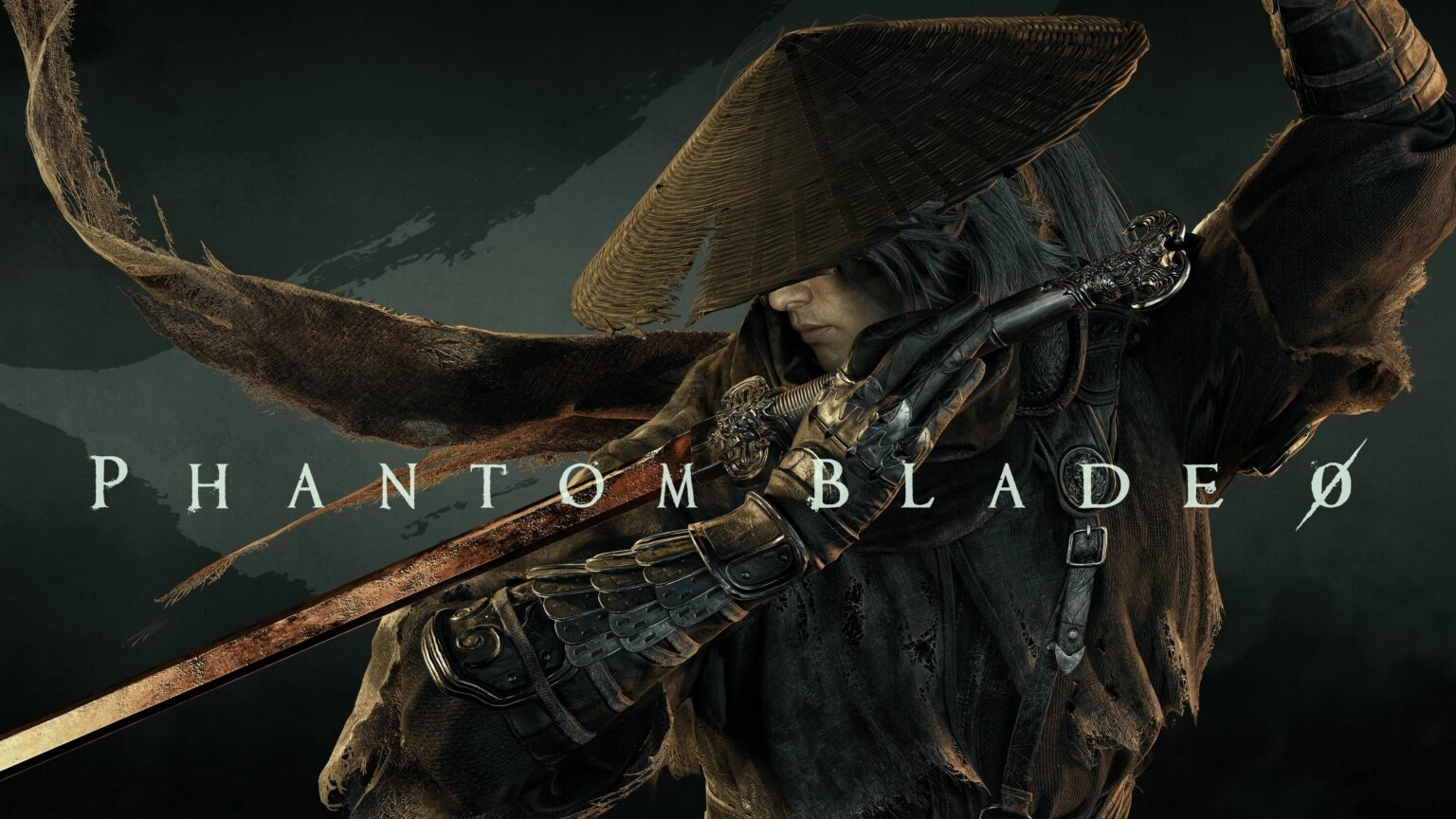
Phantom Blade Zero is an Action RPG set in the Wulin, the realm of martial artists and the stage of many great martial stories. Players take control of Soul, a renegade who has forsaken his old identity in pursuit of an “old friend”. His journey leads him to Phangzeng, where a mysterious ailment has taken hold of the population, and where a great power struggle has all but ensured madness runs amok. With only sixty-six days left to live, Soul must use his martial prowess and mastery of weapons to hunt down the men responsible for all the pain and suffering. His efforts ultimately uncover a conspiracy that implicates the involvement of an otherworldly entity beyond comprehension.
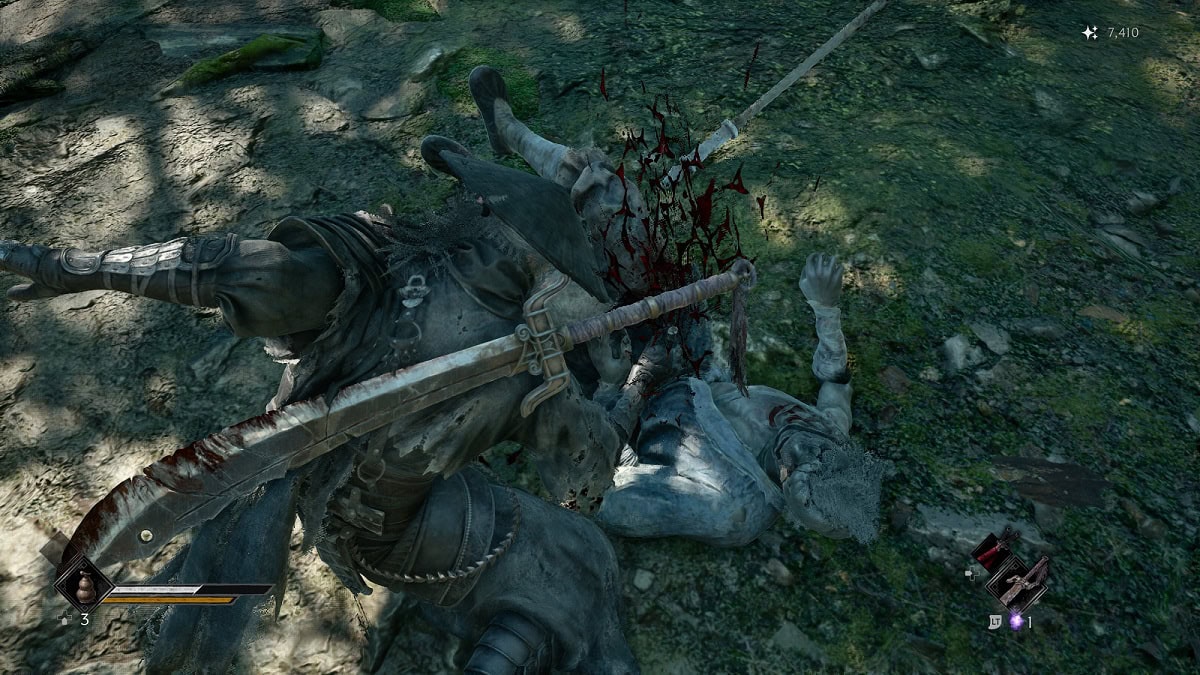
The best way I can describe Phantom Blade Zero‘s gameplay is that it is a fusion of Dark Souls and Devil May Cry. The world itself is designed with exploration in mind and leans heavily on environmental storytelling Souls games are famous for, but without the hindrances of respawning enemies and being forced to retrieve lost souls. The combat is a one-two punch of Sekiro’s precise parry timing and Devil May Cry’s emotion-filled flurry of attacks. This is most evident in the game’s numerous boss fights where you need to wear down enemy defenses before delivering the beatdown.
As Soul, you wield both a primary and secondary weapon that you can swap out mid-combat for maximum effectiveness. You also have access to two Phantom Edge weapons that serve as both traversal tools and support weapons meant to supplement your damage-dealing abilities. You also have access to a myriad of healing items, each of which has different effects and best-use cases. You can carry two kinds of healing items at a time and can freely use them when the need arises. To round out your personal arsenal, you are encouraged to choose from an array of powerful accessories that complement your specific playstyle. The best of these accessories are often rewards for going well off the beaten path and solving clues left behind via lingering memories.
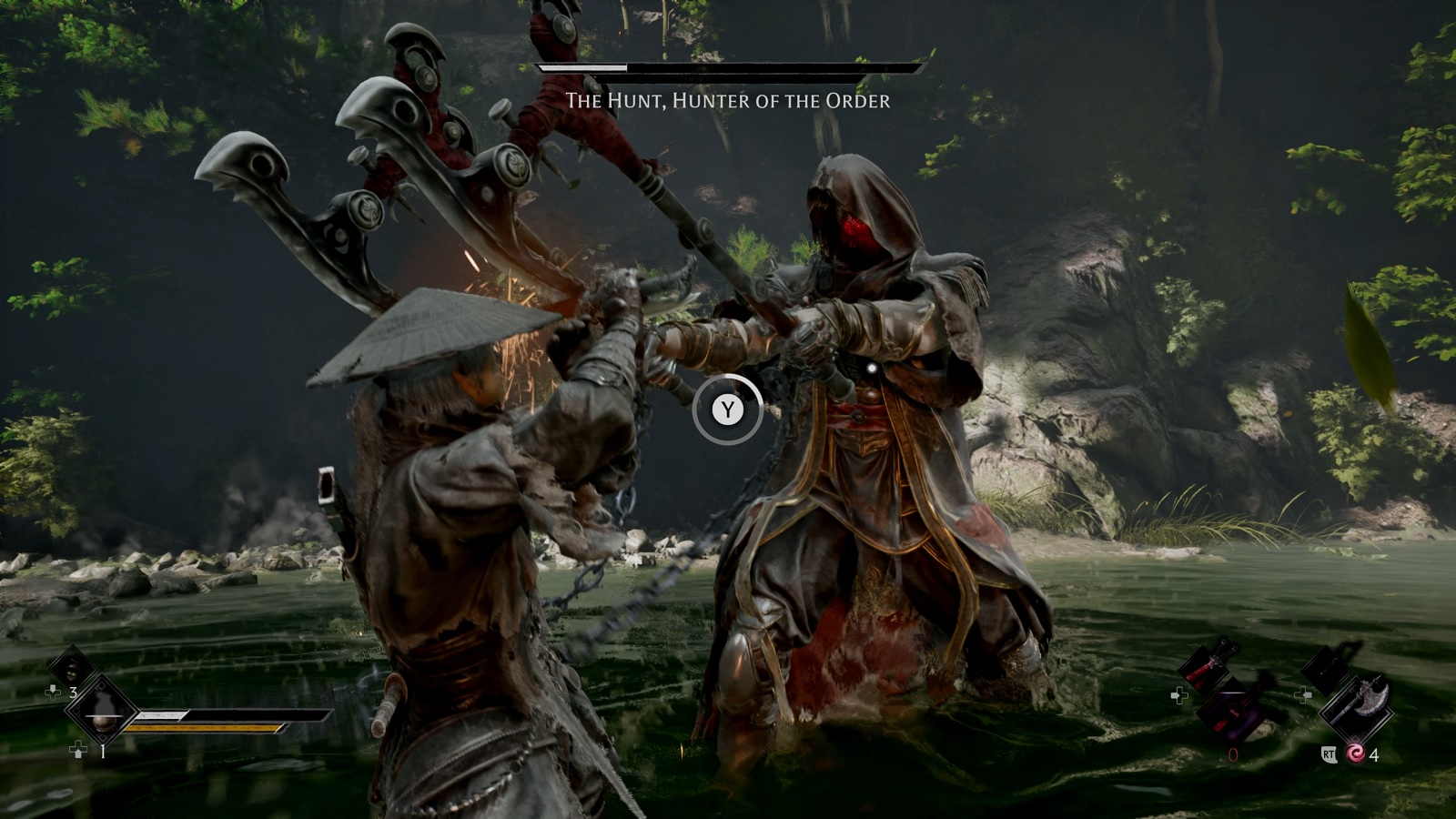
Combat is the beating heart that drives the entire experience forward. There are more than two dozen weapons to add to your collection. They range from iconic Chinese longswords, the legendary crescent blade, to the exotic ring blades. No two weapons are alike, as evident in their unique movesets and combat style. It is a testament to the labour of love that went into the motion capture process. In fact, the only thing they have in common is the materials you need to upgrade them.
Phantom Blade Zero’s combat feel is some of the best I’ve experienced in quite some time. It is so rare for you as a player to be on the offensive and defensive at the same time. This is what it feels like to be in the movies where the masters never stop moving, while applying pressure through a flurry of feints and blocks. I like that the game is well aware of the fact that Soul can handle pretty much any weapon he gets a hold of. At one point, he admits that he can only “mimic the form, not the spirit.” That makes him the Chinese version of Taskmaster from the Marvel universe.
The boss fights are some of the most challenging, yet satisfying parts of the experience. In general, both sides are protected by Sha-Chi, the life energy that powers all martial arts. Your initial goal in every fight should be the removal of the shields from play. Once the shields go down, you are free to lay down the pain for a short while. You’d be surprised at how often I look back on a difficult boss fight and wonder how I ever lost in the first place. Quite simply, I happened to commit fewer mistakes and allowed the fight to go at my pace. Proving once again that victory is determined by the side that makes fewer mistakes.
What caught me off guard about the game is the ease with which one can upgrade weapons. Every weapon in the game is made more powerful through the application of upgrade materials. However, the materials aren’t lost through the upgrade process. The materials can be retrieved and used again to upgrade another weapon. It’s a clever system that encourages experimentation, which is a good thing as there are more than two dozen weapons to play around with. Soul Tempering also allows weapons to gain a new attribute. The materials for the process are often tied to story locations and hidden areas. I was afraid that it was going to take several playthroughs to get everything. Fortunately, I was just overthinking.
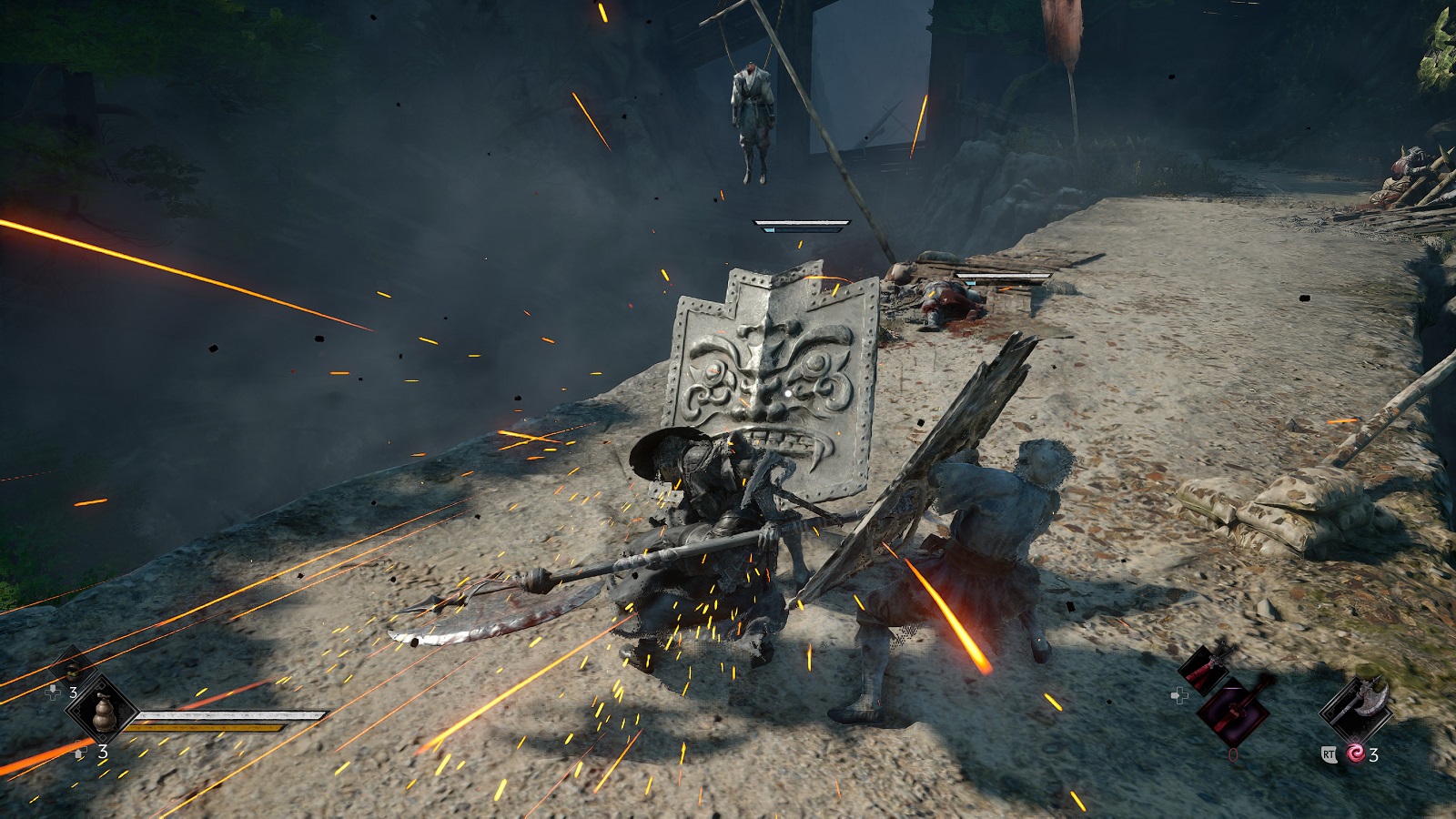
Every region of the map is a carefully constructed series of interconnected areas that has one bell for fast travel and is guarded by a combination of maskwalkers, corrupted Mandate fighters, and Order foot soldiers. The areas are wide as to not be confused for a linear adventure while allowing for some level of exploration for the sake of collectibles and story tidbits. There is the added incentive of completing side quests such as Quick Hand Zhang’s Treasures and fallen hero relic retrievals, as they reward you with some handy accessories.
Several parts of the map require specific Phantom Edges to unlock. In my adventures throughout the map, they function less like Metroidvania blockades and more like hidden caches for tempering materials. The exception being the sickle blades that allow you to grapple onto certain points. As beautifully painted as the Chinese ink-wash maps are, they do not account for depth or height. You need to have a vague remembrance of where hidden caches are, or else you’ll be wandering around looking for a spot on the map that could very well be underground or on the side of a mountain.
My biggest frustration with the game lies in how the stage layouts are put together. Boss arenas look the part for their intended combat purposes. My problem with them lies with the tiny elements that are meant to give the stages a believable look. I’m talking about rocks and the weapons sticking out of the ground. I have lost count of the number of times I died due to my pinky toe getting stuck on a random rock. The few moments of standing still are long enough to be near lethal. It’s not something you casually forget as you helplessly watch Soul get torn apart.
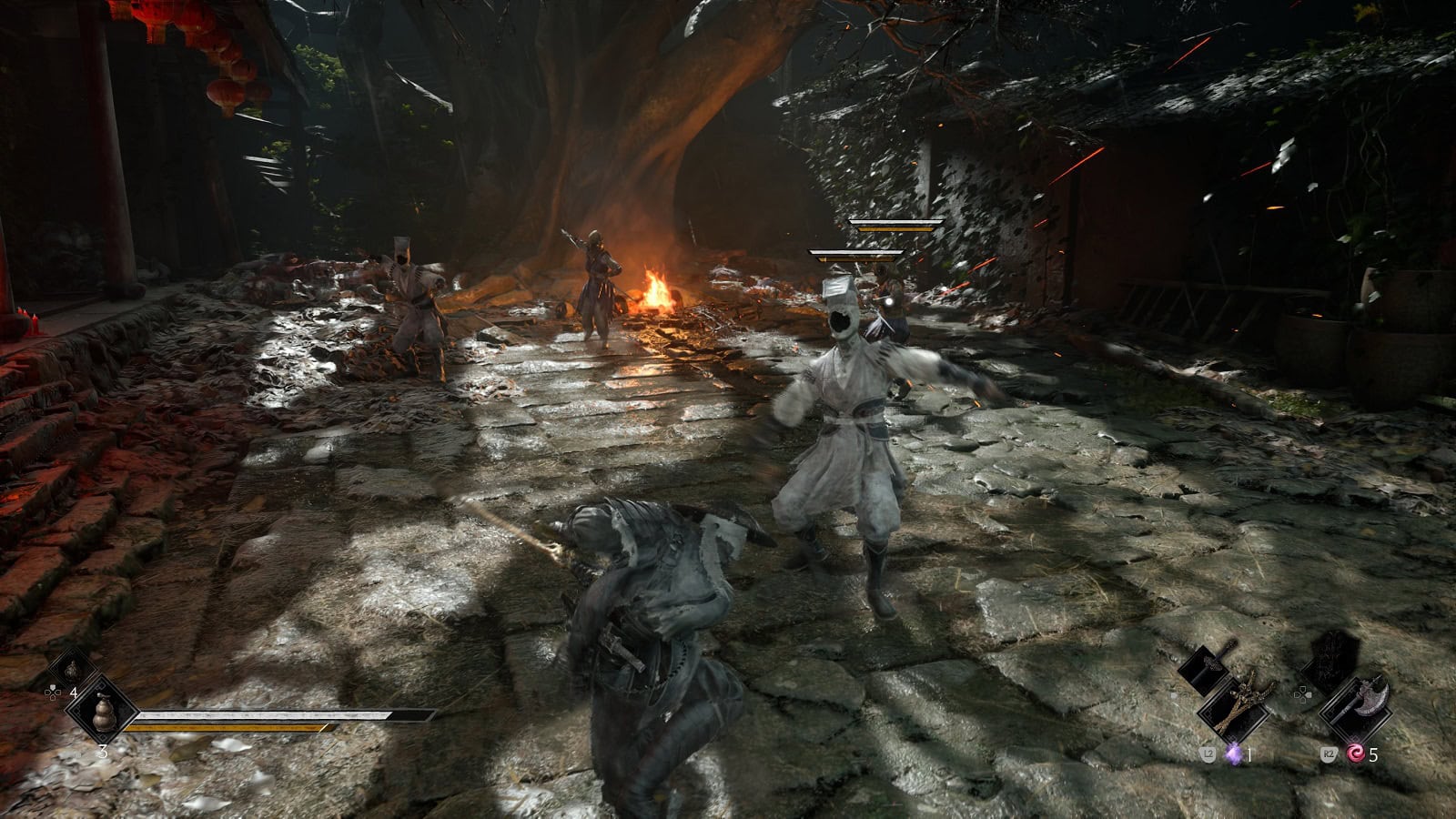
I find fighting multiple enemies to be so annoying in the late game. The stronger mobs totally bring me out of the immersion of being a warrior worth a thousand soldiers. These guys don’t respect your space like enemies in Assassin’s Creed would. They will get up in your face and gang up on you if you give them the slightest chance. This often results in a quick death and a humiliating return to the bell. I’ve since learned to rely more on Phantom Edges for crowd control, but it really shouldn’t have come to that. I shouldn’t have to treat encounters like they are Dark Souls encounters. It doesn’t fit the image of a kung fu master controlling crowds of enemies. I was able to do that in the beginning and in the mid-game, but late-game camps shouldn’t be such a hassle to clear.
When it comes to PC performance, the game runs smoothly. I had to pull down a few graphics options as my mid-range PC wasn’t able to go above 120 frames in the open world. On the bright side, the game runs perfectly during boss fights, with one exception due to the location of the fight and the presence of a lot of water. On a final note, I did notice a few graphical glitches here and there, the most noticeable ones being some objects not being affected by camera culling, resulting in fights that sometimes obscure my view.
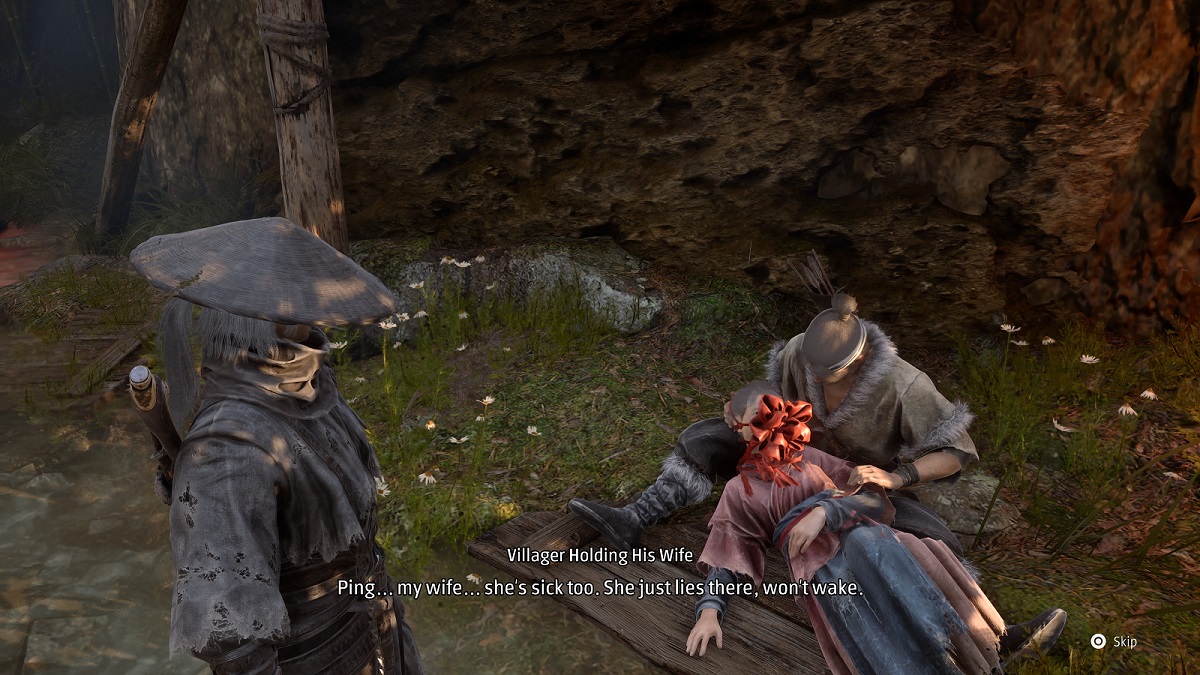
Graphics-wise, the game looks quite impressive. It’s not a stretch to say that Phantom Blade is yet another win for Unreal Engine 5. While there is still room for improvement, I’m just happy that it didn’t end up like other games that need a complete overhaul to run decently. More importantly, the game takes another leap forward not only in terms of cutscene quality in the styling of Chinese ink-wash painting, but also in the use of shadow puppets. More on that during the full release. And as usual, the language barrier remains undefeated for this release. The English dub, while great in its own right, doesn’t make sense in the context of the scene, and it doesn’t always reflect what’s shown in the subtitles. Sometimes to a wide margin. There are awkward pauses in points that I feel compelled to press the skip button, only to realize that there was more being said.
The game coins this new direction as Kungfupunk, or, in other words, Chinese tradition meets modern pop culture. In terms of visuals, you can see examples of that with the Thread-binding sect’s blending of traditional architecture with industrial machinery. A few moments listening to the game’s soundtrack reveal a mix of Chinese instruments with rock and electric music. There’s nothing quite like it in the scene currently. I’m excited to see where this new direction takes us moving forward.
Phantom Blade Zero embodies everything we love about kung fu on the silver screen, from the deadly dance that is the fights to the emotions that fuel every conflict, all woven into a tapestry of old and new cultural inspirations. It represents a bold new direction in terms of presentation and aesthetics. If you have even the slightest interest in wuxia games or pure ARPG’s with a touch of Souls-like mechanics, I wholeheartedly recommend this game. I would even go so far as to say that it’s deserving of a permanent spot in your games library.
Phantom Blade Zero Review (PC)
Phantom Blade Zero embodies everything we love about kung fu on the silver screen, from the deadly dance that is the fights to the emotions that fuel every conflict, all woven into a tapestry of old and new cultural inspirations.
The Good
- Thrilling combat
- A story of resolve and perseverance
- The emotional payout was well worth all the trials and tribulations
- Flexible weapon progression system
The Bad
- Level geometry can get you killed
- English dubs and subs need a few touch-ups
- Map icons do not account for height or depth