Developer: Brigada Games
Publisher: Devolver Digital
Reviewed On: PC
Available On: PC
Release Date: June 4, 2026 (PC)
Picture this: you are starting your new job as commander of a military checkpoint in the middle of a zombie apocalypse. What do you expect to see within the ruins and the flames? Long lines of desperate people trying to get ahead of each other? No. Rampant fear and a breakdown of order? Definitely not. What actually happens is that everyone lines up neatly and orderly, waiting for the go-ahead for extraction. Just another day in Quarantine Zone: The Last Check.
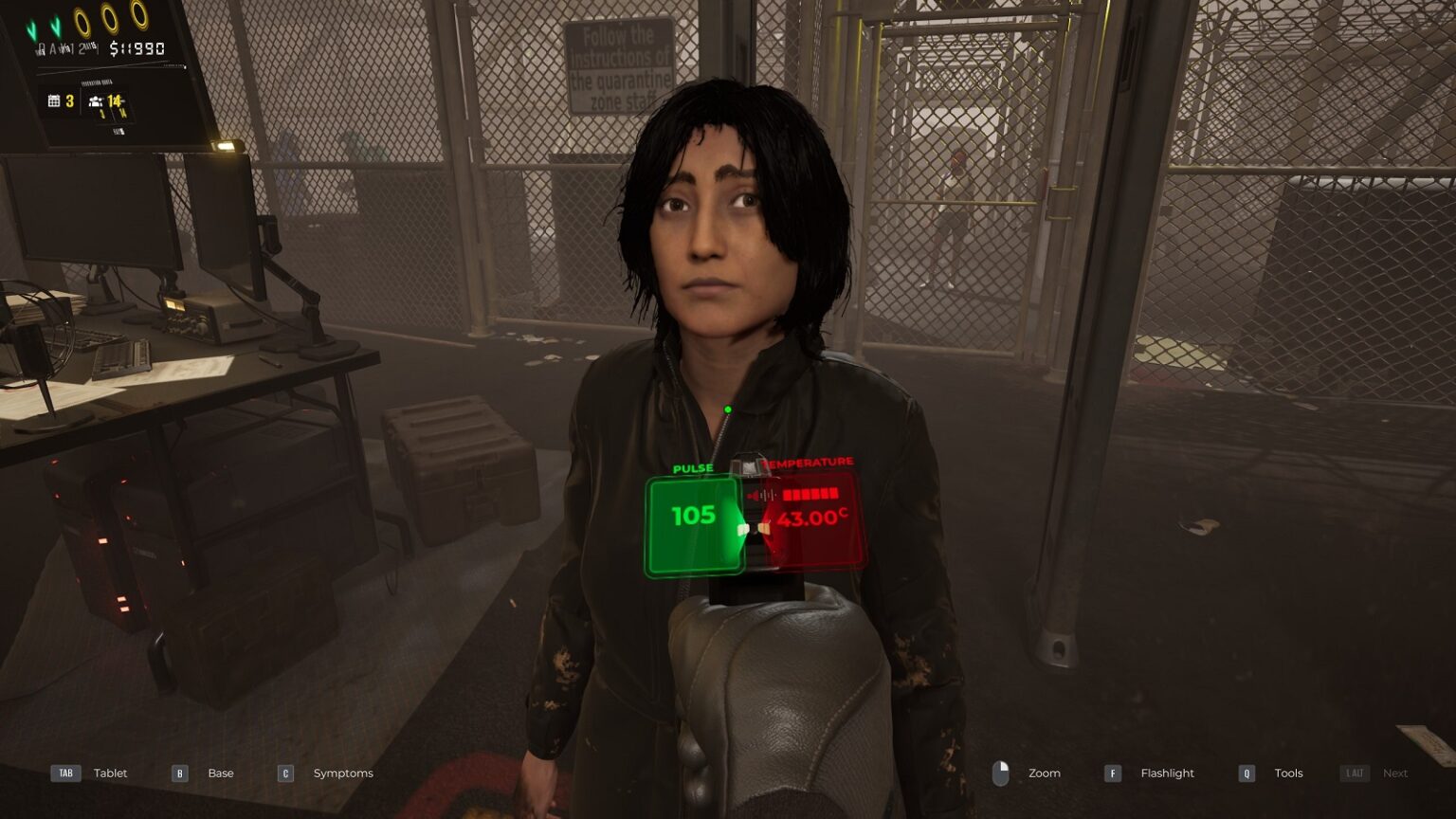
Quarantine Zone: The Last Check is a checkpoint simulator set in the middle of a post-apocalyptic city. Players take control of a commander whose job is to inspect and pass judgment on survivors looking to extract from the zombie-infested city. Everyday a line of survivors patiently waits while you use the tool in hand to determine whether or not a survivor shows signs of infection. It goes without saying that letting any infected through lessens the importance of the base and puts into question your ability to run the place.
The general gameplay loop is that you are given a set number of days between evacuations. During the time you have been given, you are given the task of examining survivors and passing judgment based on whether or not they are infected, essentially making you a military version of Judge Dredd. Success is determined by how many survivors you manage to extract at the deadline. Failure to reach quota results in losing any value your checkpoint holds, leaving the place wide open to being overrun.
Your only choice then is to separate the infected from the healthy survivors before they cause too much death and destruction. To aid you in this task, your character is given access to an array of tools that are meant to sus out signs of infection. Unfortunately for you, humans tend to be selfish, and they will do whatever they can to hide signs of infection. To get an idea, you start the game taking temperatures and using an x-ray gun to reveal bite marks, and near the end, you get access to tools that allow you to see signs of infection at the microscopic level.
Now, it’s not all the clean cut with every test that you do. Sometimes, tests will come back as inconclusive or show signs of illness that might be mistaken for signs of infection. When that happens, you can choose to assign the survivor to quarantine and allow symptoms to develop before passing ultimate judgment. The only problem here is that if an infected person does go full zombie while in quarantine, they will kill every other person around them. The risk/reward mechanic is something I can appreciate.
My only disappointment with all this comes from the fact that each technique never goes beyond its initial implementation. Whereas other checkpoint games try to explore different applications for old and new techniques. Quarantine Zone, at least in its current iteration, is content with repeating the same procedures over and over again, despite there being an emphasis on the evolving nature of the zombie virus.
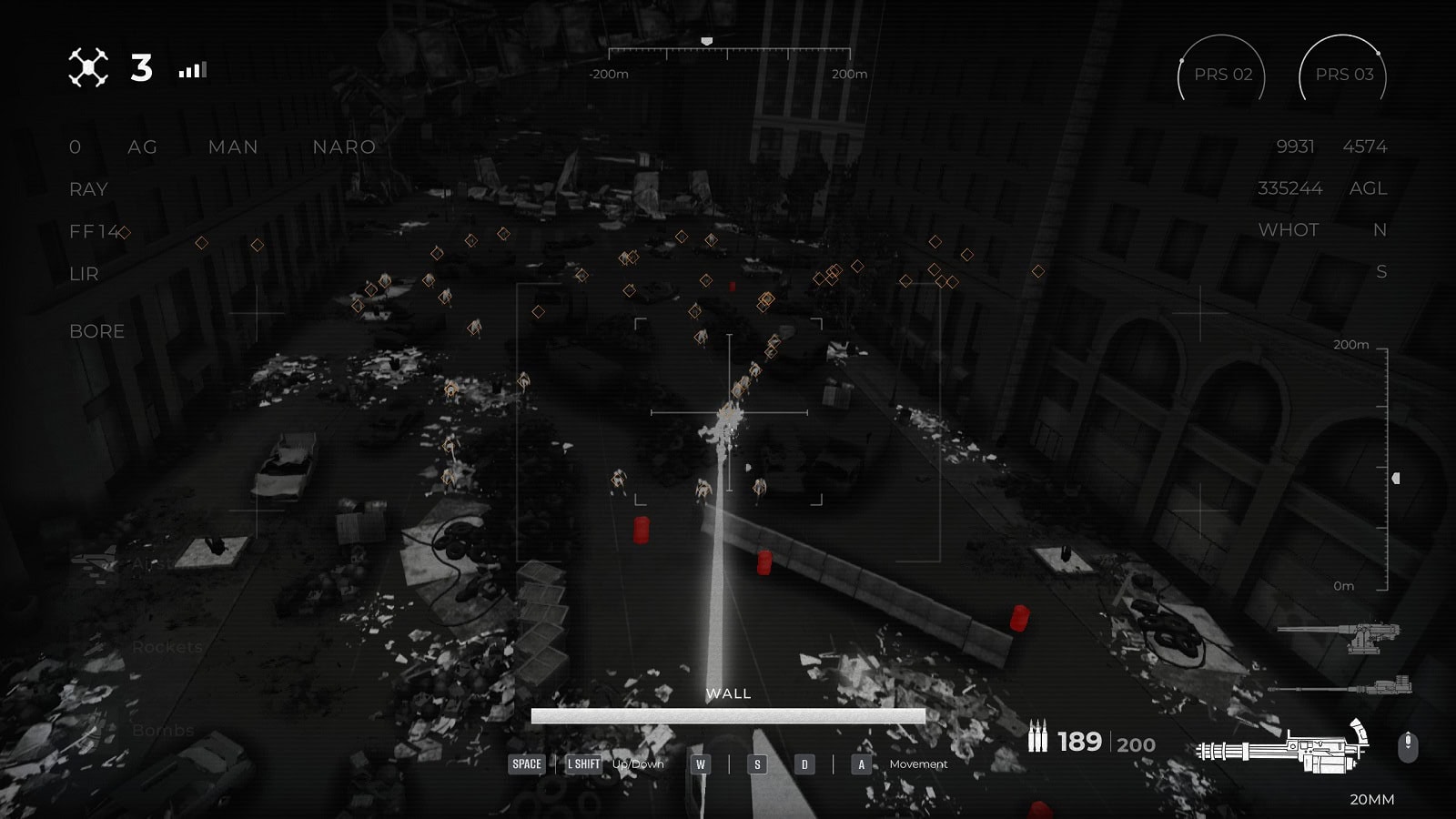
At the midpoint of every cycle, a horde of zombies will attempt to break through the walls of the encampment. To counter this assault, you take control of a drone that’s armed to the teeth with a minigun, recoilless rifle, and a cannon. On top of that, your drone comes equipped with a laser guide that paints an area for an airstrike or artillery barrage. This is the most action-packed part of the game and arguably a great way of breaking the monotony of handling long lines of survivors. I just so very much dislike the end screen where it’s just a PNG with a victory message on top. It reminded me of Big Rigs: Over the Road Racing and its infamous ‘You’re Winner’ screen.
Aside from screening people and drone hunting zombies, there are a few other tasks to earn some extra cash for base upgrades. A bulletin board will have a random task per day that you can work before ending shift. You might be asked to hammer rats or send a specific survivor to Quarantine/Liquidation, no questions asked. These small tasks work well in expanding your list of things to do, a feature that’s appreciated by players of simulator games.
One of the features that seemed undercooked is the research and development activity. On paper, it sounds like a great idea. Every once in a while, a survivor comes in with an unknown symptom that warrants further investigation. You assign that survivor to R&D, where they “contribute” to progressing our understanding of various symptoms. The only problem is that the symptoms themselves are nearly impossible to sus out. In my entire playthrough, I have only revealed around 3 new symptoms, but I have lost count of the number of false positives that led to the wasteful killing of survivors.
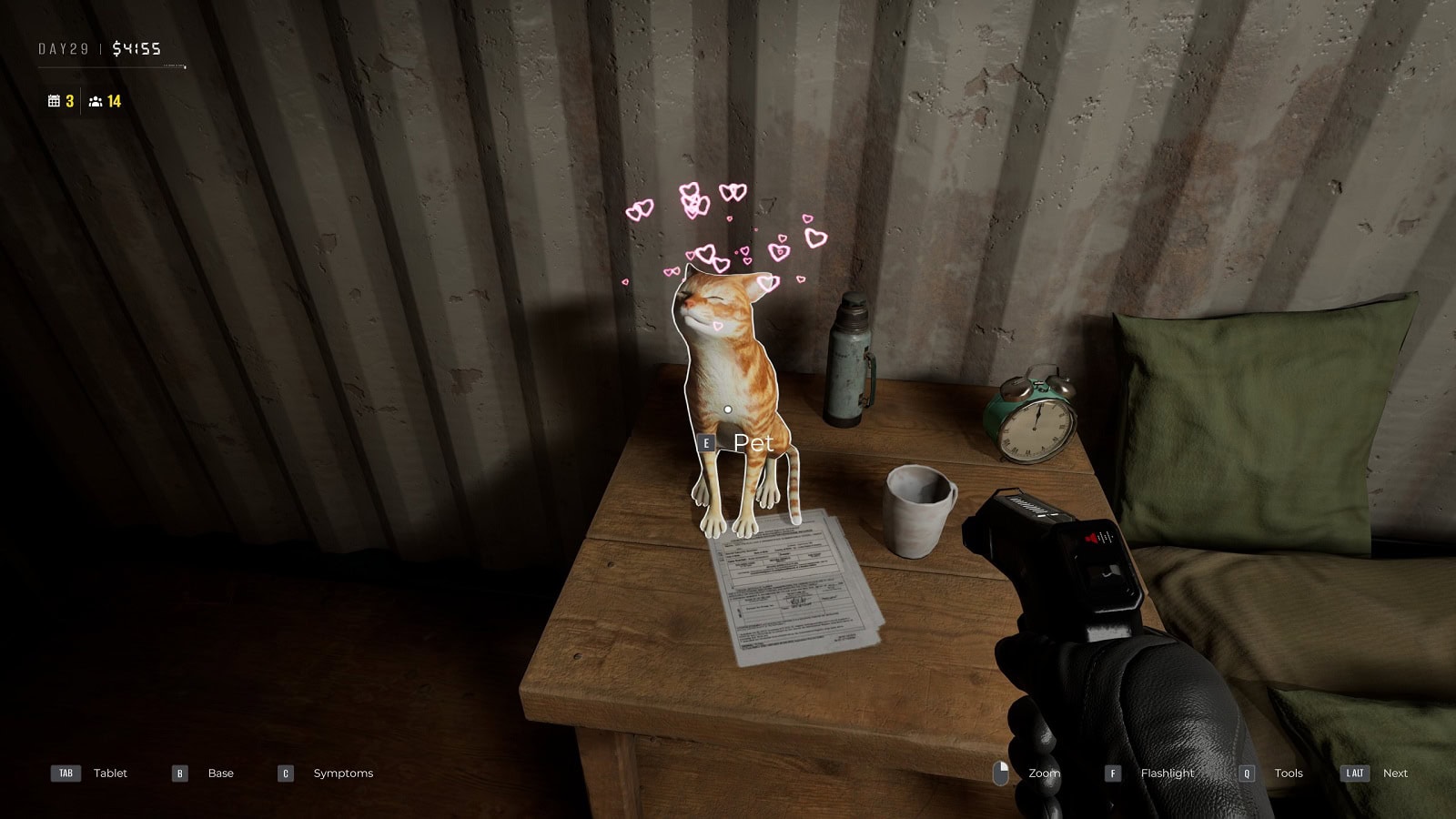
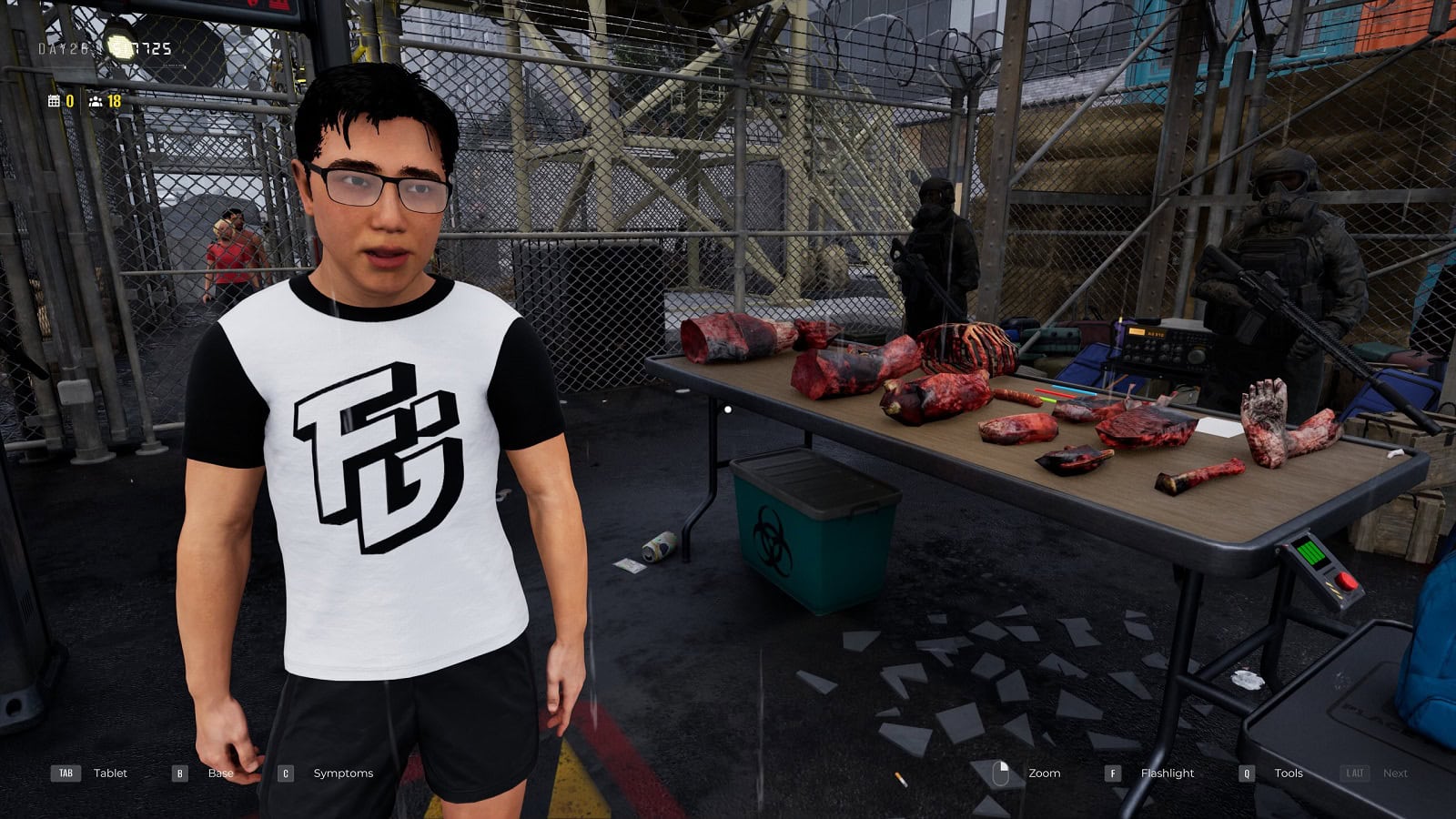
Quarantine Zone doesn’t really have much of a story besides the occasional radio message from your commanding officer. Because of this, the game missed an opportunity to tell such interesting side stories. Many times, I looked at random survivor events and asked myself if it was possible to have more dialogue here. Sure, survivors were looking to parley their way, trying to justify bringing zombie body parts. But there was nothing more beyond the initial plea. No response to me aiming a firearm at their head. It made it easier to choose the safe route when there’s no reason to consider alternative options. I look back on games like Papers, Please, and how that game implemented long-term consequences. (Much respect to the Potato Guy) Quarantine Zone doesn’t have anything close to that, unfortunately.
So, what’s the game like after finishing story mode? If you manage to make it all the way to the final evacuation cycle, you are given the choice of either leaving the base or staying behind to continue your work. I chose the latter as hints suggest that the former will result in me being put on an autopsy table in a faraway lab.
The Endgame is pretty much the same as story mode, but you get to try and hold out for as long as possible before setting the game aside. This is pretty much the ‘endless game mode’, and it confuses why having them running in parallel when the only difference between the two is that story mode introduces mechanics gradually, while endless mode gives you all the tools right from the start. In fairness, I have spent closer to 30 hours with the game so far, so I did enjoy my time with the game, even if all roads lead to endless mode.
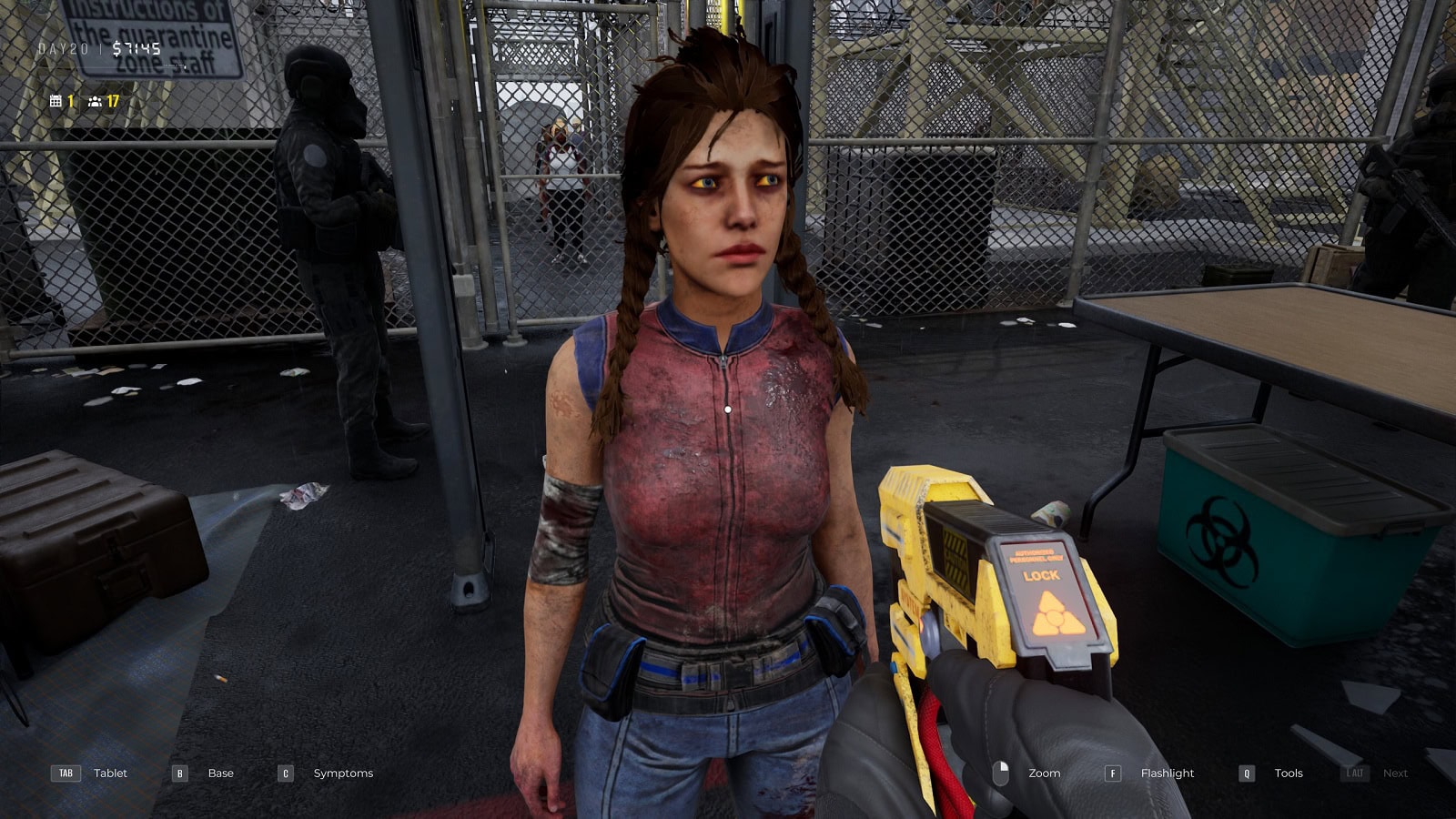
Visually, the game is great. I believe one of the reasons why this game stood out so much is the amount of effort that goes into the moment-to-moment examinations. One moment, you are examining a survivor who is scared witless, eyes darting around as if death is hanging over their shoulders. Other times, you get survivors who are already numb to their surroundings. (Huge red flag there.)
The game has remained quiet in the first 3 months after release, as of the writing of this review, only to receive the occasional hotfix here and there. Since then, the game has quietly added more YouTube personalities, including cameos from Caseoh and Real Civil Engineer. (I was very amused by the contents of their respective backpacks.) Well, I’m sure that there are others included as well, but these are the ones I am familiar with. Setting those additions aside, there has not been an addition to the game since gloves and the cat were added. I don’t consider seasonal events like Valentine’s and St. Patrick’s on the same level. Should we be concerned with the lack of content? Not really. The game had a successful launch. The best we can hope for is that we get content celebrating the achievement. All-in-all, I am content with the quiet acknowledgement that the game did well.
Quarantine Zone: The Last Check looks and plays better than most checkpoint simulators out there. However, its individual gameplay elements don’t exactly work together on a deeper level, leaving players with a disjointed experience that offers very limited long-term appeal hours after the initial novelty wears off. If you’re looking for a slightly different kind of simulator experience to mix things up for a few hours, then you’ve come to the right place.
Quarantine Zone: The Last Check (PC)
Quarantine Zone: The Last Check looks and plays slightly better than most checkpoint simulators out there. However, its individual gameplay elements don't exactly work in unison, leaving players with a disjointed experience that offers very limited long term appeal hours after the initial novelty wears off.