A pirate’s life is such a cool experience, especially when you get onto your ship, setting your sails as you let the wind and the ocean take you into amazing adventures. Ubisoft’s Assassin’s Creed: Black Flag set the benchmark for an action-focused pirate game, with awesome naval battles infused with that Assassin’s Creed formula. Rare’s Sea of Thieves focuses on the openness of the seas in first-person view, with your friends as crew members with their own set of responsibilities, like manning the canons, moving the sails in the right direction, and random encounters with other players in a player-versus-everyone (PvE) world.
But one thing we didn’t get — a pirate game that’s supposed to give us the entire package: base building, open-world (or seas), great sword combat, tons of hours of content, and survival mechanics. I thought Skull & Bones was that — but that game ended like it was the Call of Duty of pirate games. It was touted to be the true “pirate experience”, but they didn’t hit that mark. It’s not even close to what Black Flag had. It was such a wasted opportunity, knowing they had a solid foundation because of Black Flag, but no, they tore it apart and made it into a bite-sized, naval-action-only game. There was no on-the-ground combat, no exploration, and no digging up treasures. Nothing. Skull & Bones was fun, at least, but it shouldn’t have been marketed as a pirate’s life experience.
Years later, the Uzbekistan-based developer Crosswind, now known as the Kraken Express, has given us Windrose. It’s a PvE, open-world survival pirate game with Soulslike combat. My team and I have been playing for more than 40 hours, and I have to say: I’m totally addicted to Windrose.
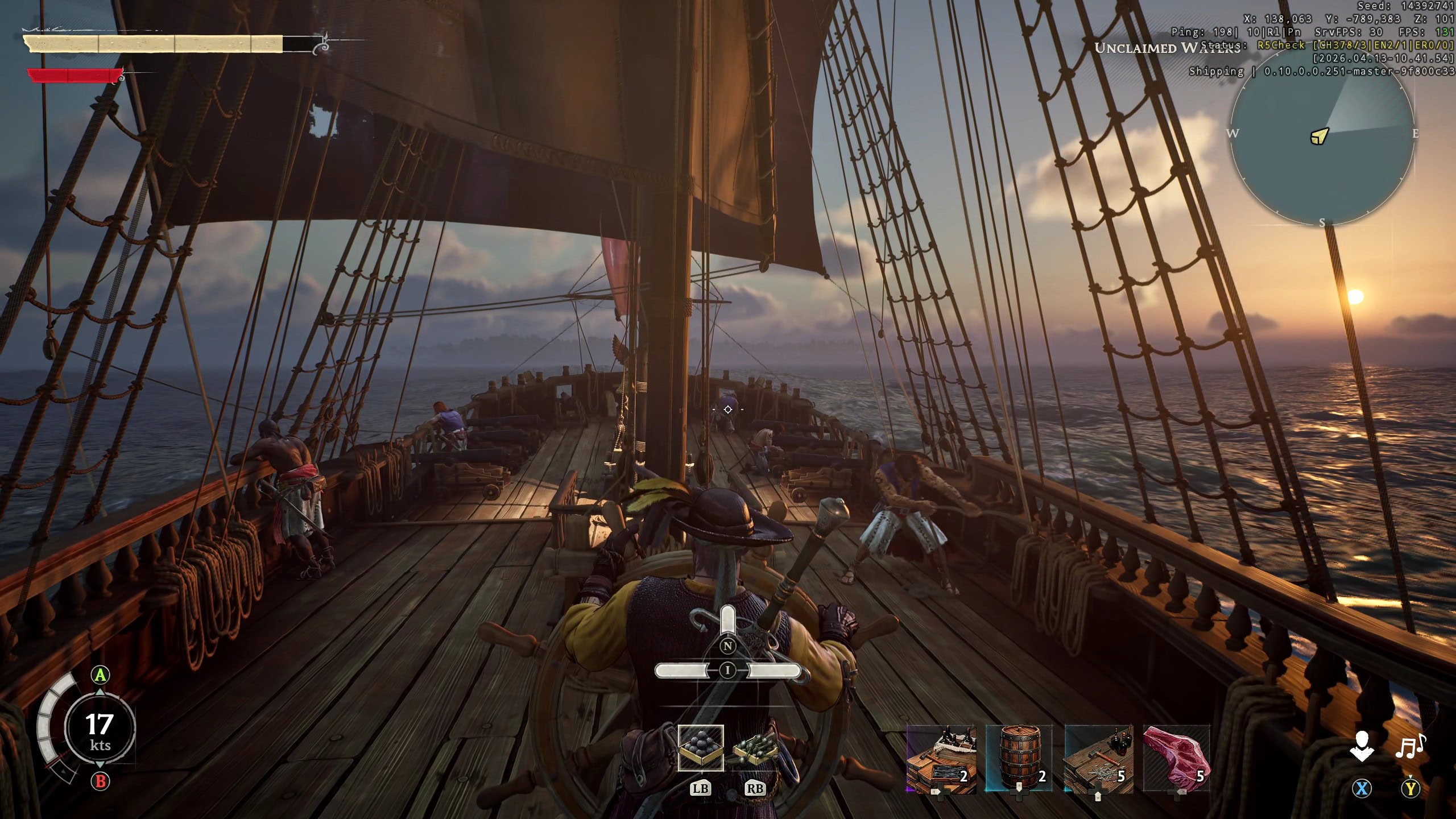
Windrose is another perfect example that indie developers know what we all gamers want. The game is huge, and what’s even great is that every time you start a new session, the entire world is procedurally generated, which gives each session a unique experience when you ever decide to start from scratch.
You start on an island alone (or with your friends if you play co-op), and your initial task is to survive. You begin by chopping up wood to build your tent and workbench, picking up plants to get fabric to begin constructing parts like roofs, and rocks to craft your stone pickaxe and stone axe. You also need to hunt wildlife for food to increase your health and give you passive bonuses like additional strength stats. The game doesn’t handhold you that much; it does at least guide you on what you need to learn and where you have to go. Much like other survival games, Windrose allows you to start your session in any way you want after you master the basic foundation of survival.
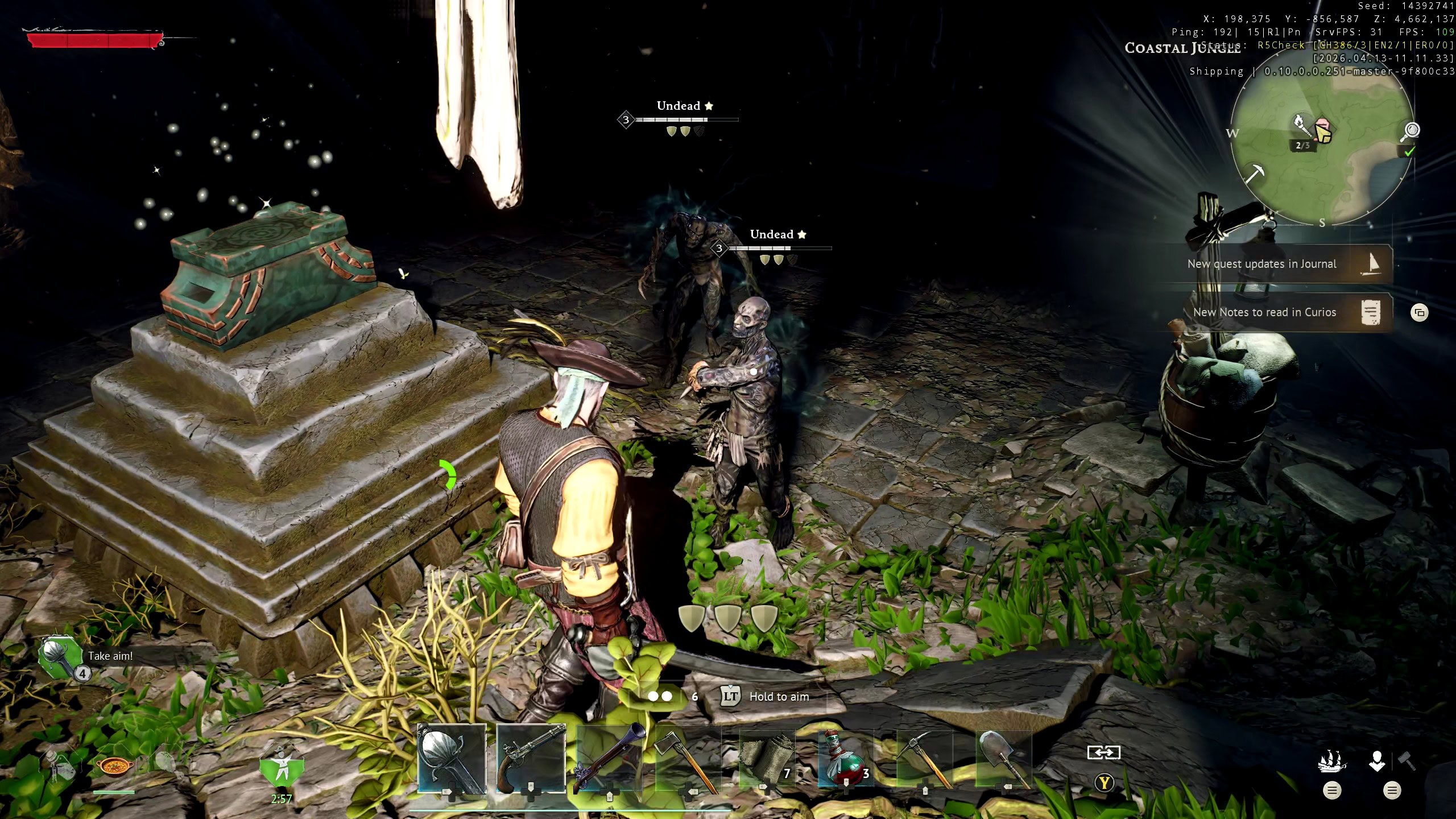
Combat is marketed as “Souls-like,” and I have to lay this out: the closest Souls-like games I’ve played are Sekiro: Shadows Die Twice and Black Myth Wukong. So if I were to compare the combat difficulty, I’d say it’s challenging enough in “Normal” (called High Seas) that each damage you get from enemies definitely hurts; and that’s why perfect parrying is one of the most crucial tactics in Windrose’s combat. Mechanics-wise, it’s solid for the type of game you’re getting. If you expect the same level of combat fluidity in Assassin’s Creed: Black Flag, don’t. It’s more grounded, and you need to be cleverer, especially when fighting against groups of enemies.
Combat is enjoyable, but if you’re in a friend’s session where your network latency is above 180ms, like I was, you’ll surely get frustrated when parrying doesn’t register timely. I tested it out by moving to my self-hosted session if it was really a skill issue. I’m glad it wasn’t because I managed to beat the first mainline quest boss, all thanks to less than 20ms of network latency.
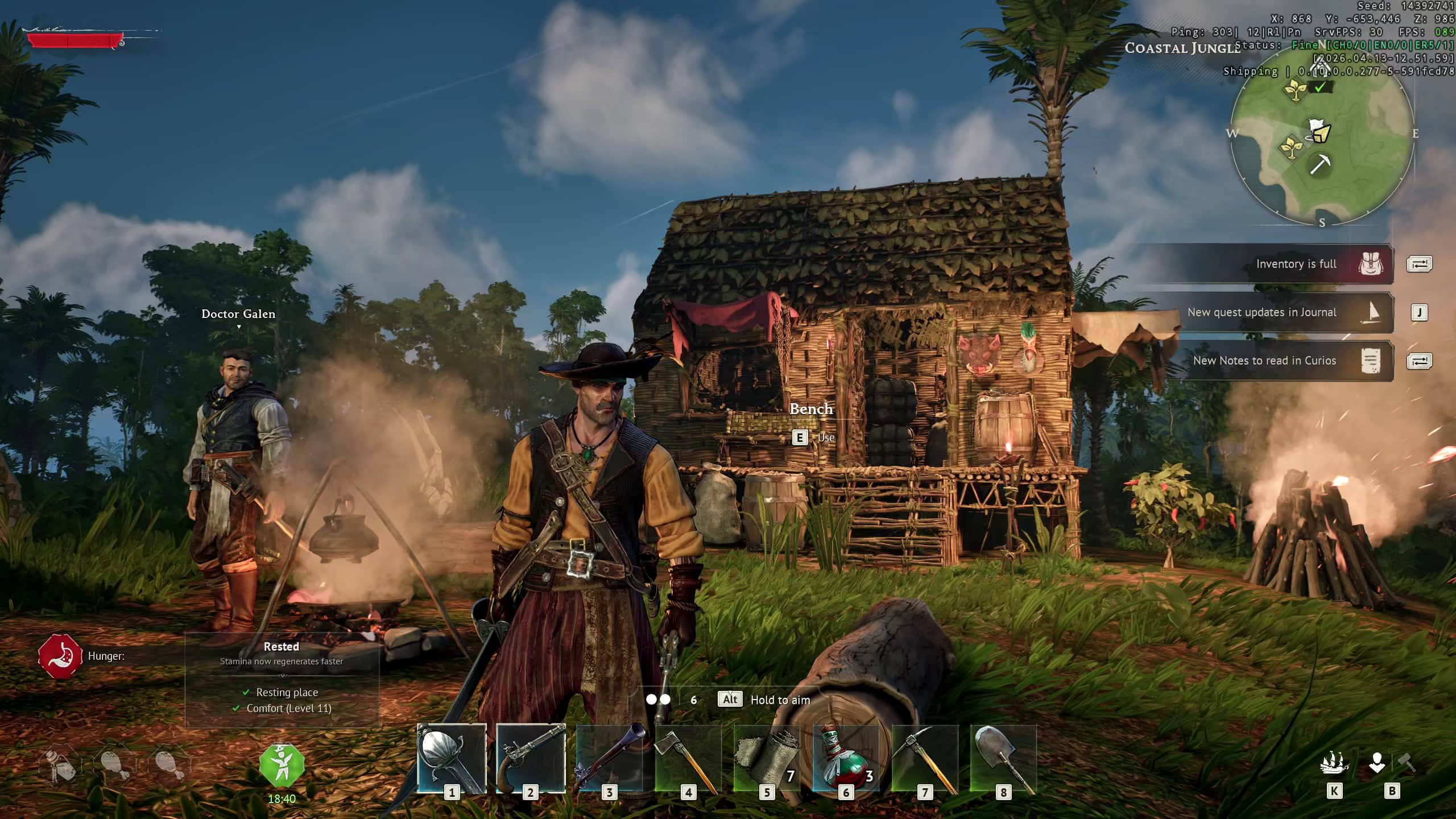
The open-world exploration, the day and night cycle, the random stormy weather, naval traversing, the sea shanties, and base building are the things I love most about Windrose. I’ve spent more time decorating my base, making it look like an authentic pirate’s small home where I get to display boar head trophies, building log benches around the bonfire, and placing the little trinkets on the table. The amount of freedom I got from building my base however I want is what makes Windrose such a fun game to play. You get to fulfill your pirate’s life dream by showing what your base would look like, even build a grand pirate’s castle if you feel like it (check that 100-hour castle building Windrose trailer out!).
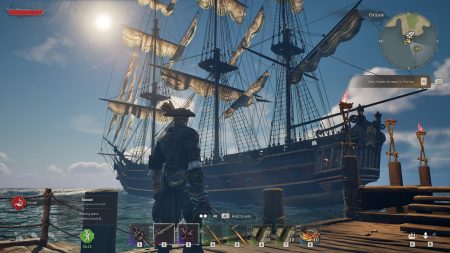
The naval combat took a lot of notes from Black Flag. You can control the canons by yourself by aiming at enemy ships even if you’re behind the helm, or if you have your 3 other buddies in co-op, they can man the canons so you can focus on sailing the ship. Once you’ve dealt enough damage to enemy ships, you can board them and take out the ship’s crew. It’s a ton of fun. I’ve never felt more alive as a pirate in Windrose than in Skull & Bones.
Ship customization is quite limited at the moment. You only get to change the hull color, the flag, and the sail designs. It would have been great if they added deep ship customization in the interior of your ship, and even a captain’s quarters like what Sea of Thieves had. Windrose would be the perfect pirate game to ever exist — it still is, don’t get me wrong! But who knows, since the game is still in the early access phase, Kraken Express may add that in the future.
I’d also love to see some deep-sea exploration. At the moment, you’ll lose stamina when you’re swimming in the ocean and will eventually drown.
Despite being in early access, Windrose feels like a complete game. The amount of hours I’ve spent and the discoveries I still make when I explore the world, Windrose never fails to amaze me in every way. I still have a long way to go (my team and I just discovered fishing!) and there’s so much more to do. It’s honestly very impressive that the team over at Kraken Express managed to release a game in this state. I can’t wait to see what it offers when the game fully releases from early access.