Developer: Cup Dog Games, GameWorks Ventures
Publisher: Cup Dog Games
Reviewed On: PC
Available On: PC
Release Date: July 23, 2026
Review Copy Provided By: Cup Dog Games
When faced with an opponent with superior size and strength, it is a pointless, futile exercise to try to match them pound for pound. Instead, the successful hunter waits patiently for an opening, dodges attacks from every angle, and when the opening eventually appears, the hunter will dash in to deliver the critical blow. This is what lies at the heart of Rubinite’s intense gameplay loop, and it is one delivered with equal amounts of grace and lethality.
Rubinite is a boss rush action game set in the dark fantasy world of what was once the Scarlet Kingdom. Players take control of Ruby, a banished princess who survived the massacre of her family and friends at the hands of Alcina the Witch. She was moments away from sharing the same fate when a mysterious man named Roy appeared out of nowhere and saved her. She has since embarked on a quest to avenge her family and to bring an end to the reign of the evil witch.
The once fearful girl is transformed into a hunter of monsters. But a blade alone isn’t enough to deal significant damage to bosses. So, Ruby had to learn enemy attack patterns, anticipate potential moves, and focus to pinpoint enemy weaknesses wherever they may be found on their bodies. No less than flawless execution will suffice, especially when the veil is lifted, and you can no longer rely on second chances.
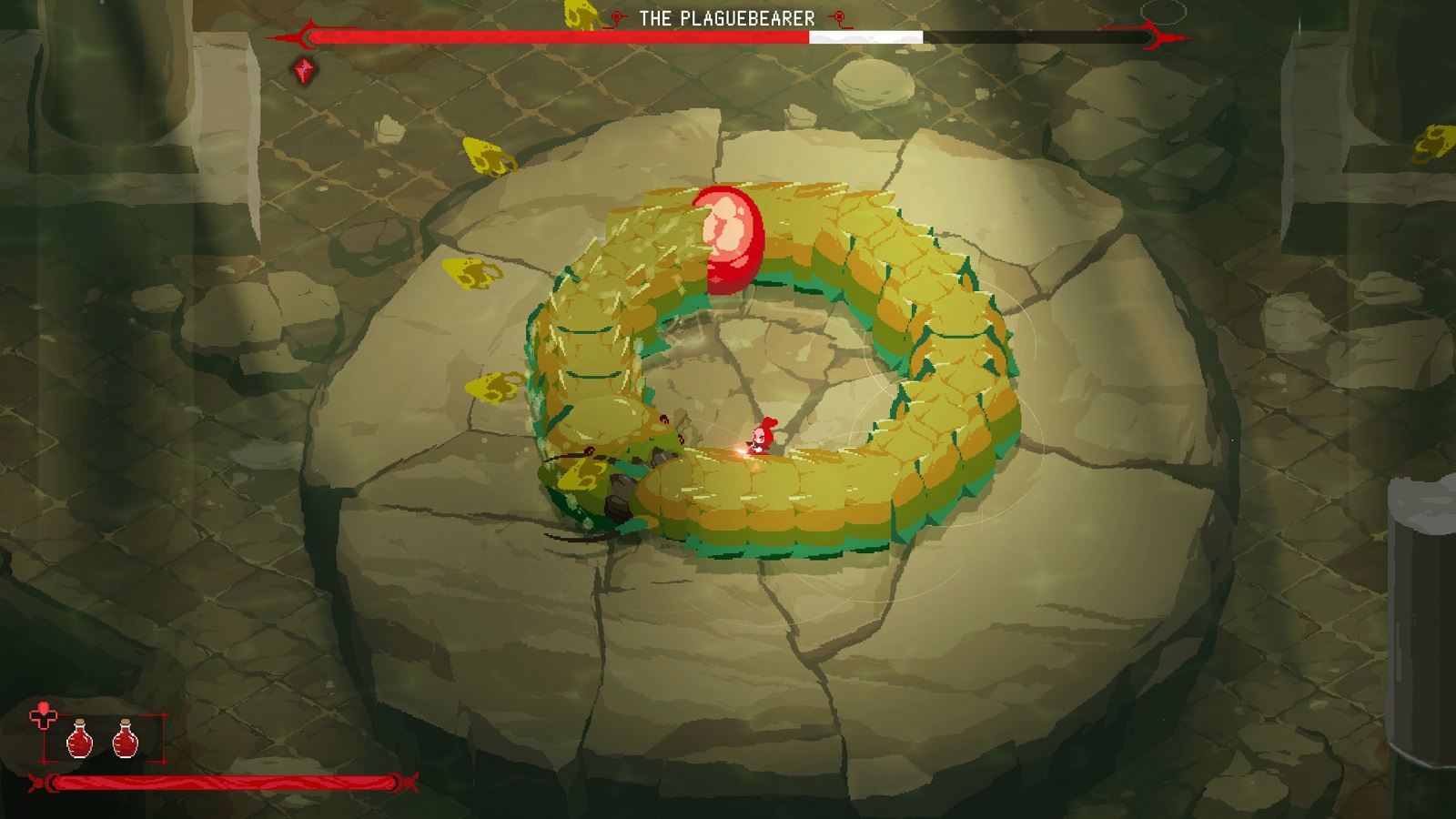
Rubinite’s gameplay loop is simple enough to understand on paper: You first observe enemy attacks to know how to react to them. You then hold R2 on the PS controller to build up your “Focus” meter. Once you feel there’s enough charge, you can quickly press L2 to perform a dashing slash that inflicts major damage. While building up charge, you can press “X” at the moment an enemy attack is going to land to dodge the attack and charge one full bar. And that’s the absolute basics. Keep doing this until the boss is inevitably defeated. Of course, there is the option to chip away at their health bar with regular slashes, but the risk of making mistakes exists during prolonged engagements.
The game, in its entirety, is about making the right choices in combat, especially when simple dodges are no longer enough. Some bosses have special moves that may happen unexpectedly during the battle. Enemies that glow purple indicate that they intend to launch a grapple attack. You may get lucky with a dodge if you are far enough away, but a better choice is to counter-stab the grab before it connects. Other enemy attacks flash a bright crimson. When that happens, it is better to throw knives in their direction than let the dice roll determine your fate. This added dimension was severely missing from the game’s demo, so knowing that the game’s systems are deeper than they initially appear is a welcome sight.
Observing enemy move sets is a crucial part of Ruby’s hunt. In earlier parts of the game, you can get away with a few scratches here and there. But once you hit the endgame, there is no room for errors. Thankfully, enemy moves have some degree of predictability to them. The only ones that truly annoyed me were the Plaguebearers’ move that let them go under the map, making me wait for extended periods for a move that seems designed specifically to annoy me. Let’s just say that it led to more than a few unintended deaths because I was focusing on one part of the battle when something else was bubbling up beneath my feet. I did not enjoy that prolonged fight. I was so happy to learn that there were very few battles like that. To that end, I wish there were more stages, but I am satisfied with the current roster of bosses, as each is unique in its impact and move set.
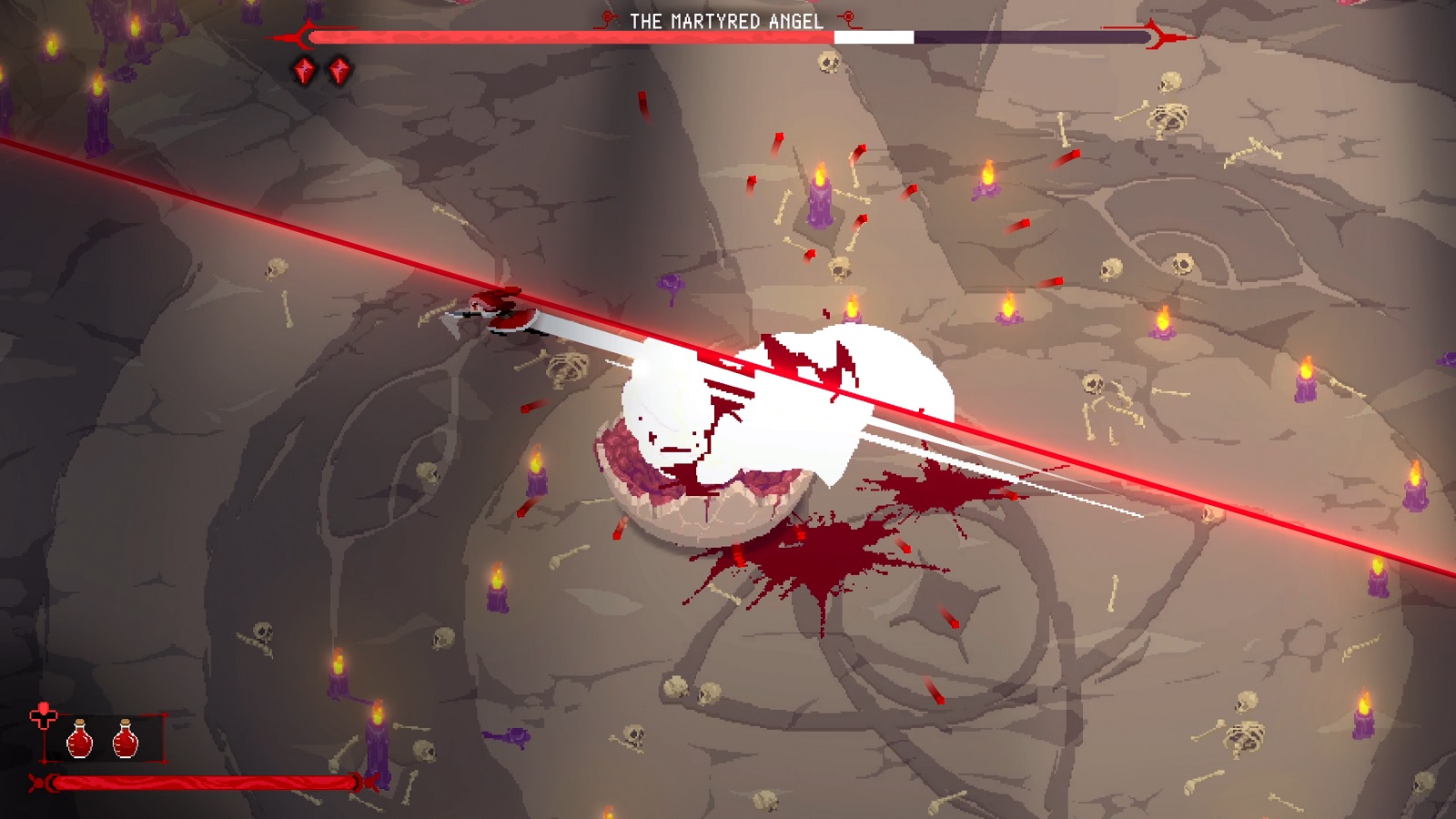
If there’s one reason to pick this up, it’s for the game’s razor-sharp combat. It is one of the most intense and tactically rewarding games I’ve played in a long while. For one thing, you are vulnerable whenever you “focus” on your target. In that time, enemies are free to do whatever they want, and it only takes a split second for everything to fall apart: not only do you take damage from the attack, but you lose all your charge markers. You are constantly forced to choose between guaranteed damage and high burst damage.
The beauty of it all is that sometimes it is not a choice. Certain bosses will try to be as obnoxious as possible, making it so that going for a full charge is not worth the risk. The fact that you are given a choice speaks a lot about the depth of this title.
Rubinite is not just a game that relies solely on its crushing difficulty. The game has clever ways of making things a little easier for players, if they so desire it. The first is in its progression system. At around halfway through a fight, the boss drops a good amount of “blood dust” (the game’s currency), and you get to keep it even if you fall before killing the boss. It also helps that you can take the challenge again at the press of a button. In fact, you can instantly restart the fight at any time if you feel like things aren’t going the way you expected. Finally, you have things like Talismans and Relics that’ll give you the edge in certain cases, if you have the slot space to afford them. All of this on top of the game’s simplified leveling-up system.
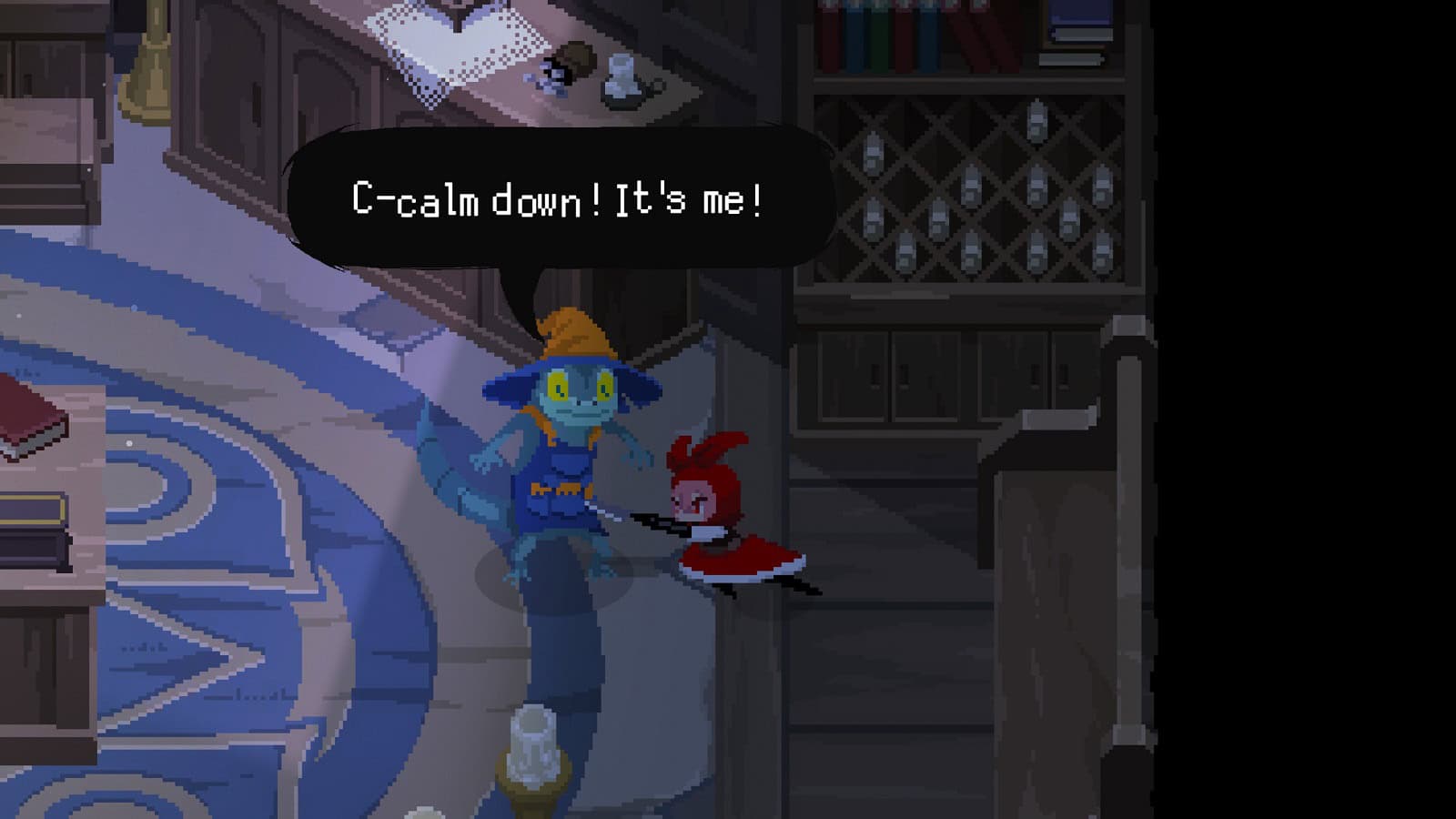
Rubinite’s story, on the surface, should feel familiar to many adventure fans. On the surface, it is a story about Ruby wanting to get revenge on Alcina the Witch for murdering her entire family. But there are levels to it that players won’t immediately understand until they at least finish one full playthrough, where characters like Mira are revealed, as well as the game’s namesake, Rubinite.
There are also elements of mystery and intrigue present in the abandoned church, but it only takes a couple of seconds to figure out what transpired inside those walls. This is probably one of the weakest parts of the game. But considering how good everything else is about the game, you can forgive it for being predictable. Now, what I didn’t expect was the game’s Ghosts and Goblins twist at the end of the game. It was very amusing. I was fine giving this game a solid 8, but after learning the truth and unlocking True Difficulty, I found little reason to give this game anything less than a 9.
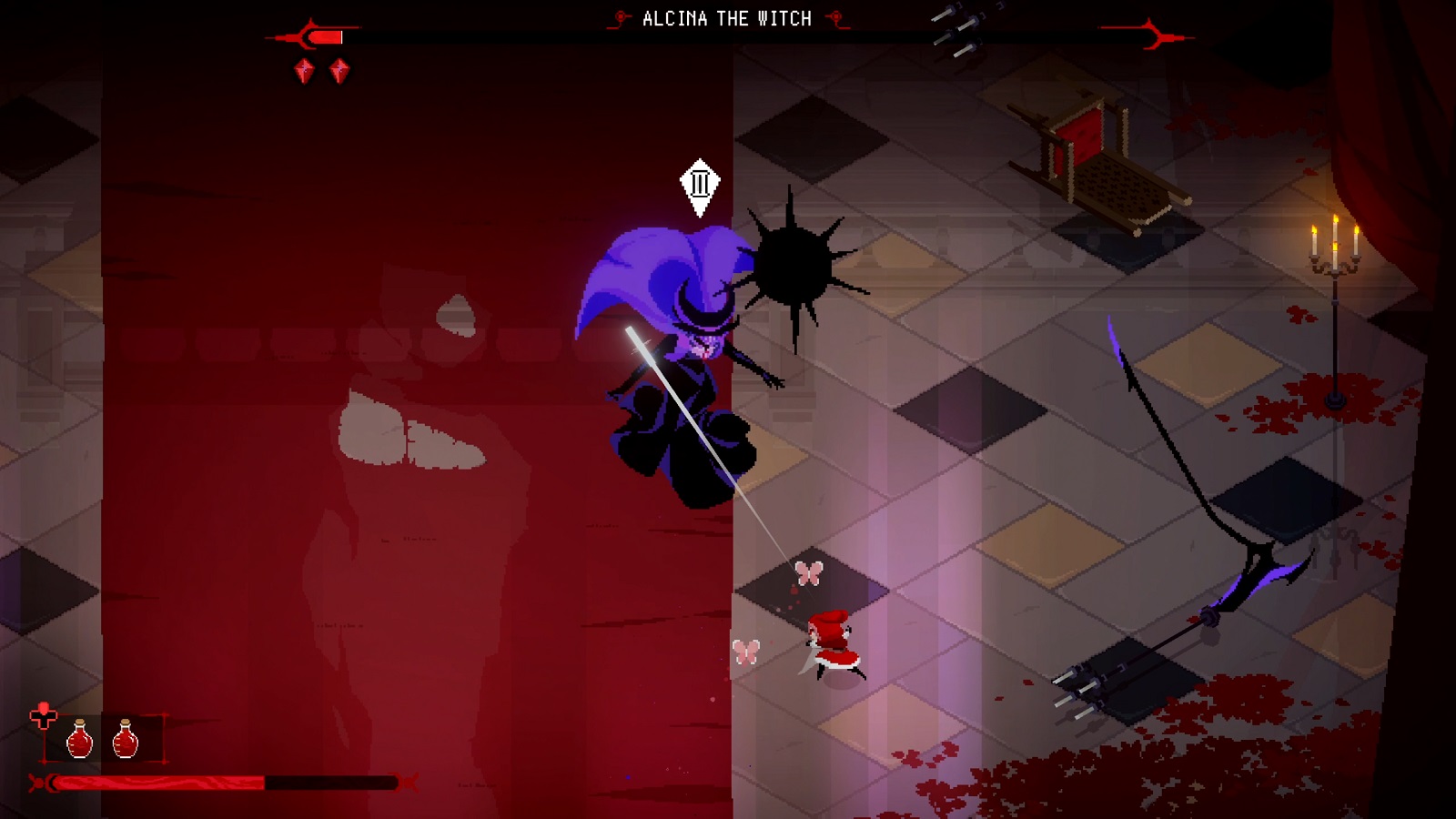
After beating the game the first time, you unlock True Difficulty after offering your save slot as tribute. As it turns out, everything you’ve experienced in the first playthrough was nothing more than a dream about future events. As it turns out, Alcina has plans for you. And not wanting to disappoint, Ruby takes on the challenge again with a twist.
In True Difficulty mode, you die after getting hit once. This is a departure from the first playthrough where you can take damage and drink potions to recover health. A nice touch added is the fact that Ruby is self-aware, and she remarks on “needing” health potions. Amazingly, the change of pace is also reflected on Ruby’s upgrade screen. Every upgrade you invest in Health Potions is automatically refunded, ready for another purchase. Ruby also gets access to a wider selection of talismans as the story progresses, often after breaking the 4th wall and talking to Mira.
It takes roughly 8 hours to complete the game’s base campaign. Subsequent playthroughs have the potential to push playtime past the 20-hour mark, depending on how invested you are. In any case, True Difficulty is the cherry on top of a very well-made game.
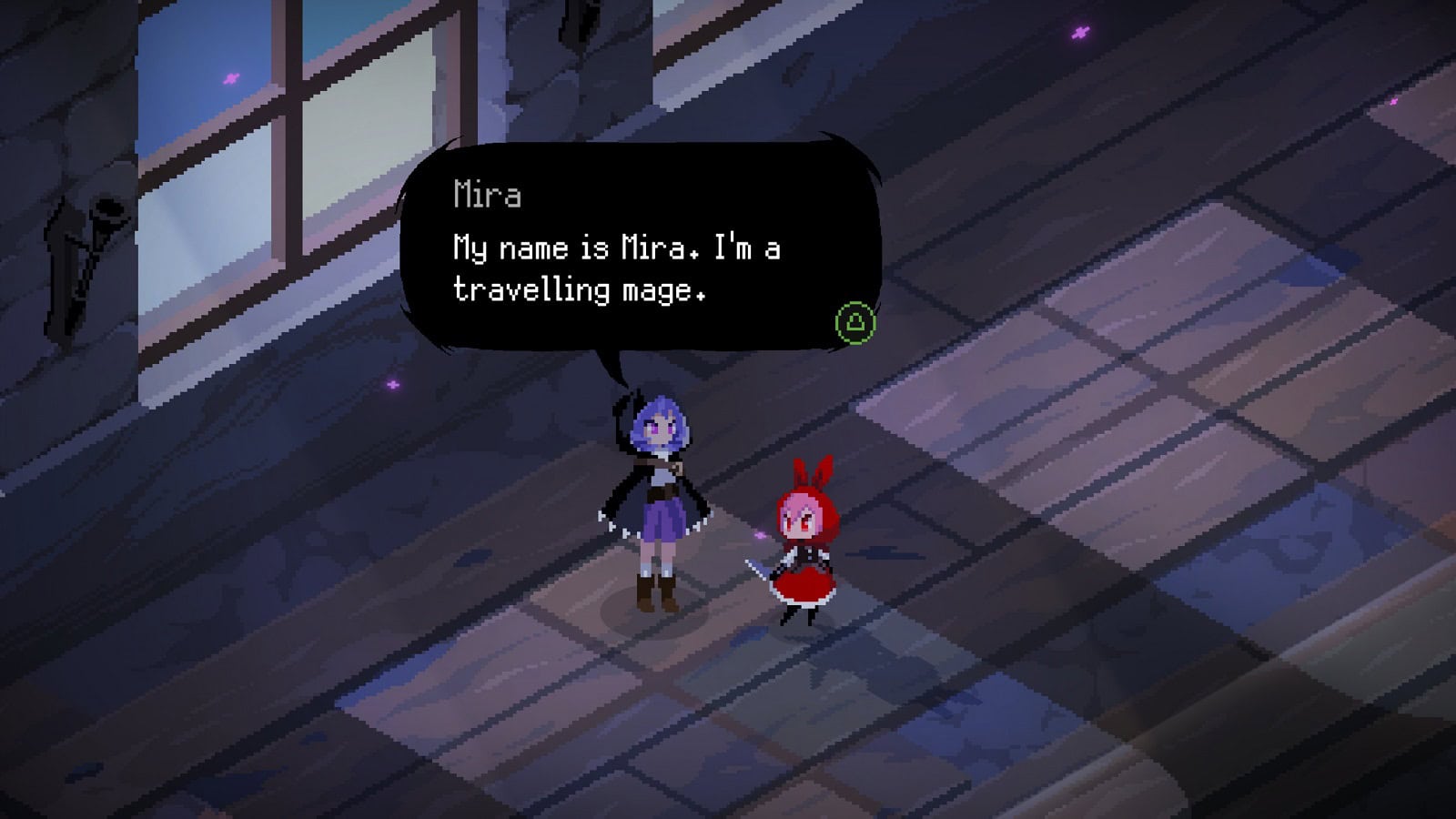
In terms of visuals, Rubinite’s pixel art is very well made. Ruby and her companions may only have a few animation poses, but every single one was used rather effectively. Every ounce of remaining effort seems to have been applied to every single boss in the game. The amount of care and effort is also present in the game’s soundtrack, as every boss fight and emotional moment has its own theme song. It doesn’t get any better than this. Performance-wise, the game ran flawlessly on my mid-range PC. If there are any issues with the game, I did not come across any of them.
Rubinite is a bona fide sleeper hit, and I won’t be convinced otherwise. The game’s demo was already a delight; the full release shattered every single one of my expectations. I was fully ready to enjoy Rubinite’s combat for the short time I assumed it offered, but I didn’t expect the game to hold back its punches and deliver a second-half performance worthy of remembrance. If you like grim, dark pixel art games with thrilling combat and a hint of campfire banter between companions, Rubinite might be something you might be interested in.
Rubinite Review (PC)
Rubinite is a bona fide sleeper hit, and I won't be convinced otherwise. The game's demo was already a delight; the full release shattered every single one of my expectations.
The Good
- Intense and incredibly cathartic combat
- There are ways to make the game easier or harder
- Twist ending
- Streamlined experience at its finest
- Amazing pixel art style
The Bad
- Could use some more hidden bosses or more bosses in general
- First playthrough basically a dry run
- Story is ok at best