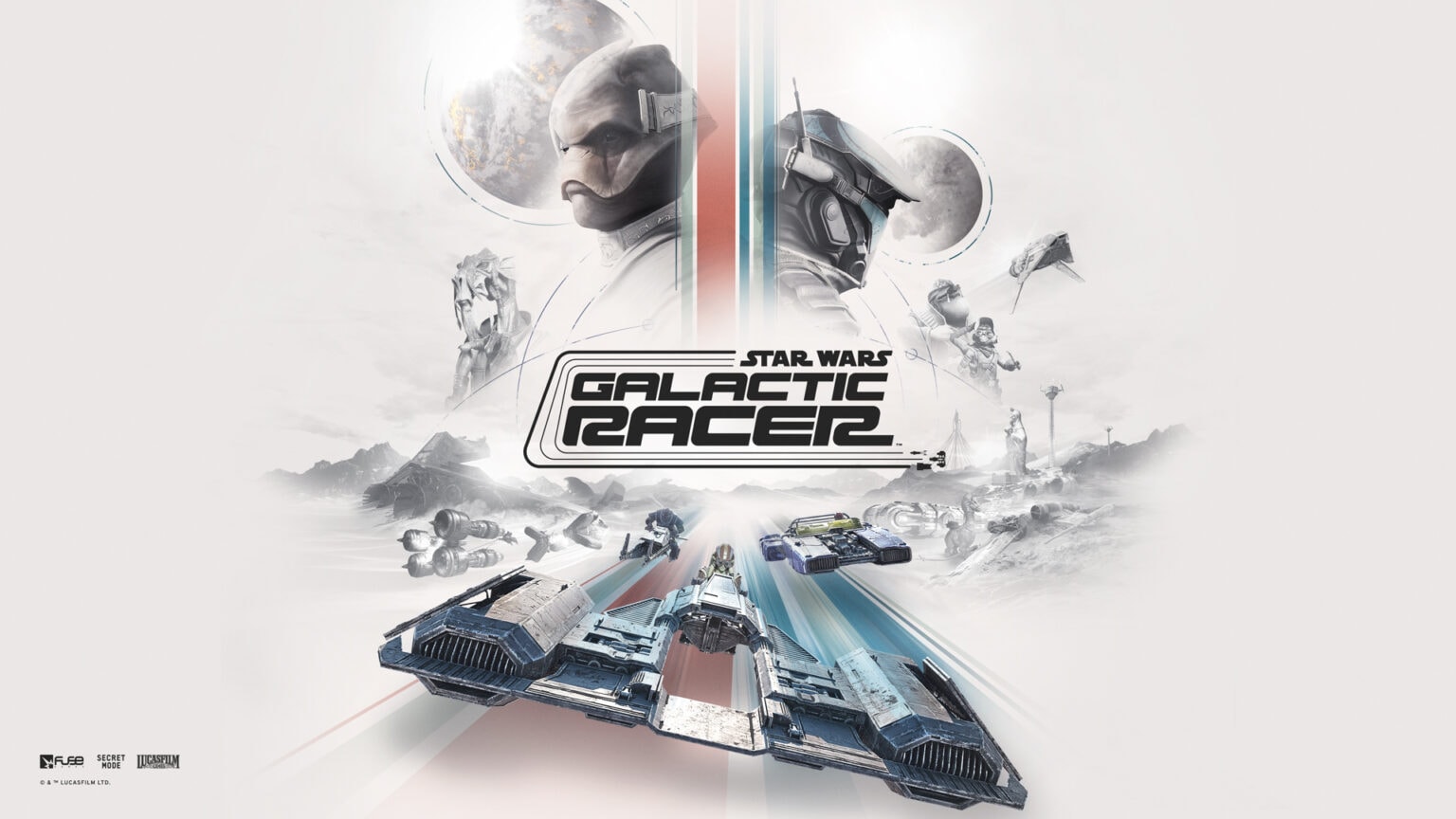
Developer: Fuse Games
Publisher: Secret Mode
Reviewed On: PC
Available On: PS5, PC, Xbox Series X|S
Release Date: October 6, 2026
Review Copy Provided By: Plaion, Secret Mode
I remember the good times when I would simply sit in front of the television in my room playing Star Wars: Racer Revenge on the PlayStation 2. I’d be at it for hours, racing through the Mos Espa Open on Tatooine and the coral banks of the Grand Reef. These were some of my most memorable moments playing as Anakin Skywalker. The insane speed, the thrill, and the excitement are the things I’ve always loved about podracing in Star Wars.
I never thought the day would come when we’d get another racing game set in the Star Wars universe. Thanks to Lucasfilm Games for getting Fuse Games to work on Star Wars: Galactic Racer, because it checks almost every box I’ve wanted from a brand-new Star Wars racing game: awesome racetracks, great arcade modes, incredible speed, classic speeders alongside iconic characters featured in The Phantom Menace, excellent sound design and soundtrack, and, most importantly, impressive visuals.
There isn’t much to compare Star Wars: Galactic Racer to beyond its spiritual predecessors, Episode I: Racer and Racer Revenge. Fuse Games clearly did its homework while bringing some interesting ideas to both single-player and multiplayer experiences. One of those ideas is something I haven’t really encountered much in racing games: a roguelite structure. It’s a very interesting direction.
When the hands-on previews for Galactic Racer went up, I was really excited to play it. Now that I’ve gotten my hands on the game early, thanks to the publisher, I can finally say it: by the Force, this game is refreshing.
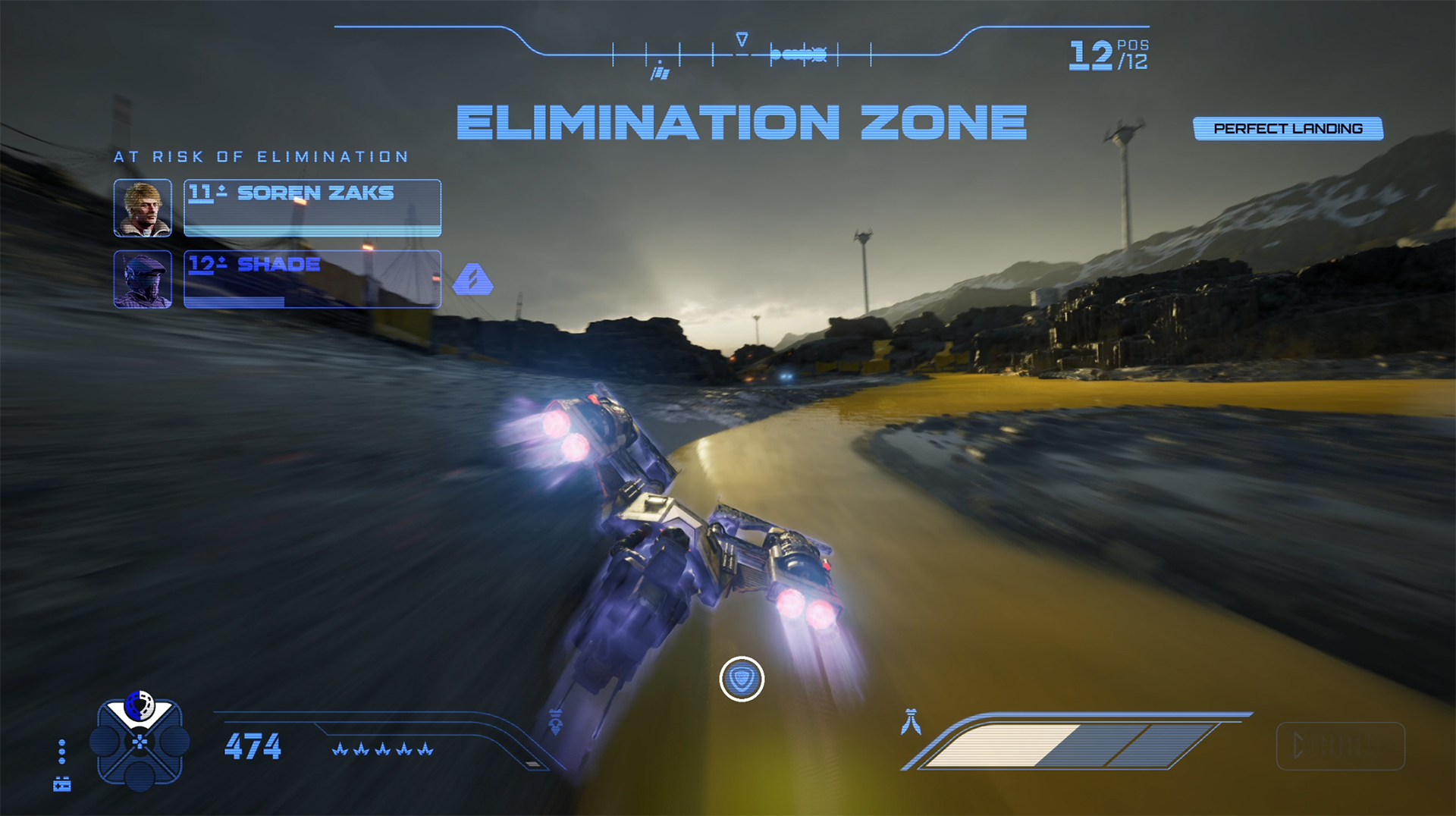
Star Wars: Galactic Racer still features a single-player campaign, but with a huge twist. It incorporates roguelite elements that work surprisingly well. I never thought I’d actually enjoy this direction.
Fuse Games calls it “runs-based” rather than using the traditional term “roguelite.” That distinction makes sense because Galactic Racer doesn’t simply follow the typical roguelite formula. While it uses the basic framework, it does enough differently to feel unique in its own way.
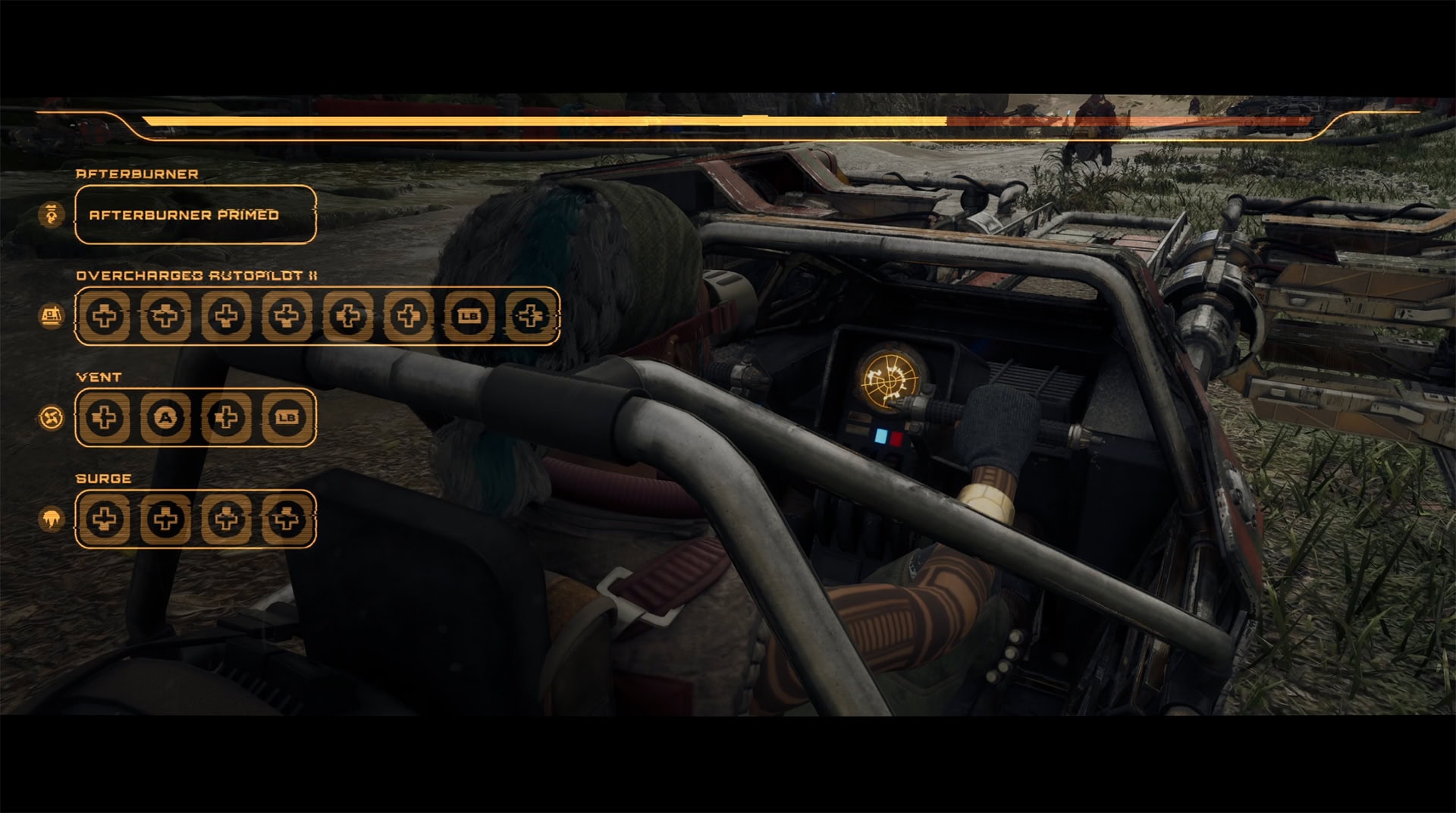
I don’t want to get too technical here, so here’s a high-level overview. If you’re knocked out of a Tour, you essentially start that Tour again. League Tokens serve as your lifeline throughout each run. Lose them all by losing races, then you’re sent back to the beginning of the Tour.
Since it follows roguelite principles, your current speeder is scrapped. In return, you earn currency, Tuning Points, newly unlocked Racer Styles, Kit Points, and new Favors that carry over into future attempts.
Participating in races through this “runs-based” campaign also means you can’t abuse a restart option whenever something goes wrong. If you finish in fourth place, then fourth place becomes part of your current Tour, and you have to deal with the consequences and perform better in the next event.
That makes every race in the single-player campaign feel high-stakes, which makes the overall experience more engaging and challenging. What I also like is that while the event structure and layout are randomized whenever you restart a Tour, the sequence of planets remains the same.
I don’t know how hardcore roguelite players will feel about this approach, but I personally like it because it gives me an opportunity to become more familiar with the tracks between attempts.
Speeder upgrades feel all too similar to the Star Card power-ups from Battlefront II. Instead of the traditional way of upgrading a vehicle with individual, physical speeder parts, upgrades come in the form of cards with different levels of rarity. This means you’ll still have to rely on RNG to get the upgrades you want, which I obviously disliked. But for some reason, it actually fits surprisingly well with the runs-based structure, forcing me to think outside the box and work with what I have rather than always relying on the same set of upgrades.
Racing is naturally about getting ahead, and part of getting ahead is knowing your way around the track. This is where Galactic Racer stands out the most. Its tracks can be intimidating, with tight corridors and dangerous shortcuts constantly presenting high-risk, high-reward decisions.
I also have to give Fuse Games credit for making the controls responsive and well-defined. You can feel the weight of each speeder at high speeds, which makes banking through tight corners challenging to pull off but incredibly satisfying when you get it right. I never felt as though I was fighting against the controls.
That doesn’t mean crashing is uncommon. You can easily misjudge a tight corner and slam into a wall inside the wreckage of a Star Destroyer on Jakku, or find yourself heading directly toward a boulder splitting the track inside the crystallized caves of Crait. There were moments when I genuinely shouted after crashing into something.
You remember that guy during the Boonta Eve race in The Phantom Menace? Yeah. This guy:

Star Wars as a franchise has given us plenty of interesting stories, especially in video games. We’ve seen Kay Vess maneuver her way through the criminal underworld. We’ve witnessed Cal Kestis survive Order 66 and eventually become a full-fledged Jedi Knight. The list goes on.
Unfortunately, Star Wars: Galactic Racer doesn’t meet my benchmark for a compelling Star Wars story.
Its plot focuses on Shade’s desire to dethrone Kester Bool of the Caskadag as champion of the Galactic League as part of a revenge plot. While there may be more to it than meets the eye, the narrative direction ultimately left me disappointed. I wanted something more from it.
The part of the story that mattered most to me was Sebulba’s tale, which sent me straight down memory lane by letting me experience historical podracing events from his perspective.
That makes the campaign’s limited characterization feel like such a missed opportunity because there’s a great cast here. Hibi, the Ardennian, constantly encourages you throughout the game while suggesting absurd upgrades for your speeder in equally absurd ways. Characters like her made me want to know more about the people surrounding Shade, but the story rarely gave me enough.
While the story is the weakest part of Galactic Racer, the game excels in its multiplayer and arcade offerings.
In typical racing-game fashion, Arcade mode includes races, time trials, and checkpoint runs, but there’s also a mode called Scenarios. Here, you play as specific characters from the single-player campaign, each with unique racer traits, and participate in five races during a Tour on a specific planet while following the same “runs-based” structure.
It’s a great way to earn additional Kit and Tuning Points for new customization options and permanent speeder upgrades. However, this also feels like another missed opportunity to tell smaller stories about each racer.
I would have loved to learn more about characters such as the Zabrak Nik Skandaro and the Trandoshian Malis Vazosks. Star Wars has always been about its characters, and Scenarios could have been another opportunity to explore this cast beyond what you learn from eavesdropping on conversations or occasionally speaking with them during the campaign.
The game features three distinctly different types of repulsorcraft: Landspeeders, Speeder Bikes, and Skim Speeders.
Podracers, however, don’t fall into any of those three categories. They’re treated as something beyond what these standard repulsorcraft can achieve in terms of sheer speed.
Each vehicle type has unique traits suited to different playstyles. Landspeeders are the most durable and offer smoother handling, making them ideal for players who prefer a well-balanced repulsorcraft. Speeder Bikes are smaller and quicker when recovering through corners. And then there’s my personal favorite: the Skim Speeder.
This repulsorcraft feels more akin to the Podracers of old. It has two turbines positioned alongside each other, with a pod toward the rear-middle for the pilot. Beyond looking fantastic, it maintains its top speed through wider racing lines and handles cornering particularly well. What I really like, though, is its ability to roll onto a Knife Edge when navigating particularly challenging corners. That combination is why I prefer the Skim Speeder over the other two.
At first, I was baffled that Podracers were excluded from the main speeder selection. But considering how the game is designed, Podracers are simply too powerful. Including them alongside the other repulsorcraft could undermine the different playstyles those vehicles offer.
I’m glad Fuse Games didn’t dismiss Podracers entirely and instead contained them within their own exclusive Tour. I never thought I’d actually like this decision, but separating them places more emphasis on game balance and preserves the different upgrade paths available to the standard speeders during Multiplayer Tours.
Customization, unfortunately, is pretty basic. While you can mix and match parts from different models within the same type of speeder, there isn’t enough depth to let you create something that truly feels like your own. You’re limited to premade patterns, while even the available colors are restricted to fixed presets.
For a multiplayer racing game where I’d like my speeder to feel recognizable as mine, the lack of freedom here is disappointing.
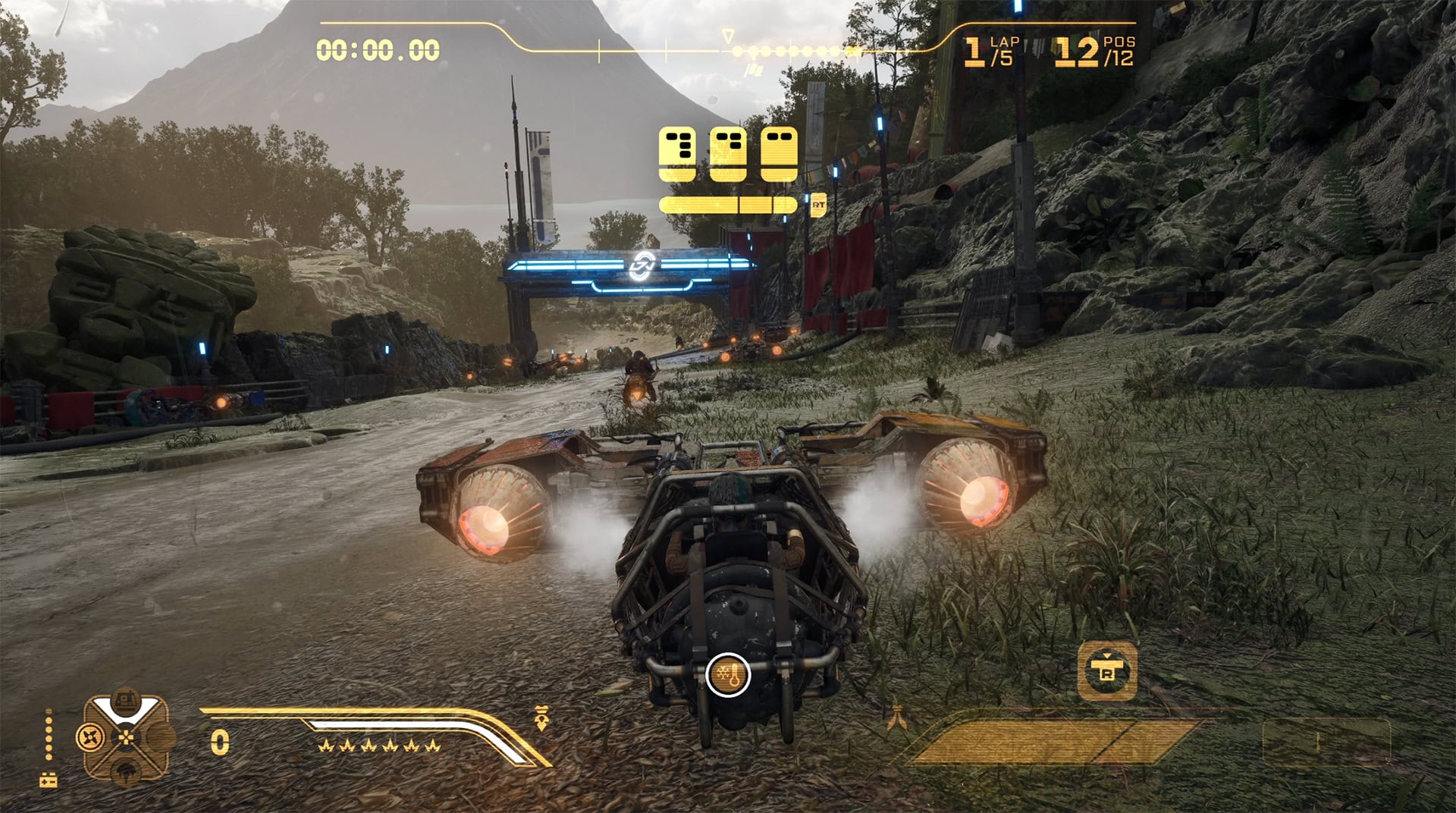
Despite the lackluster customization, it’s the racing that matters most in Galactic Racer, and there’s rarely a dull moment in either the single-player campaign or multiplayer Tour mode.
Getting into the cockpit and completing the pre-race check minigame, which rewards you with abilities that are immediately available if you finish before the timer expires, is already a satisfying way to begin. Then you start the engine and hear the turbines roar to life, accompanied by flames shooting from the exhaust. The magnificent audio design makes the buildup to every race feel exciting before you’ve even left the starting line. And once the race begins, it’s all-out, high-speed competition where the only thing that matters is winning.
I had to do whatever it took. Sometimes that meant slamming into another racer to disorient them or potentially take them down Burnout-style. Other times, I’d get ahead and drop disruptive mines behind me to disable their abilities. I do whatever it takes to win. And when it works, especially during those close moments when I fly past another player online and steal second place from them during a Tour, it’s an incredibly satisfying feeling.
I’ve played a handful of multiplayer sessions with other media outlets for a limited time, and so far, it’s by far the best way to play Galactic Racer. That said, the computer-controlled racers are surprisingly good, too. Never underestimate them. They know when to activate their Afterburners and Ramjets, frequently use shortcuts to get ahead, and aren’t afraid to use abilities to take you down.
There’s still a lot of enjoyment to be had when racing against the AI, but it’s never quite the same as competing against an actual player. Computer-controlled racers simply don’t think the way another person does. A human player can make the slightest mistake when deciding which path to take, misjudge a turn, or crash into the wall dividing two routes. In a game this fast, even a split-second mistake can make a night-and-day difference in how much distance separates you from another racer. That unpredictability is what makes multiplayer races much more exciting for me.
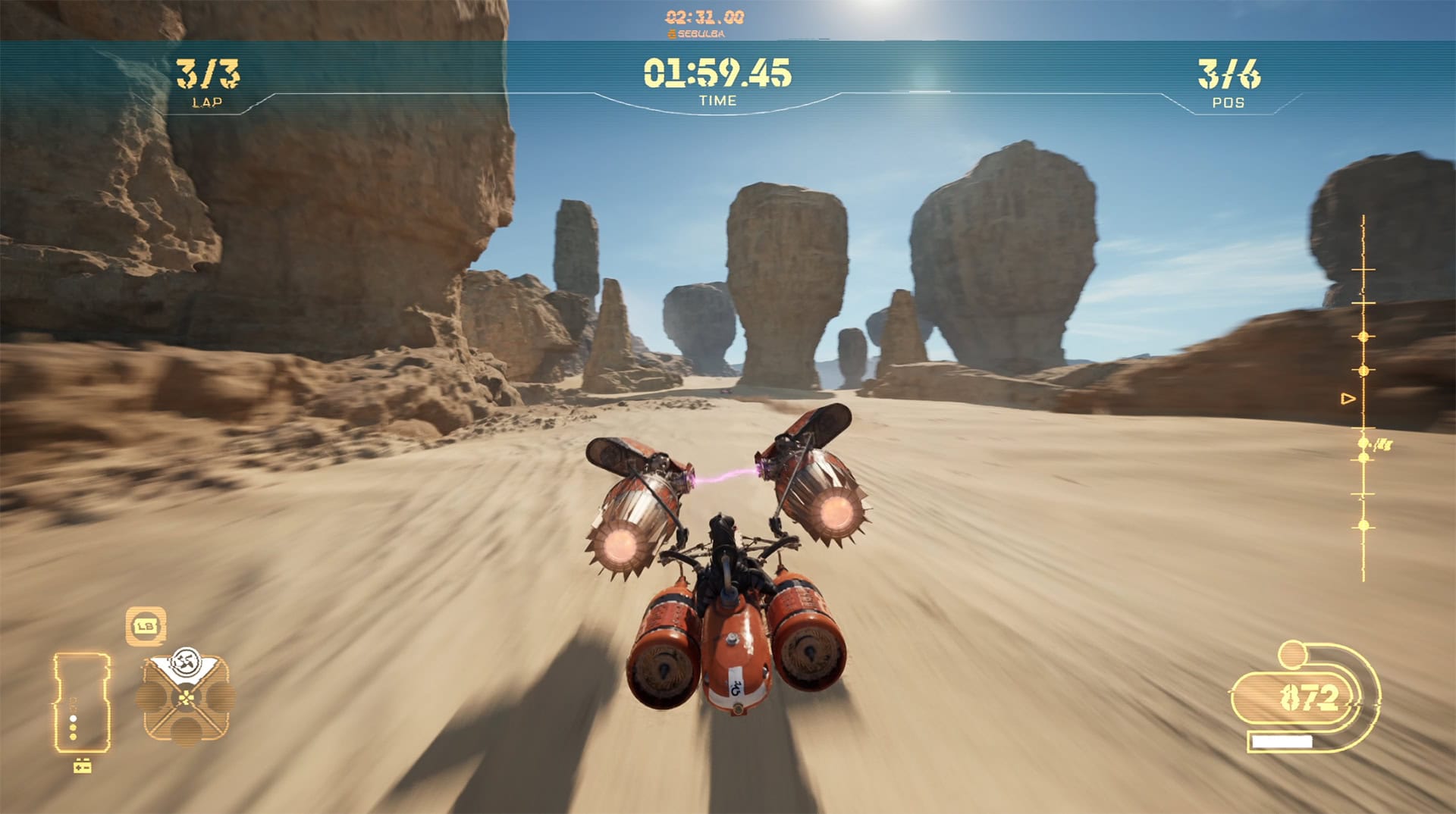
Galactic Racer wouldn’t be able to fuel that same adrenaline without an authentic, John Williams-inspired soundtrack. Gordy Haab is the composer, and if you’ve played EA’s Battlefront games, you’ll already know how well he can capture the sound and feeling of Star Wars.
Haab has done it again with Galactic Racer. The sweeping orchestral pieces genuinely evoke the magic of John Williams’ iconic score while still giving the game a soundtrack of its own. It fits beautifully with the high-speed races, especially during those intense moments when you’re trying to overtake another racer or make that final push toward the finish line.
Star Wars: Galactic Racer, at its core, is an amazingly well-designed Star Wars racing game. Despite its limitations and flaws, there was never a moment when its high-speed, high-stakes races became dull. Its tracks are impressively designed, capturing the look and feel of each location in the Star Wars universe, while the runs-based structure makes every race feel like there’s something at stake. Combine that with responsive controls, excellent sound design, and the sheer thrill of racing at breakneck speeds, and Galactic Racer delivers the kind of Star Wars racing game I’ve been waiting years to play. I can’t wait for the servers to go live and race against more players to see just how far my racing skills can take me in a galaxy far, far away.
Star Wars: Galactic Racer (PC)
Star Wars: Galactic Racer, at its core, is an amazingly well-designed Star Wars racing game. Despite its limitations and flaws, there was never a moment when its high-speed, high-stakes races became dull. Its tracks are impressively designed, capturing the look and feel of each location in the Star Wars universe, while the runs-based structure makes every race feel like there’s something at stake.
The Good
- Excellent high-speed racing
- Responsive and satisfying controls
- Fantastic track design
- Runs-based campaign works surprisingly well
- Multiplayer makes races even more exciting
- Excellent sound design and soundtrack
The Bad
- Underwhelming story
- Supporting characters feel underdeveloped
- Limited speeder customization
- Scenarios miss an opportunity for more character stories