Developer: Asobo Studio
Publisher: Focus Entertainment
Reviewed On: PS5
Available On: PC, PS5, Xbox Series X|S
Release Date: August 27, 2026
Review Copy Provided By: Focus Entertainment
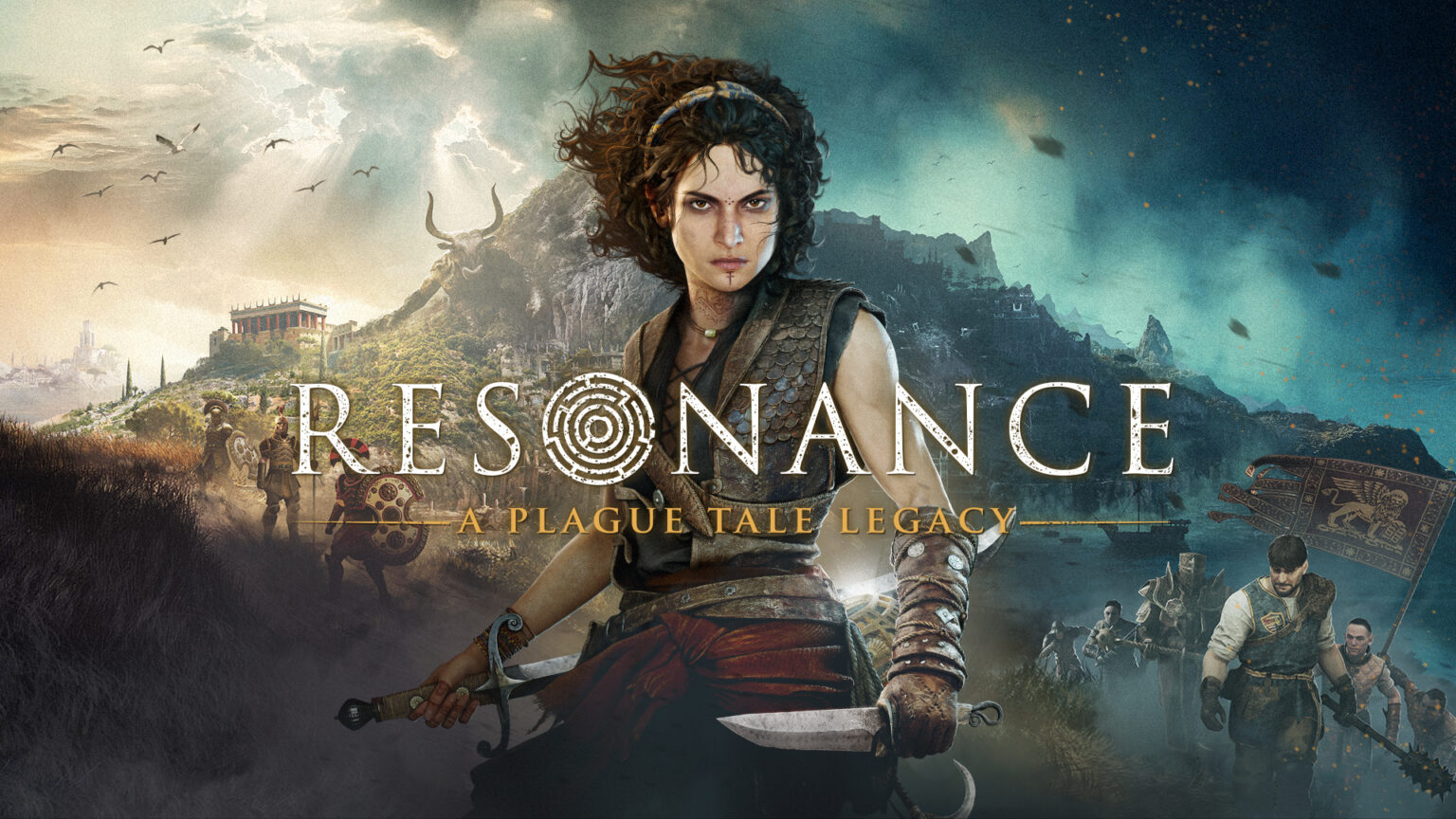
I’ve always been a fan of the Plague Tale series. Amicia and Hugo got me instantly, that us against the world story, where two kids only ever had each other hit really close to home. So when Asobo announced they were switching things up for Resonance, I was in. Sophia was easily the most enigmatic thing in Requiem, and the idea of her running with pirates had me imagining every adventure waiting for us.
She is a pirate. Technically.
Resonance has way more in common with Tomb Raider than whatever you’re picturing right now. You’ll spend most of this game solving puzzles and picking through ruins.
It starts with Sophia as a child, visions she never asked for and an illness handed to her by people who wore the cloth and should’ve known better. Her father goes looking for a cure. That search drops them into a town of plunderers, and those plunderers end up being the closest thing this story has to a home.
There’s Irene, the veteran who takes Sophia seriously before anyone else bothers to. Faro, her father’s right hand. Ezra, the enormous uncle-figure. Years pass, Sophia grows, and by the time she’s old enough to chase the thread herself she’s doing it in her father’s footsteps with a newly minted plunderer named Leni beside her.
The story’s good. There are real tragedies in here, the banter during the puzzle bits is warm in the way this series has always been warm, and the big dramatic moments are staged with obvious care.
None of it hit me like Innocence and Requiem did, though, and I went back and forth on why.
I think it’s that I never rooted for anyone but Sophia. The crew’s likeable enough, but likeable isn’t loved, and the game never gives most of them the time to become more than that. So when it reaches for loss, and it reaches plenty, there’s nobody in the frame I was scared of losing.
Which brings me to the Godfather problem, because that’s exactly what this is. Part III isn’t a bad movie. It’s a perfectly competent one standing next to something that ruined the scale for everything after it.
And like Godfather Part II, Resonance runs two timelines. Sophia’s counterpart is Theseus, and if you’ve read any Greek mythology at all you already know where this is going. This is Asobo’s retelling of the myth with its own twists thrown in, and it’s the thing that ties the whole game together. Easily my favourite part of the story.
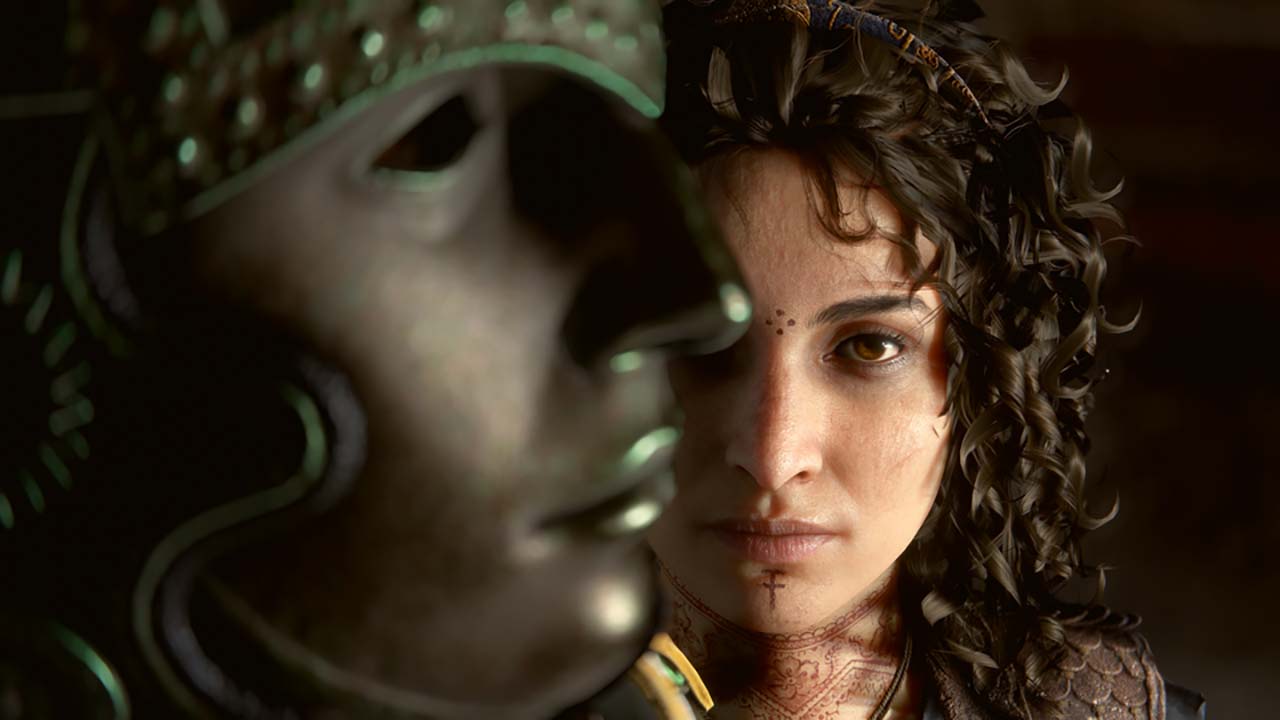
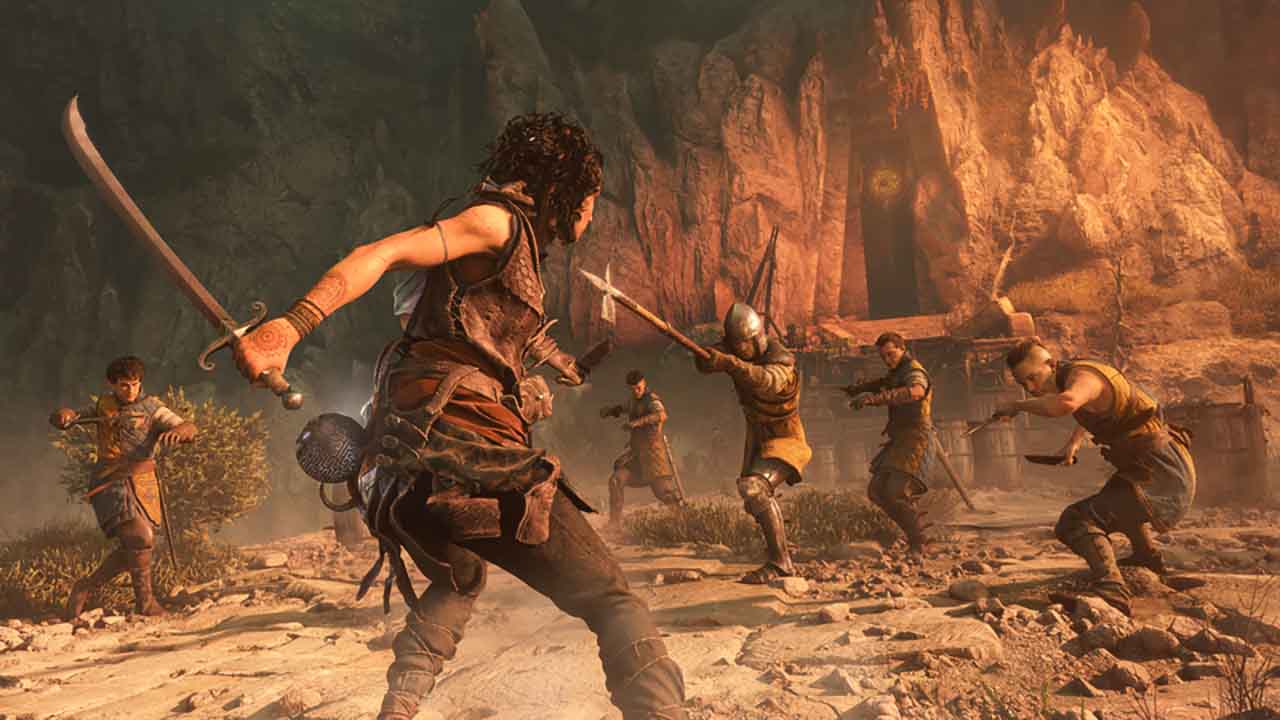
And speaking of swashbuckling, the biggest change here is combat. Asobo’s dropped the series’ tried and true formula of Amicia crouched behind cover chucking rocks at people’s noggins. Sophia goes in blades first.
Man, I wanted to love this.
You block, you parry, you dodge, you attack. That’s it. That’s the whole kit, and it’s the same kit you’ll finish the game with, give or take a few tweaks. Whatever novelty there is in finally swinging back at someone in Resonance wears off fast, and what’s left underneath is about as basic as it gets. Maybe it’s the animations. The swings never look right and they never feel right, and there’s no weight to any of it. No crunch. No moment where a hit lands and you actually feel it land.
The enemies don’t do much to help. Sword-wielding grunts, cannon fodder mostly. Archers who plink at you from range, though I’ll give them this: they whistle before they fire like the Seraphites in The Last of Us Part II, and that’s a genuinely great touch. Spearmen with unblockable lunges, the only ones that ever gave me trouble. Big lads with more health. Lads with shields. That’s your lot.
Oh, and you’ve got three hit points. Three straight hits and you’re done. The only way to get any back is to kill someone mid-fight, which sounds fine until you meet the ones that combo you. Some of these blokes hit twice a row. Two thirds of your health, gone, because you read one attack wrong. So you play it safe. You wait. And you eat the third hit anyway and go back to the checkpoint to do the whole thing again.
You earn resonance points as you go, either by proving yourself in a fight or just by poking around the world, and you spend them on the game’s skill tree. There’s only a handful of things to buy. You can learn to block unblockables, dodge further, or unlock a throw that sends someone flying if you time it right. Sounds fun on paper. In practice none of it changed how I actually played. These aren’t new tools, they’re variations on the two you already had, 1a and 1b instead of a proper second option. You still end up attacking or waiting to parry, because the game never gives you a reason to do anything else.
Combat was easily my least favourite part of the experience, and that’s coming from someone who lives for good combat. Which is the frustrating bit. This was the change I was most excited for.
There was a moment where Sophia found herself on a beachfront and my grandfather, standing behind me, went “That looks real, video games are wild now frfr.” Then he dapped me up.
Kidding aside, even he could see it. Blue water rolling onto the sand. Overgrown ruins and gilded walls gone faded. Whole cities mid-celebration with fireworks to match. I lost count of how many times I actually gasped going from one scene to the next, gushing at whoever happened to be in the room about how beautiful it all was.
It’s a change of scenery too. Innocence and Requiem were fourteenth century France, all mud and grey skies and burnt-out villages with famine and disease doing the heavy lifting in the background. Resonance jumps back fifteen years before any of that and swaps the palette entirely. Everything here is sun and salt water, stone that’s been baking for a thousand years. And when it finally takes you into the myth proper, the armour and the great halls and the crowds packed in around them, it genuinely feels like you’re in ancient Greece.
Most of the adventure happens on one island with Greek ruins strewn all over it. There’s real cohesion to them and there’s beauty in them, but by gawd did I want more. Not more of the same island. More places.
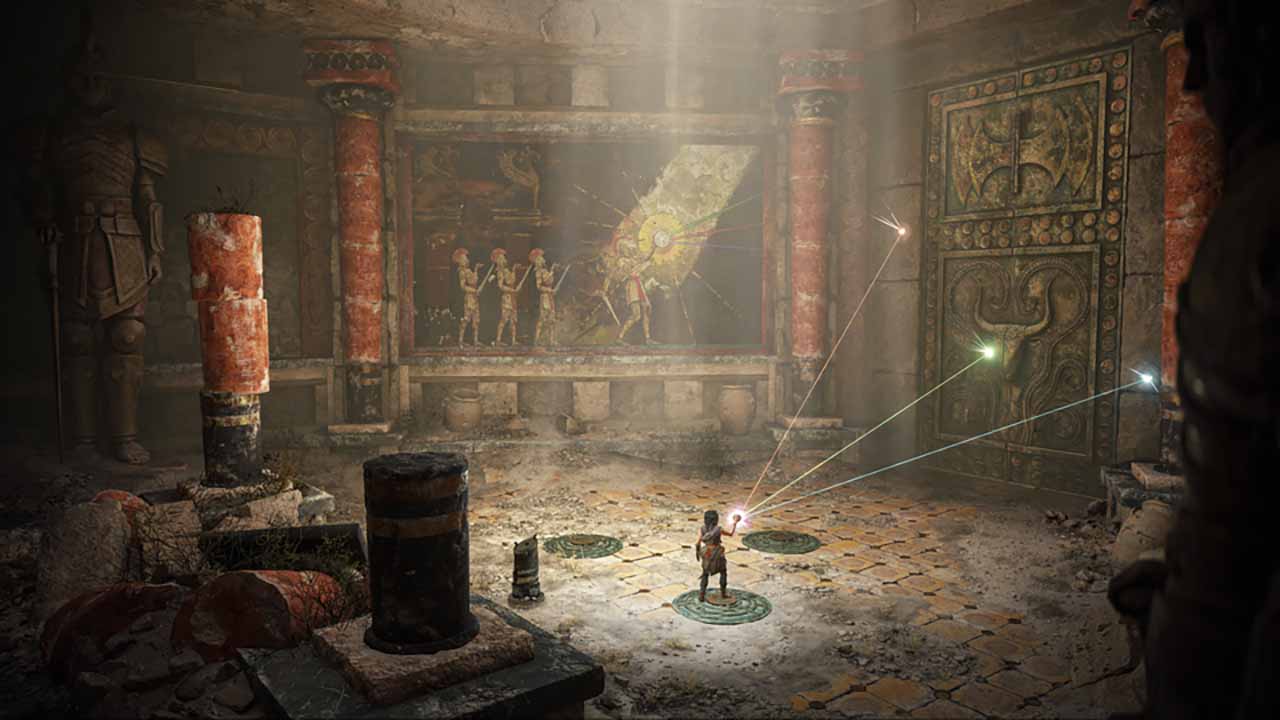
And like I said, most of your time goes into puzzles. Some are simple, point a sphere of light and match the colour to a gemstone. Some are proper exploration in little hub areas where you work out where to go using Sophia’s notebook, which is lovely in its own right. You can see her father’s scribbles in the margins, still guiding her. And some are enormous, multiple moving parts, and I’m not spoiling a single one.
Leni’s with you for most of it and she’s great, mostly because the game never makes you manage her. No command wheel, no button prompt. She just reads what you’re doing. Walk up to an unlit brazier and she lights it. Stand at a puzzle that needs weight on a plate and she’s already standing on the plate.
The puzzles are solid, and hearing them work is half the fun. Gears clanking, ancient architecture grinding into motion above you, stone doing things it probably hasn’t done in a thousand years. It’s a great feeling, working something out and then hearing the building prove you right.
Sophia picks up charms as she explores, and they’re worth the detour. Beads, bracelets, armbands, all giving you some small passive edge, a wider parry window, better crits, the odd projectile sailing harmlessly past. None of them reinvent anything, but they’re fun to collect and it’s satisfying to feel a fight get a fraction easier because of something you found in a corner. The other treasures don’t do a thing for you mechanically and I liked those even more. A puppet. A play ball someone in the plunderers’ town clearly used to own. Little objects with no purpose except to remind you the world is alive.
Every Plague Tale game gives you something to be afraid of and something to hold it back with. Innocence had the rats and it had fire.
Resonance has glowing dust.
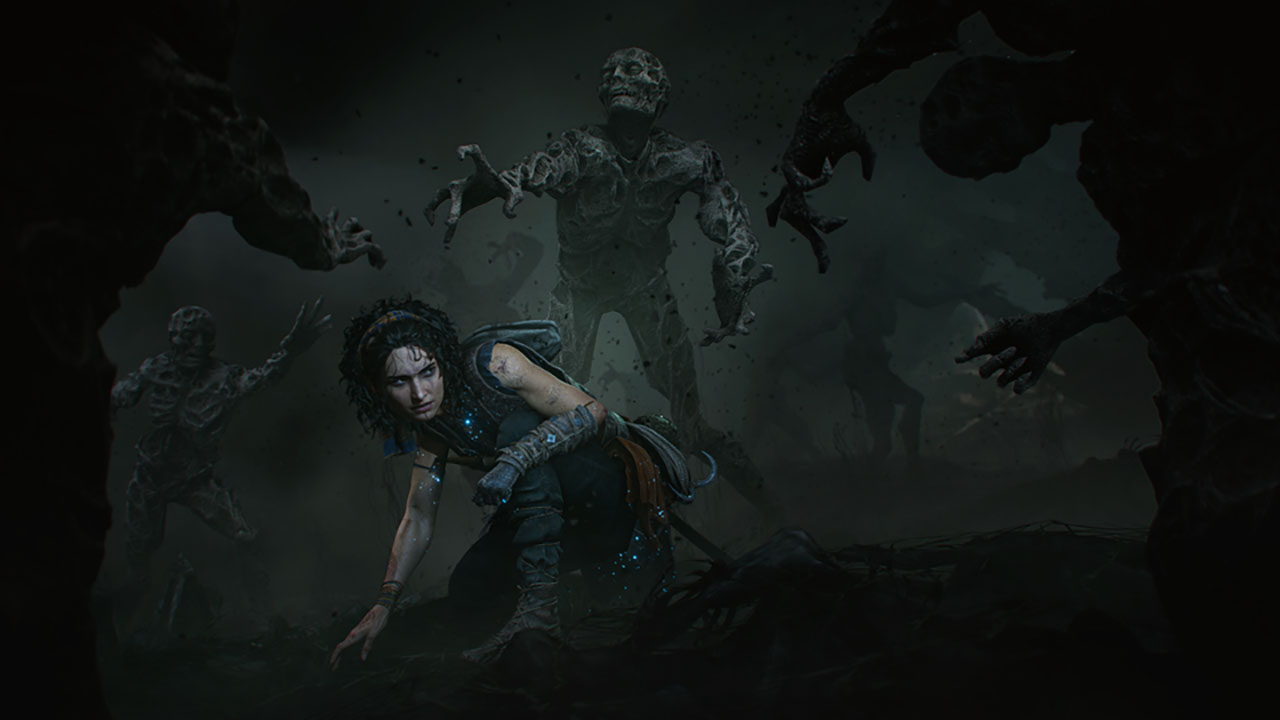
Here’s the thing though. It’s beautiful. Walking through the dim stretches of this game, the stuff kicks up around your ankles and hangs there, and you leave this faint glowing trail behind you like something out of a dream. I caught myself stopping just to look at it more than once. It also, probably by accident, makes it dead easy to retrace your steps. Lost in a dark corridor? Just follow the breadcrumbs you didn’t know you were dropping.
Which is a lovely trick, right up until they tell you what the dust is for.
Because disturbing it pulls attention. So you slow down, you pick your route, you keep still when you have to, and light is still the answer it’s always been in this series. It works. Slowing a player down is what these games have always done best, and Resonance knows exactly which muscle it’s flexing.
And when it decides you’ve been careful long enough, the chases are frantic. Absolutely frantic. Dust exploding off every surface as you sprint, no time to think about where you’re going, sound design doing horrible things to your heart rate. Those sections had me white-knuckling the controller in a way nothing else in the game managed.
So the build is there. Like any decent horror film, Resonance keeps the thing in the closet for as long as it possibly can, and that’s a gamble. Withhold well and you get an oh shit moment people talk about for years. Withhold badly and the audience has had so long to build something in their own head that whatever you show them lands as a shrug. That’s it? That’s what all that was for?
I landed closer to the latter.
The rats worked because rats are real. You know what a rat is. You’ve seen one somewhere you really didn’t want to, and all the game had to do was multiply that by a thousand and let it loose in an alley you couldn’t get out of. Nothing needed explaining, because the fear of rats is already primal.
The monster in Resonance is a remix of something out of the myth, and it never quite gets there. Looks incredible, mind you, and being hunted by it is properly frightening. It just isn’t the older, primal fear that Innocence found.
The best monsters are usually the ones you already understand. Resonance built one you have to be told about first.
Here’s my actual problem with Resonance, and it’s the one that soured everything else.
Somewhere near the middle, the game stops moving. Not the plot exactly, since things technically keep happening, but the sense that any of it is heading somewhere. You solve a puzzle. You fight a few soldiers. You explore a bit. Then you do all three again in a slightly different ruin, and again after that, and the story you’re supposedly chasing never gets any closer.
And believe me, the game tries to cover for it. Sweeping vistas, ancient ruins that look like nothing else out there, a forced combat encounter every time the pace threatens to flatline. None of it worked on me. You can throw as much grandeur at a stretch as you like, but you can still feel when a story’s running in place, and this one runs in place for a good long while.
What makes it worse is knowing what’s on the other side. In the last quarter, Resonance drops new mechanics on you and I let out an actual audible gasp. Not because it was flashy. Because it was finally, unmistakably unique. This was what I’d been waiting for.
Because everything else on offer, we’ve seen. The puzzles, the chases, the traversal, all of it exists somewhere else in some other form. The rats were what made Plague Tale great, the thing nobody else had. Resonance has its own version of that. It just sits on it for far too long.
Resonance is a labyrinth in every sense. Undeniably gorgeous, but far too willing to lead you in circles through one breathtaking ruin after another, deploying fun set pieces along a journey that spends a bit too long in the maze before it finds its way forward.
Resonance: A Plague Tale Legacy (PS5)
Resonance is a labyrinth in every sense. Undeniably gorgeous, but far too willing to lead you in circles through one breathtaking ruin after another, deploying fun set pieces along a journey that spends a bit too long in the maze before it finds its way forward.
The Good
- Gorgeous Visuals
- Good Story
The Bad
- Simplistic Combat
- Bad Pacing
- Cast never quite lands