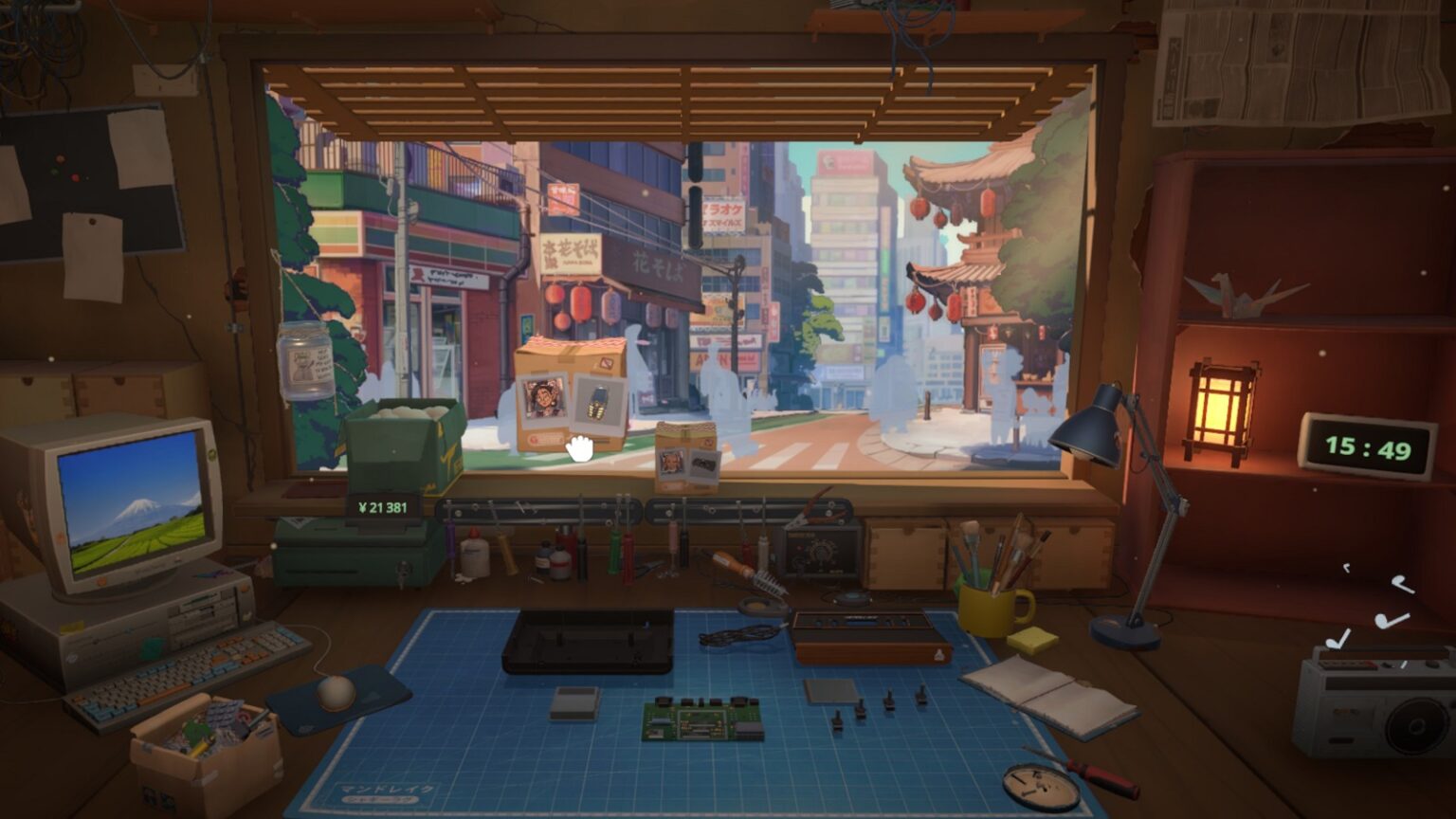
Developer: Mandragora
Publisher: tinyBuild
Reviewed On: PC
Available On: PC
Release Date: August 06, 2026
Review Copy Provided By: tinyBuild
Do you ever get the feeling that you’re in way over your head too fast? That’s what it is like playing ReStory: Chill Electronics Repairs past the first few days of opening your repair store. Of course, it may all be a figment of the imagination, and it may be a case of creating something out of nothing… right? Oh well, feel free to fix electronics all day without a care in the world, because progress stops for no one, not even for a highly respected repairman.
ReStory: Chill Electronics Repairs is a “cozy” repair simulator game where players run a small electronics repair shop after replacing the previous master who left after they didn’t see eye-to-eye with the other shopkeepers in the area. Let’s leave it at that, for now. Your initial goal is to grow the business and take in more customers and then to eventually take on more complex jobs. Unfortunately, there is nothing simple about living around Akihabara, and it won’t take long for trouble to find your cozy corner. How you deal with the situation will determine how the story plays out, while affecting numerous characters in the process.
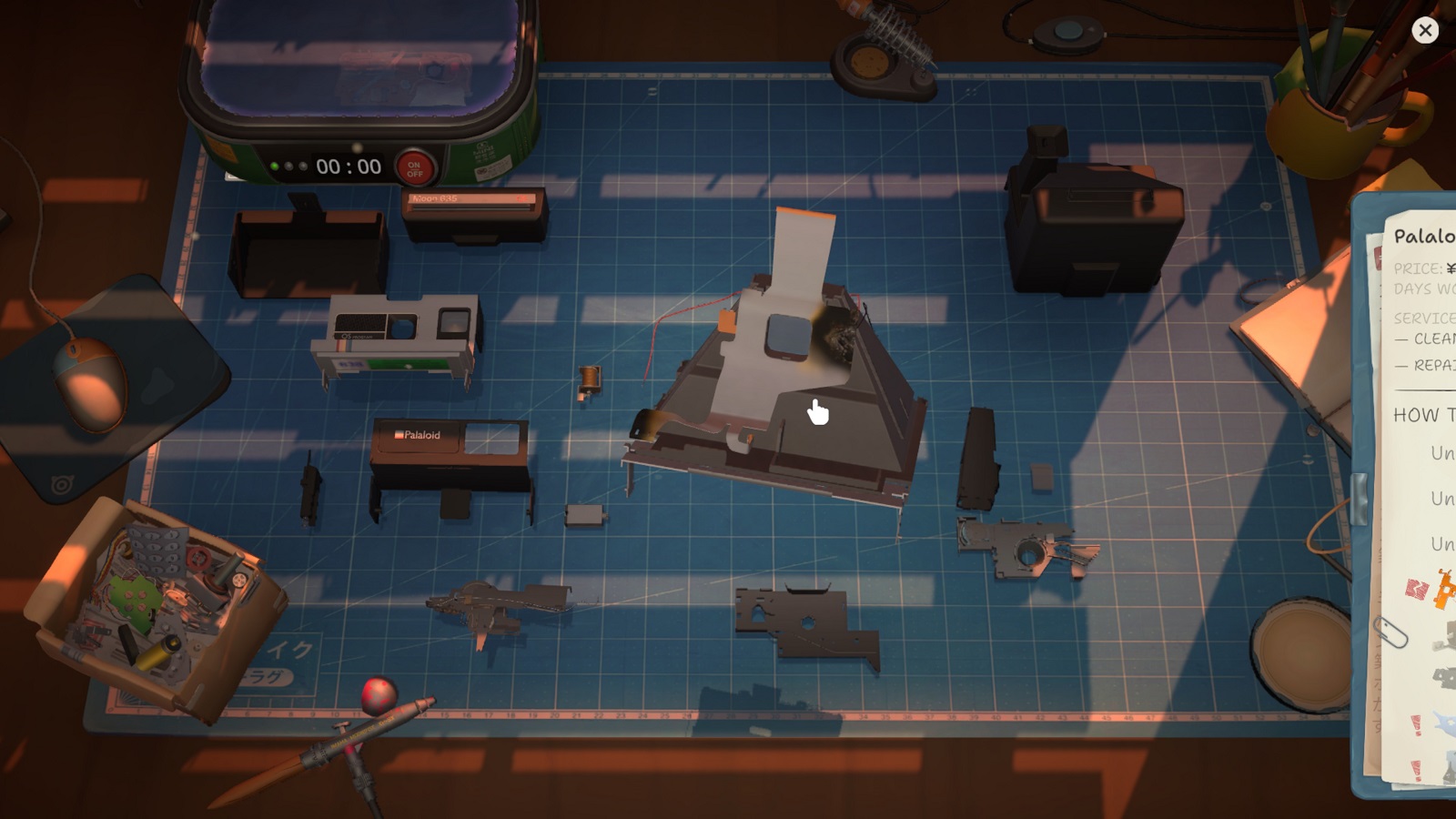
The main gameplay loop of ReStory revolves around the disassembly and cleaning of electronics. The electronics vary in complexity and component count, but no matter what you have on the table, it will have screws to remove and components to take apart. You will start the game working on simple stuff like “not” Nokia 3310s, and then eventually move on to more complex ones like “not” IBM Thinkpads.
One of the things I appreciate about the game is that it distinguishes parts wherever possible and shows the order in which components are generally put together. You are not expected to follow a strict build order. As long as the components are in the right place, and there is a path to put them there, everything falls into place. It is made all the easier by the fact that you don’t need to flex your repair knowledge, as any broken component can simply be trashed and replaced after being bought new from the factory or scavenged from a donor part of another electronic.
A typical day in the repairman’s life starts with checking for requests online via e-mail. After accepting the job, the courier will arrive shortly to deliver the electronic(s) that need to be repaired. Every so often, story characters will appear and give you electronics that require a license to repair. It’s a way of advancing the plot while justifying the need to purchase more licenses.
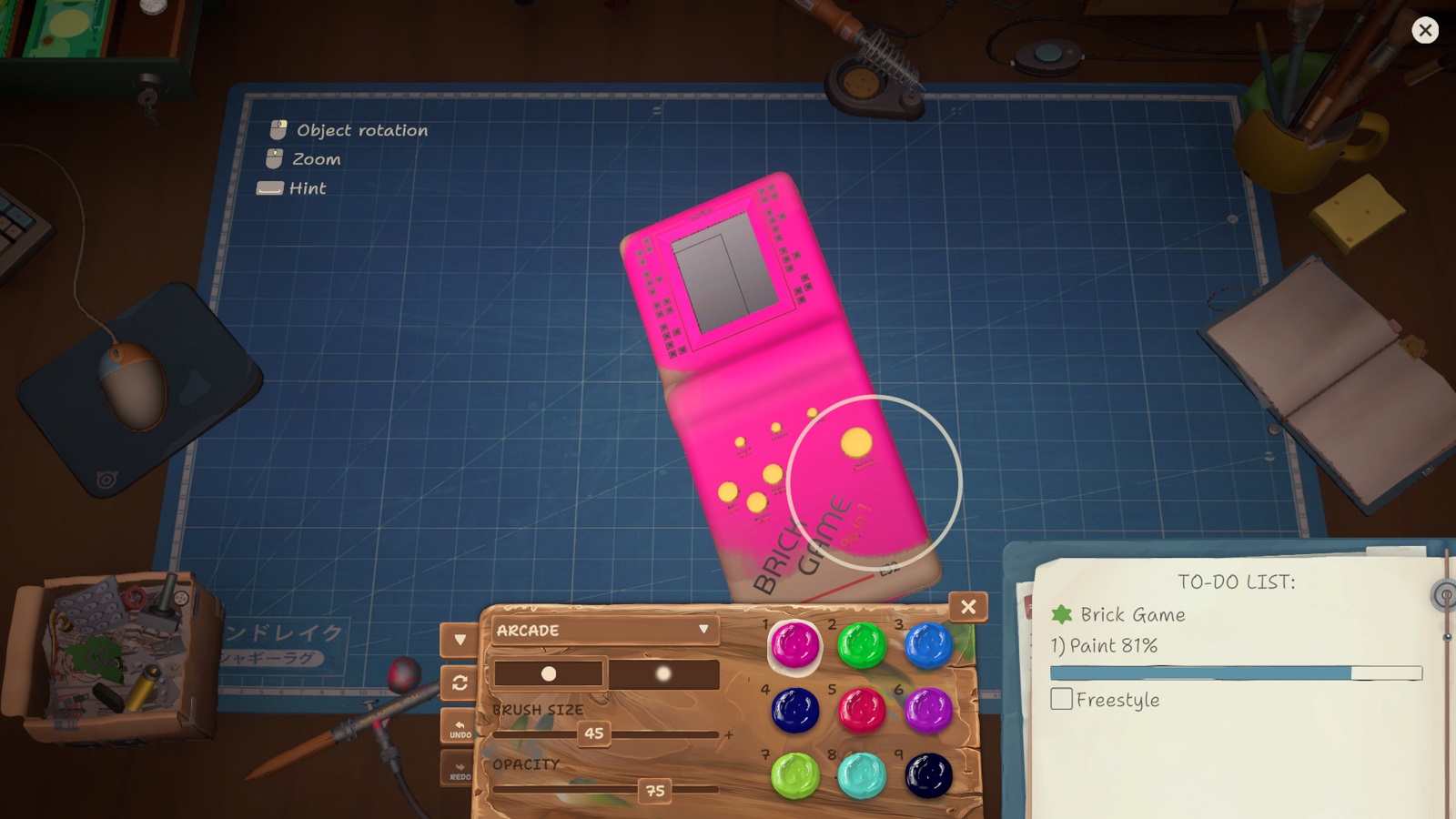
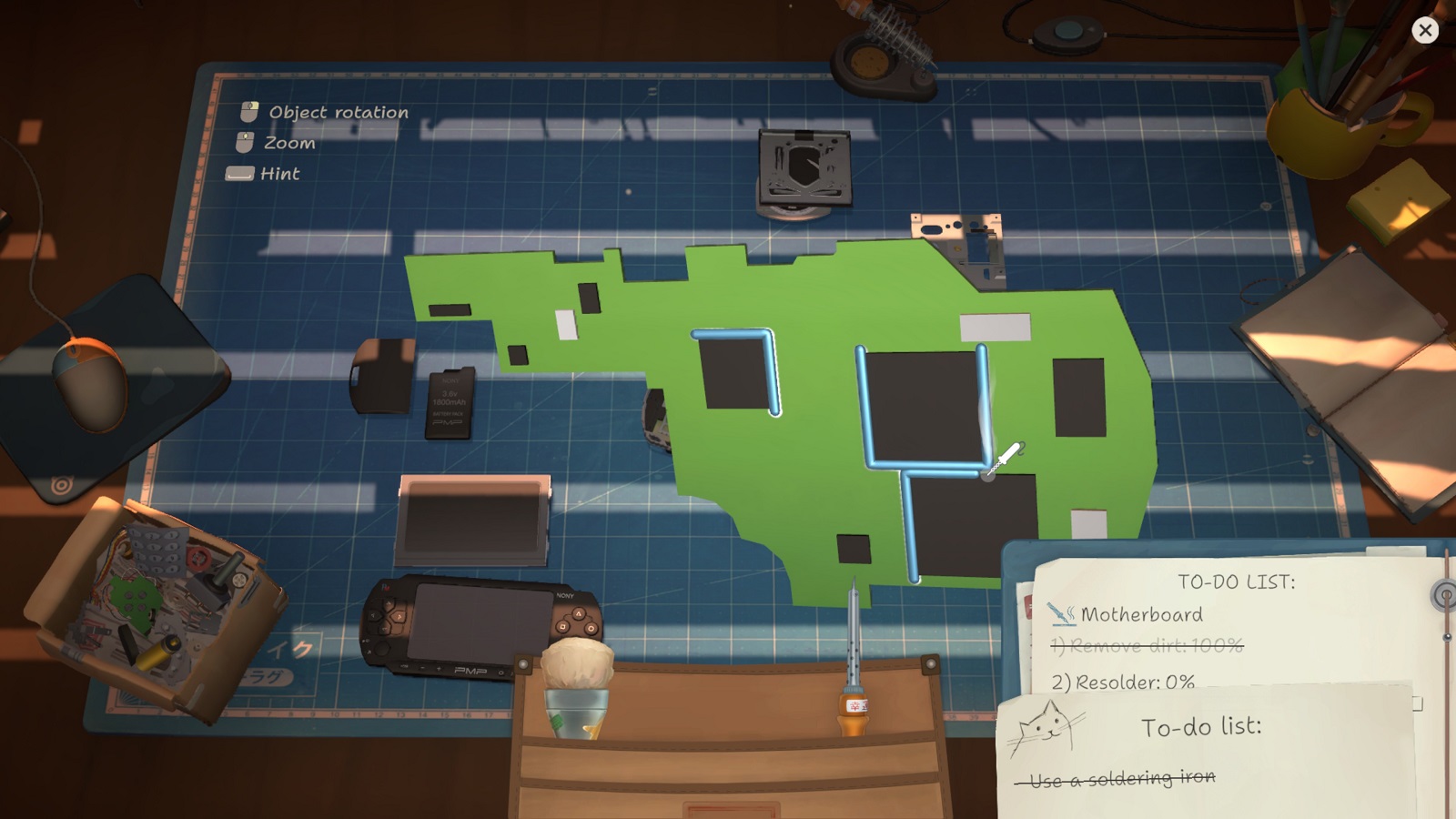
The money you earn goes into more than just licenses; there are tool upgrades to buy as well as a brush tool and color palettes in case you feel like letting out some of that creativity. There is also the soldering iron that adds a new welcome addition to the gameplay loop. It essentially incorporates another layer of cleaning on some circuit board by having you resolder traces. It’s a small addition overall, but a welcome change of pace that keeps the process from becoming too repetitive. I’d like to say that the hacking minigame is similar. But not really. It is best experienced rather than explained.
What surprised me the most about the game’s story is that it has elements of mystery and thrill. It all centers around a major repairs competition. Somehow, every major character involved is linked to espionage, betrayal, petty theft, and even conspiracy to commit crimes. It is the very definition of a shady cast of characters, minus Yui, of course; she’s an innocent girl who got caught up in the dirty business of the adults. Your character starts off just the go-to repairman; eventually earning the trust of everyone to the point that they will reveal things they won’t normally tell others. They will ask for your advice, and whatever you choose will determine what happens to them by the conclusion of the story.
To be frank, I was only paying attention to what’s going on less than half the time. Even when I was getting grilled for information, I was usually honest with my answers, not knowing that someone could be getting hurt because of my answers. For my part, I try to get somewhat of the full picture as best I can, but there’s something about looking at the anime art style that’s preventing me from reading between the lines.
The full game is a lot beefier than I thought it was going to be when compared to the demo. I had assumed that it was going to be your standard repair simulator with a colorful cast of anime characters. I was half right, as I would later find out that the story is anything but chill. In fact, during my entire time leading up to and after the competition, I was under constant pressure to perform well. Granted, it was a self-imposed condition. I had no real reason to be so efficient. I could very well take my sweet time and do one repair per day, but workman’s pride and a little bit of ego got the better of me. And that’s another thing I like about the game: it allowed me to play at my own pace and still rewarded me for going the extra mile.
My biggest fear about the game while playing the demo was that it might fall short on the list of available types. I was completely wrong about that. The full game has nearly a couple of dozen types, including appliances and electric guitars. I still think there’s room to grow, but that’ll depend on the developers wanting to add more content to the game post-launch. I hope they do add more, even if it turns out to be just more licenses.
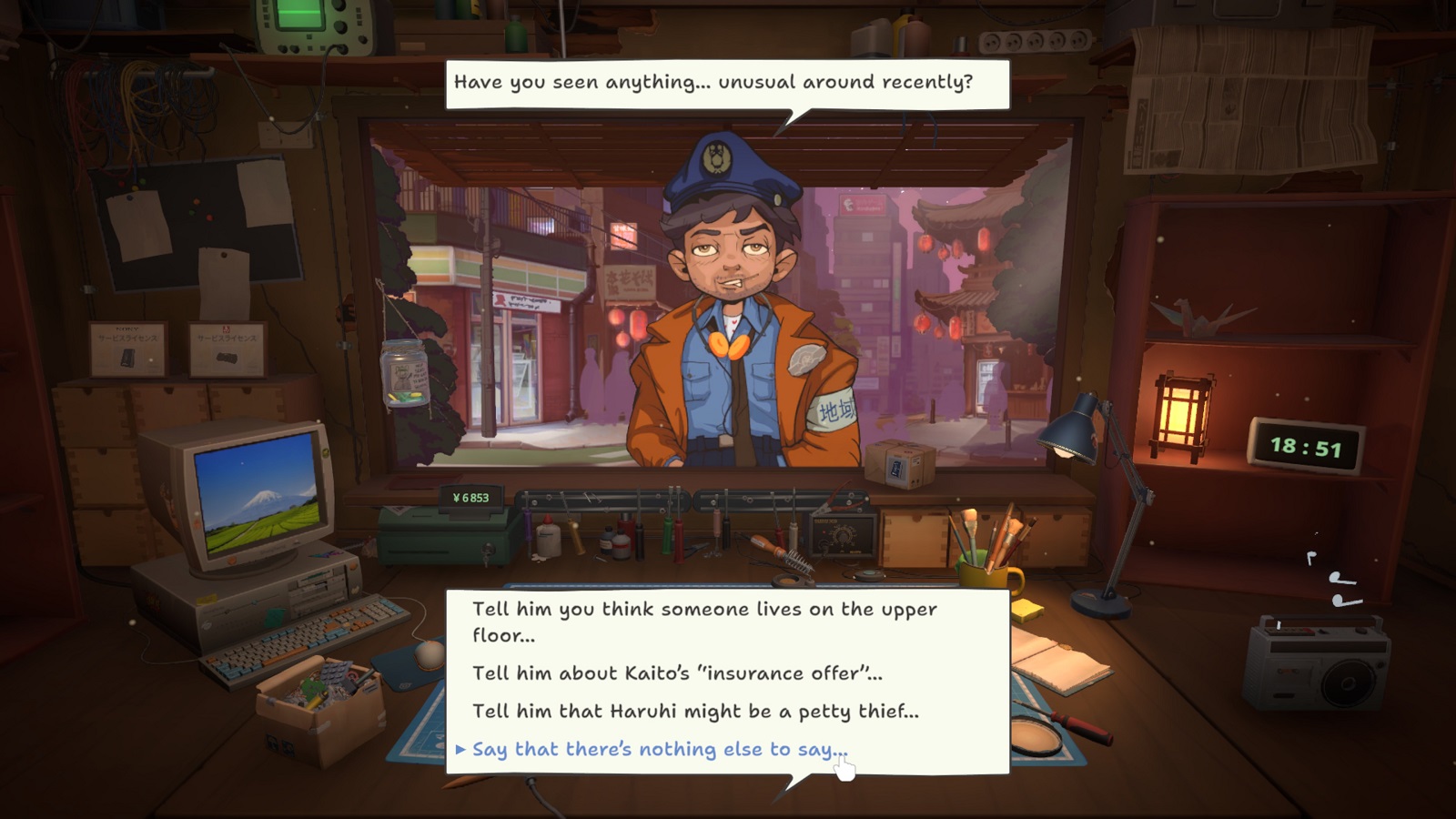
The game’s art style was one of the first things that caught my attention. There was something about the cartoonish style that really appealed to me. I can’t really explain it in certain terms; I suppose it helped make the game stand out in a good way. As for the game’s music, I don’t have much to say. It’s very chill and relaxing. On top of that, you can have barely any background music at all if you decide to turn off the radio.
After playing for more than 8 hours into the game, I can say that I have yet to find any significant issues with the game’s performance. There were no dropped frames or any stuttering on my mid-range PC. Aside from obnoxiously large text boxes, the only other issue I have with the game is a bug that happened during the electronics competition where we spoke to the courier at the start of the middle rounds of the competition. In both cases, the courier spoke the same lines, and we had the same dialogue options on both occasions. The story proceeded normally after that, but you’d think something like that would be caught by QA.
On the surface, ReStory: Chill Electronics Repairs can be chill as the title suggests, but dig a little deeper and you find yourself on the sidelines of a thriller movie plot, surrounded by intrigue and people running away from shadowy figures. Gameplay-wise, this is one of the more compelling repair simulators out there, all because it is simplistically elegant in its execution and rewards smart and prudent choices. Moreover, there is some replay value to be had if you wish to try different choices for alternative outcomes. All-in-all, I highly recommend this game for repair sim enthusiasts, and to a lesser extent, mystery thriller story fans.
Restory: Chill Electronics Repairs Review (PC)
ReStory: Chill Electronics Repairs can be chill but dig a little deeper and you find yourself on the sidelines of a thriller movie plot, surrounded by intrigue and people running away from shadowy figures.
The Good
- Anything but chill
- No issues with performance
- Story's surprisingly full of mystery
- Solid gameplay
The Bad
- Anything but chill
- Some speech bubbles have too much text
- There's some pressure to perform well